Quick Take At How Often Serpentine Belt Replacement? Mileage Tips
There is no single mileage or time interval that applies to every serpentine belt. Check your vehicle’s owner’s manual first, then replace the belt when the schedule or its condition calls for it. Cracking, fraying, glazing, contamination, uneven wear, unusual noise, or accessory problems are reasons to arrange an inspection promptly.
Driving conditions, belt design, engine layout, and the condition of the tensioner and pulleys can all change how long a belt lasts. If your manual does not give a replacement interval, use regular condition-based inspections rather than relying on a universal mileage or age target.
What Is The Standard Replacement Interval For Serpentine Belts?
There is no verified universal replacement interval for serpentine belts. Some vehicles have a specified inspection or replacement schedule, while others rely more heavily on condition. The owner’s manual or manufacturer service information is the correct starting point for your vehicle.
Typical Baseline Intervals (Miles And Years)
No single mileage or age target can be confirmed for all vehicles. Treat any general interval as a planning reference only, not as a guarantee. If the belt shows cracking, fraying, glazing, contamination, or uneven wear, its condition takes priority over the calendar or odometer.
| Maintenance milestone | Baseline target | What to do |
|---|---|---|
| Inspection interval | Vehicle-specific schedule | Check the belt and the surrounding drive system for damage, contamination, and tracking problems. |
| Age-based replacement target | No universal target | Follow the manufacturer’s instructions and replace sooner if the belt shows deterioration. |
How To Verify Against Your Vehicle Manual
Search the owner’s manual or maintenance schedule for terms such as “serpentine belt,” “accessory drive belt,” or “drive belt.” Check whether the manufacturer specifies inspection, replacement, mileage, time, or severe-use conditions.
If the manual gives a specific interval, follow it. If it does not, arrange periodic inspections and use the belt’s condition and symptoms to guide the decision. A mechanic can also check the tensioner, idlers, pulley alignment, and nearby components.
Why Does Wear Determine The Replacement Interval?
A serpentine belt works under repeated bending, heat, and tension. Over time, its rubber and reinforcement can lose strength or grip. The belt may then slip, track poorly, or fail to drive its accessories even if some of its surface still looks intact.
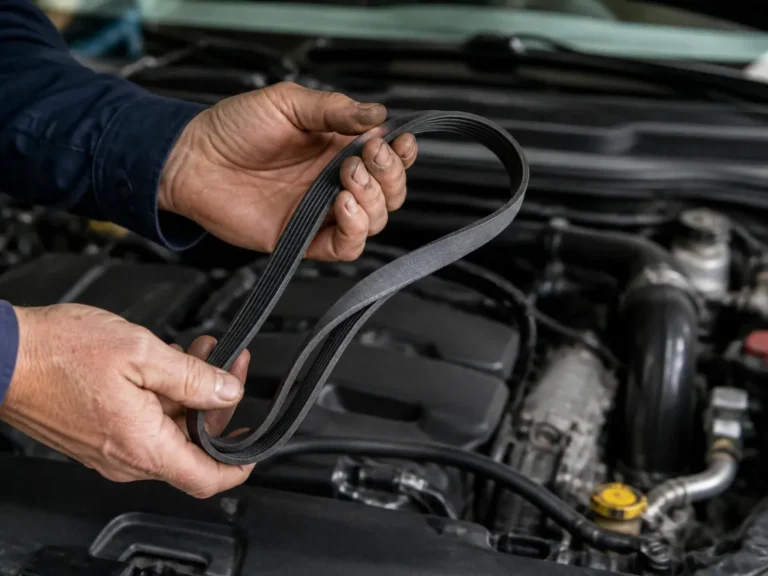
Cracking and fraying can develop where the belt bends around pulleys or runs near hot engine components. A glossy or hardened surface can indicate slipping or heat exposure. Wear concentrated along one edge may point to poor tracking or misalignment rather than ordinary aging.
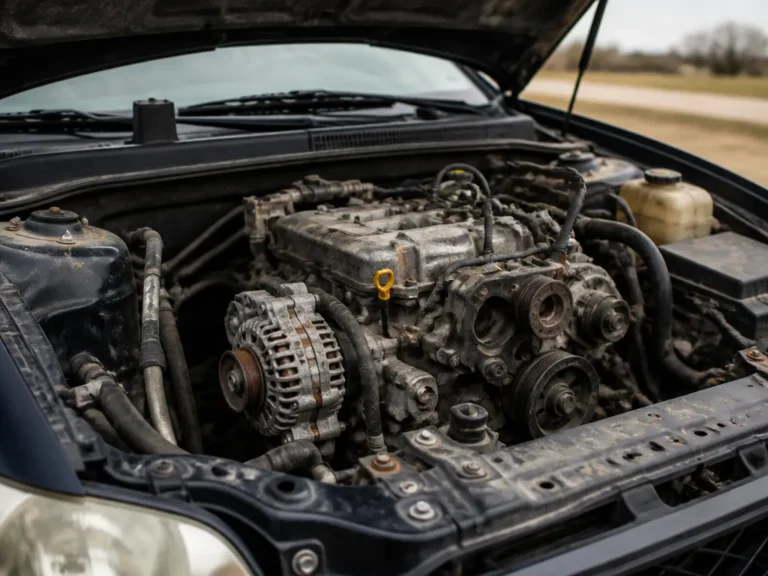
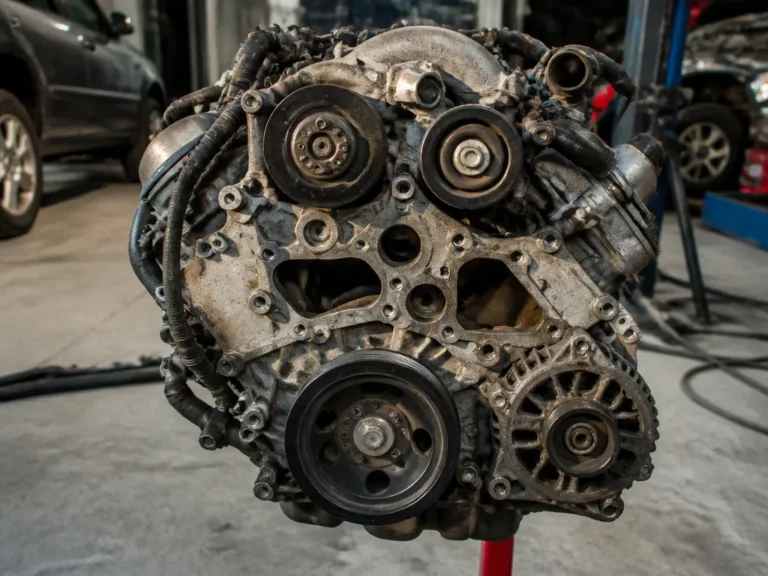
Belt construction and the accessory layout also affect wear. Different materials, pulley sizes, and accessory loads place different demands on the belt. The tensioner and idler pulleys matter just as much. A rough bearing, weak tensioner, or misaligned pulley can damage a new belt quickly.
The practical rule is simple: the belt’s condition and the health of the belt drive matter more than a generic interval.
Which Factors Change The Interval And By How Much?

Replacement timing can change with heat, contamination, accessory load, alignment, and maintenance history. There is no dependable universal figure for how much each factor shortens belt life. Use the vehicle’s severe-use guidance when available, and inspect sooner when conditions are demanding or symptoms appear.
How Should You Decide When To Replace Based On Your Car?
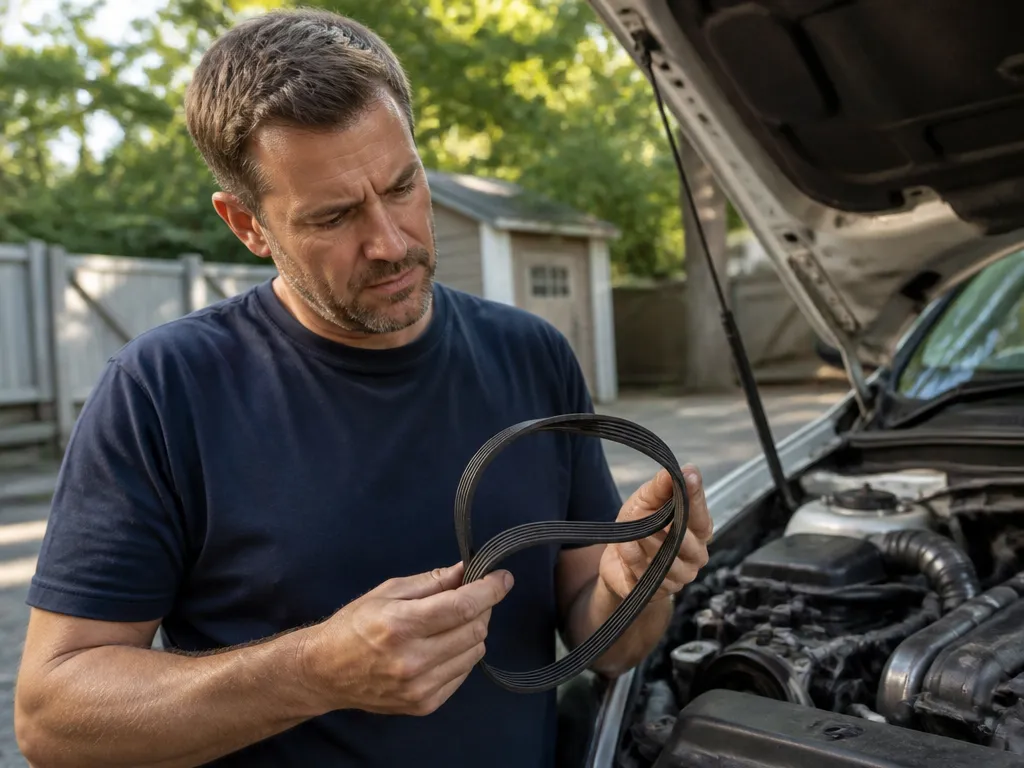
Start with the manufacturer’s instructions and then use the belt’s condition to decide whether service is needed sooner.
Rule I would use: if the belt shows visible cracking, fraying, glazing, contamination, or uneven wear, arrange an inspection and plan replacement instead of waiting for a generic interval.
If you cannot tell whether a mark is normal belt texture or damage, have the belt assessed professionally. A partial view is not enough to confirm its condition.
What Are The Signs Of A Failing Serpentine Belt?

A failing serpentine belt may show physical damage, make unusual sounds, or cause belt-driven accessories to work inconsistently. A visible defect or sudden change in belt noise deserves prompt attention.
Some symptoms originate in a pulley, tensioner, bearing, or accessory rather than the belt itself. The complete belt drive should be inspected, especially if noise returns after replacement.
What Happens If The Belt Fails Or Is Neglected?
A failed serpentine belt can disable several accessories at once. The exact result depends on the vehicle’s belt layout, but continued driving after a failure can create electrical, cooling, steering, or engine problems.
What Edge Cases Could Mislead The Obvious Interval?
A generic interval can be misleading when the vehicle uses a different belt arrangement, has a contaminated or misaligned drive, or operates under unusually heavy heat or mechanical load. In those situations, the manufacturer’s instructions and the belt’s actual condition take priority.
Some engines use belt designs or service instructions that differ from the conventional serpentine arrangement. Do not assume that a long-life designation or schedule for one belt applies to every belt under the hood. Check the owner‘s manual or vehicle service documentation.
There is no dependable rule that converts these conditions into a precise mileage or time reduction. Use the severe-use guidance in the manual when available, shorten the inspection gap when conditions are demanding, and replace the belt when contamination, tracking problems, or structural damage appears.
How Can You Maintain A Practical Inspection Routine?
Build the inspection routine around the manufacturer’s schedule, the belt’s condition, and any change in noise or accessory operation. If the vehicle’s belt is difficult to access, professional inspection is safer and more reliable.
Quick Summary
There is no universal mileage or age rule for serpentine belt replacement. Follow your vehicle’s service information, inspect the belt regularly, and replace it sooner when its condition or symptoms indicate a problem.
A belt that squeals, chirps, slips, or causes charging, cooling, or steering symptoms needs prompt diagnosis, even if its age and mileage seem acceptable. Check the belt when the engine is off and cool, record its condition, and compare it with the manufacturer’s service instructions.
Frequently Asked Questions
What Will It Cost To Replace A Serpentine Belt?
Price depends on the vehicle’s belt layout, access difficulty, local labor rates, and whether the job includes a tensioner, idler, or another related part. There is no reliable universal price. Request a parts-and-labor quote using your vehicle identification number.
Before approving the work, ask what will be replaced and what condition made the repair necessary.
If I Ignore A Small Crack Or Surface Wear, Will It Usually Be Fine?
It may continue to operate for a while, but visible damage can progress to slipping or accessory failure. Cracking, fraying, glazing, contamination, or uneven wear should be assessed rather than ignored.
If the belt has started making noise or the wear is concentrated on one side, ask for a complete belt-drive inspection.
Do I Need To Replace The Tensioner Or Idler Pulleys Every Time?
Not necessarily. These parts should be replaced when inspection finds bearing noise, wobble, rough operation, weak tension, or another fault. A new belt may wear quickly if a damaged tensioner or pulley remains in service.
Ask the installer to inspect the tensioner and idlers and explain any recommended replacement.
How Do I Verify That A Repair Shop’s Claim About My Belt Is Real?
Ask for specific inspection details rather than accepting a general recommendation. The shop should be able to show or describe cracks, fraying, glazing, contamination, uneven wear, pulley movement, or misalignment.
Ask whether the symptom comes from the belt itself or from another part of the belt drive, such as the tensioner, idler, bearing, or accessory.
When Should I Stop Driving And Get Professional Help Immediately?
Stop treating the issue as routine maintenance if there is sudden belt noise, visible severe damage, loss of charging, loss of cooling, heavier steering, or another change affecting a belt-driven accessory.
Turn off the engine if the vehicle overheats or a critical accessory stops working, and arrange an inspection instead of continuing to drive.
What’s The Best Next Step If I’m Not Sure Whether My Car Is Due Yet?
Use the service information for your exact vehicle, then compare it with the belt’s visible condition. If you see cracking, fraying, glazing, uneven wear, contamination, or serious symptoms, arrange an inspection even if the scheduled service point has not arrived.
If the belt is difficult to see or access, schedule a professional inspection rather than relying on a partial view.