
How Long Does It Take To Change Timing Belt? Realistic Timelines
Plan on 2 to 4 hours for a straightforward inline-4 timing belt replacement, 4 to 6 hours for many DOHC four- or six-cylinder engines, and 8 to 10 or more hours for difficult V6, V8, or turbocharged layouts. These are labor-time estimates, not guaranteed shop turnaround times. Vehicle design, access, the parts being replaced, and technician experience can move the job well outside the typical range.
A complete service often takes longer than a belt-only swap because the technician may replace the tensioner, idlers, water pump, seals, and related hardware while the timing covers are already removed. Seized fasteners, corrosion, damaged covers, or an engine mount blocking access can add several hours.
How Long Does It Take To Change A Timing Belt?

Access, engine design, and required disassembly determine which labor range applies. A simple, longitudinal SOHC inline-four may need only 2 to 4 hours. A transverse DOHC engine may require wheel-well, accessory, or engine-mount clearance, while crowded V6, V8, and turbocharged engine bays can require substantially more time.
The quoted labor time may not equal the time the vehicle remains at the shop. Parts ordering, vehicle intake, inspection, coolant service, testing, and a final recheck can extend the appointment even when the hands-on repair fits within the quoted hours.
Typical Labor Time By Engine Configuration
The following ranges are planning estimates for a scheduled timing belt replacement, not for repairing damage after a belt failure. Exact labor depends on the vehicle, engine code, access, technician experience, and the required service procedure.
| Engine layout | Estimated labor | Kit contents to confirm | Special challenges |
|---|---|---|---|
| Longitudinal SOHC inline-4 | 2 – 4 hours | Belt and tensioner commonly available; idler and water pump may be separate | Usually direct front access, but crank pulley removal may be difficult |
| Transverse SOHC inline-4 | 3 – 5 hours | Belt and tensioner; idler and pump inclusion varies by kit | Wheel-well, splash-shield, or mount clearance may be needed |
| Transverse DOHC inline-4 | 4 – 6 hours | Complete kits often include belt, tensioner, idlers, and optionally the pump | Multiple cam timing marks and restricted side access add verification time |
| Longitudinal DOHC inline-4 or inline-6 | 4 – 7 hours | Belt, tensioner, and idlers commonly offered; water pump may be bundled | Longer belt routing and more alignment points require careful setup |
| Longitudinal V6 | 5 – 8 hours | Belt, tensioner, and idlers typically available; pump may be separate or included | Two cylinder banks, covers, accessories, and possible exhaust-side obstruction |
| Transverse V6 | 6 – 10+ hours | Complete kits may include belt, tensioner, idlers, and water pump | Tight engine-bay access and several cam timing points can make alignment slow |
| Turbocharged DOHC four- or six-cylinder | 6 – 10+ hours | Belt, tensioner, and idlers; water pump inclusion varies | Charge plumbing, heat shields, exhaust components, and difficult fasteners may obstruct access |
| Belt-driven V8 or unusually crowded layout | 8 – 12+ hours | Contents vary substantially; verify belt, tensioners, idlers, and pump separately | Special locking tools, extensive disassembly, or exhaust-manifold removal may be required |
Kit names are not standardized. One timing belt kit may contain only the belt and tensioner; another may add idlers, seals, and a water pump. Confirm the contents by part number and engine code before comparing labor estimates.
Parts And Tools Checklist

Use the exact service procedure for the engine code. Torque values, locking points, belt tension, bolt-replacement requirements, and coolant specifications vary by vehicle.
| Item | What to have | Why it matters |
|---|---|---|
| Complete timing belt kit | Correct belt, tensioner, and all specified idlers | Replacing only the belt may leave worn tensioning parts in service. |
| Water pump and seal | Required when specified, belt-driven, leaking, or included in the service plan | Access often overlaps with the belt job, but pump replacement is not mandatory on every engine. |
| Seals and replacement bolts | Crank seal, cam seals, pump gasket, or one-time-use bolts as specified | A leak or reused torque-to-yield fastener can require repeated disassembly. |
| Standard hand tools | Socket and wrench set, extensions, breaker bar, screwdrivers, and pullers where specified | Crank pulley and cover access can require controlled leverage and specific pullers. |
| Torque equipment | Calibrated torque wrench and any angle-measurement tool required | Timing fasteners, pulley bolts, and mounts must be tightened to their specified values. |
| Specialty timing tools | Cam locks, crank holder, timing pins, tension gauge, or engine support equipment | The correct tools prevent cam movement and help set belt tension accurately. |
| Fluids and cleanup supplies | Correct coolant, drain equipment, cleaning materials, and approved sealant if specified | Pump replacement and seal work require clean mating surfaces and correct fluid service. |
Diy Or Professional Service?
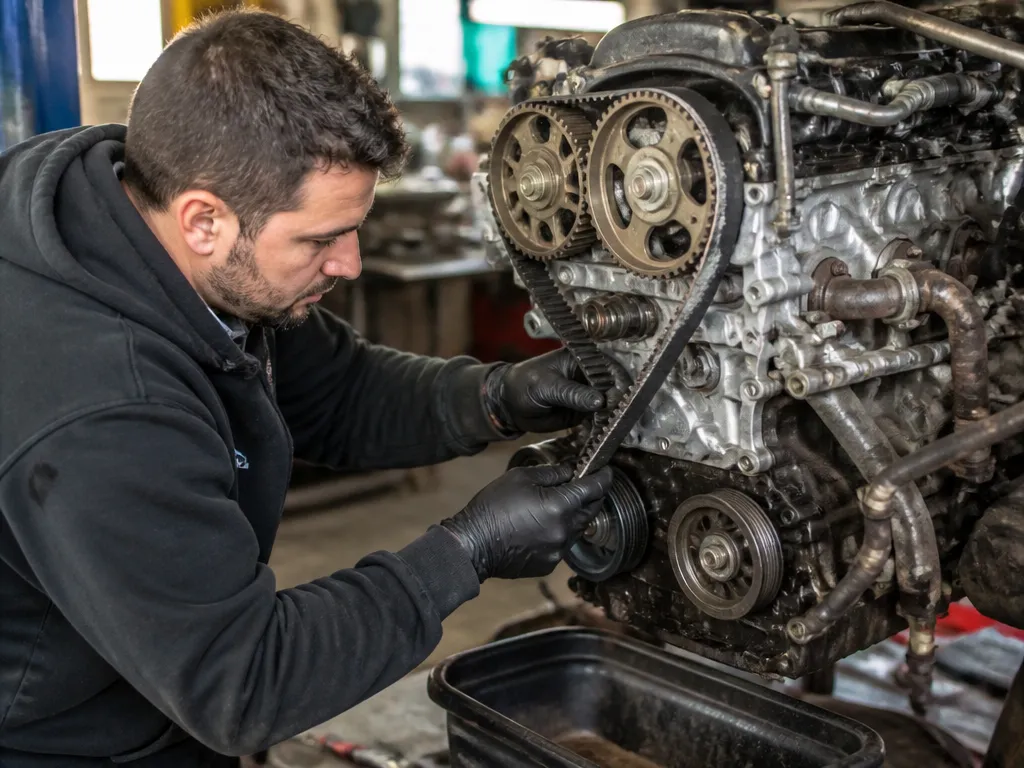
A timing belt replacement is appropriate for an experienced DIY mechanic who can support the engine safely, identify every timing mark, use the required locking tools, follow the torque procedure, and verify timing before starting the engine. It is not a good first major repair if the procedure is unfamiliar or the vehicle requires mount or exhaust removal.
Professional service generally costs more than doing the work yourself, but the technician brings vehicle-specific tools, a documented process, and experience with difficult access. The main DIY benefit is control over parts and labor cost. The main risk is that an incorrect belt position, improper tension, loose fastener, or coolant leak can require substantial rework and may damage the engine.
Simple Timing-belt Time Estimator
For a rough scheduling estimate, start with a configuration range and then add the work that applies to the exact vehicle. This is a planning tool, not a substitute for the vehicle’s service procedure or a shop labor guide.
| Factor | Planning adjustment |
|---|---|
| Simple, accessible inline engine | Use the lower end of the 2 – 4 hour range |
| Transverse or restricted access | Add time for wheel-well, bracket, or mount removal |
| Water pump, seals, tensioner, and idlers | Add the time required for the included components and coolant service |
| Turbo, V engine, or exhaust obstruction | Use the upper configuration range and allow for additional disassembly |
| Unknown condition or rust | Reserve additional schedule time for seized or damaged hardware |
Basic formula: estimated time = base engine-configuration range + access work + added components + condition allowance. A calculator or shop worksheet can use four selections: engine family, accessibility, full-kit replacement, and condition of the fasteners. Display the result as a range rather than a single promised completion time.
Visual Aids And Quick Reference
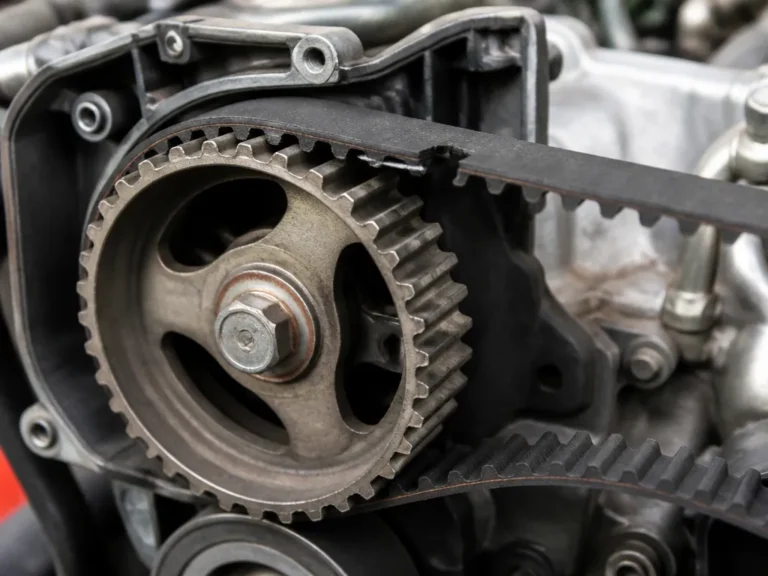
Useful illustrations for this guide would show the typical timing-cover access area, crankshaft and camshaft timing marks, belt routing around the pulleys, and the difference between longitudinal and transverse engine access. A labeled diagram should also identify the tensioner, idlers, water pump, crank pulley, and cam pulleys.
| Quick reference | Typical planning range |
|---|---|
| Simple inline-4 | 2 – 4 hours |
| DOHC four- or six-cylinder | 4 – 6 hours |
| Difficult V6 or turbocharged layout | 6 – 10+ hours |
| Crowded V8 or extensive disassembly | 8 – 12+ hours |
Frequently Asked Questions
Can I Reuse The Old Timing Belt?
A removed timing belt should normally be replaced rather than reinstalled. Its service history, heat exposure, wear, and installation condition cannot be reliably confirmed once it has been removed. Use the correct new belt for the engine code and service interval.
Is Water Pump Replacement Mandatory At The Same Time?
Not on every engine. It is commonly considered when the water pump is driven by the timing belt, when the pump is leaking or worn, or when the vehicle’s service procedure includes it. A separately driven pump may not need replacement unless inspection or the maintenance plan calls for it. Confirm the pump’s drive arrangement and kit contents for the exact engine.
How Does A Timing Chain Differ In Replacement Time?
Timing chain work is vehicle-specific and may involve guides, tensioners, multiple covers, seals, and extensive engine access. It can take longer than a belt replacement, but there is no single chain-replacement time that applies to every engine. Use the exact repair procedure and quote rather than comparing belt and chain jobs by engine size alone.
What Happens If I Do Not Replace The Tensioners?
The old tensioner may not provide the correct belt tension after the new belt is installed. A worn tensioner or idler can also create noise, tracking problems, or premature belt wear. Replacement is generally considered when the service procedure or complete kit specifies it, but confirm the required parts for the exact engine.
Why Can One Shop Quote More Hours Than Another?
Shops may include different parts and procedures. One quote may cover the belt only, while another includes the water pump, tensioner, idlers, seals, coolant, or difficult access work. Ask each shop to list labor hours, included parts, engine information, and any conditions that could change the estimate.
What Should Be Included In A Timing Belt Quote?
Request a written estimate showing the belt, tensioner, idlers, water pump if applicable, seals, coolant, labor, and any expected access work. It should also identify the engine code or vehicle information used to prepare the estimate and state what warranty applies.
Can A Timing Belt Job Be Finished In One Day?
Many straightforward jobs can fit within one working day, but same-day completion depends on parts availability, access, technician workload, and the condition of the vehicle. A complex engine, seized hardware, or additional repair can extend the appointment into the next day.
Quick Summary
The exact vehicle, engine access, technician experience, kit contents, and condition of the hardware determine the final time.
Before scheduling, confirm whether the quote includes the tensioner, idlers, water pump, seals, coolant, and timing verification. If doing the work yourself, use the exact repair procedure, correct locking tools, and specified torque values. When access or timing verification is uncertain, professional service is usually the safer and more predictable option.