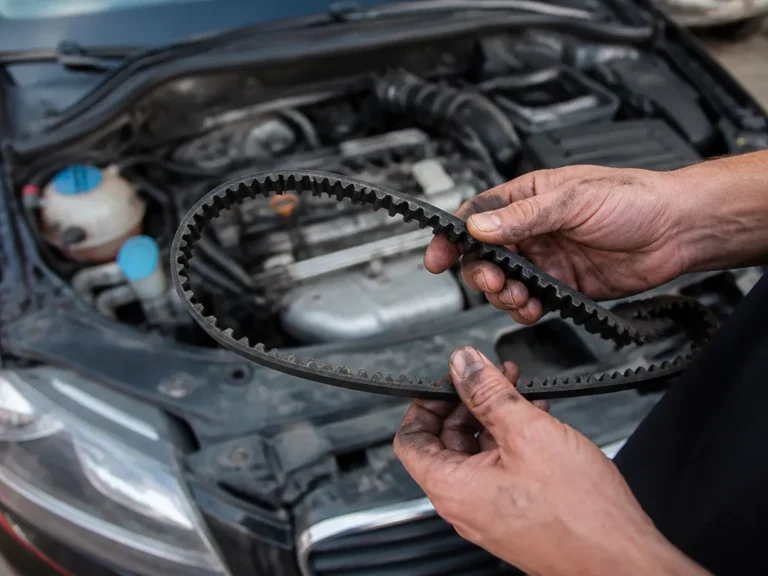
What Happens If A Serpentine Belt Breaks? Effects, Damage, Steps
If your serpentine belt breaks, drive-time matters: once the belt stops turning, the alternator stops charging the battery and the engine can overheat because the water pump stops circulating coolant.
In practical terms, if the belt breaks while you are moving, plan to shut down as soon as it’s safe if you see the temperature gauge rising or a battery/charging warning appears. If you have no overheating yet, you may be able to move to a safe location briefly, but assume the situation will worsen quickly because electrical power and cooling are both dependent on belt rotation.
What Happens When A Serpentine Belt Breaks While Driving?
Once the serpentine belt fails, the engine quickly loses drive to the accessories the belt powers, and you will feel it within seconds through steering effort, charging behavior, and temperature changes. The exact timing depends on engine speed, electrical load, and whether the vehicle has any cooling or charging capacity beyond the belt-driven systems.
Why A Broken Belt Causes Those Effects (System Mechanics)
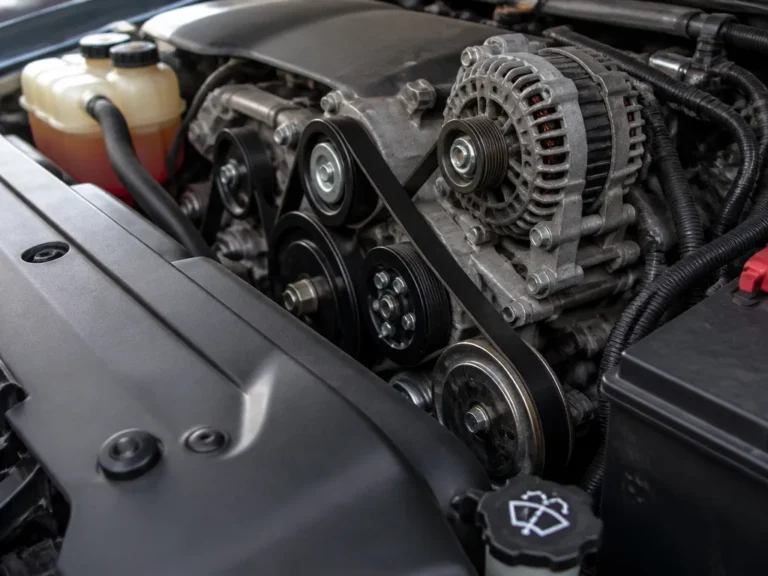
A serpentine belt is a single, continuous power transfer path from the engine to several accessories, so when it fails, the belt stops providing mechanical rotation to those systems in one stroke.
How Fast Things Worsen: Speed, Engine Load, And Duty Factors
How quickly the failure turns into bigger damage is driven by how hard the engine and electrical system are being asked to work at the moment the belt fails, plus what conditions you are running under.
In practice, the “worst” outcomes arrive faster when you are at high engine load (or high electrical demand) and when the engine already runs hot.
What Decision To Make: Drive, Shut Down, Or Tow?
You should decide fast based on three signals: temperature warning/overheating signs, burning smell or belt debris, and loss of steering assist or major charging warnings. If the engine looks like it is cooking itself, shut it down and stop trying to “make it to the next exit.” If you have no overheating and the situation looks stable, you may be able to move a short distance carefully, then get help.
If you do not yet have overheating or burning smells, you can do brief checks before moving further. Verify you are not getting a temperature spike, confirm there is no steam, and glance for obvious belt material flapping or thrown parts. If any gauge trends upward or the situation feels unstable, stop and shut down rather than “testing it.”
If the temperature gauge is rising or you see steam, the correct decision is to shut down and wait. Trying to “push through” is how a belt problem becomes an engine problem.
When you call for help, tell the dispatcher you have a serpentine belt failure (or suspected failure), mention any overheating/steam, and describe steering and warning-light behavior. That helps them send the right equipment and helps a mechanic prioritize the cooling, charging, and belt-path checks once the vehicle is secure.
What Parts Can Get Damaged After Belt Failure
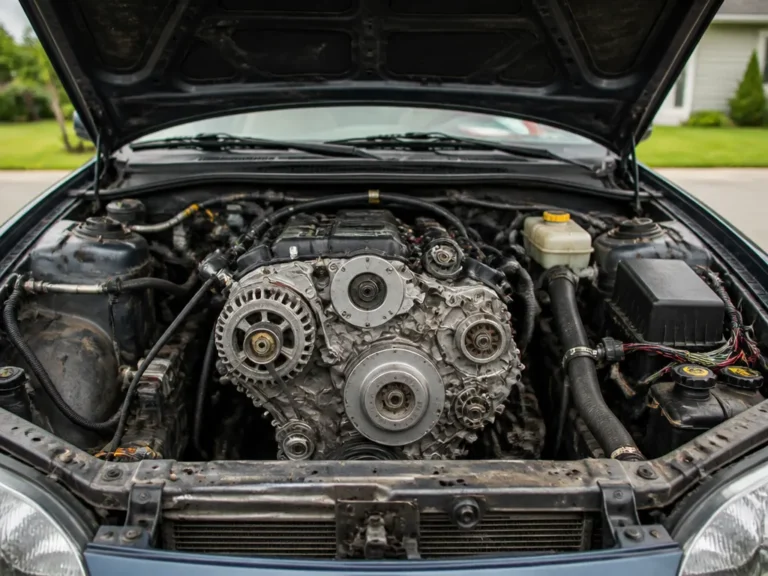
When the serpentine belt breaks, the immediate risk is losing accessory function, and the longer risk is secondary damage from overheating, electrical imbalance, and failed accessory bearings or seized components. If you keep driving, you are effectively asking the engine and accessories to survive without the belt’s cooling and charging duties, plus you may damage the belt path itself as debris and misalignment build up.
How Much The Repair Can Cost And What Affects It
Practical move: ask the shop to itemize the scope into belt only versus belt plus tensioner/idlers (and any cooling or electrical checks they performed). That single question forces the estimate to reflect the reason the belt failed, not just the symptom of a broken belt.
Signs The Belt Is Failing Before It Breaks
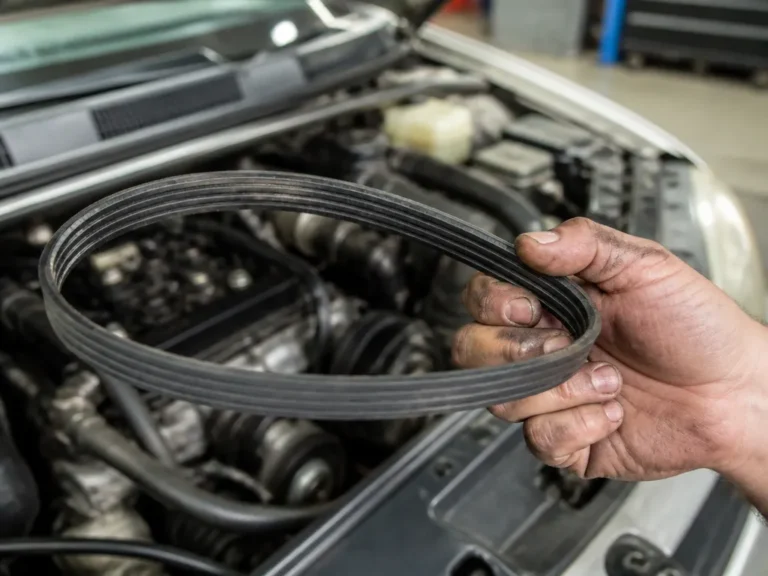
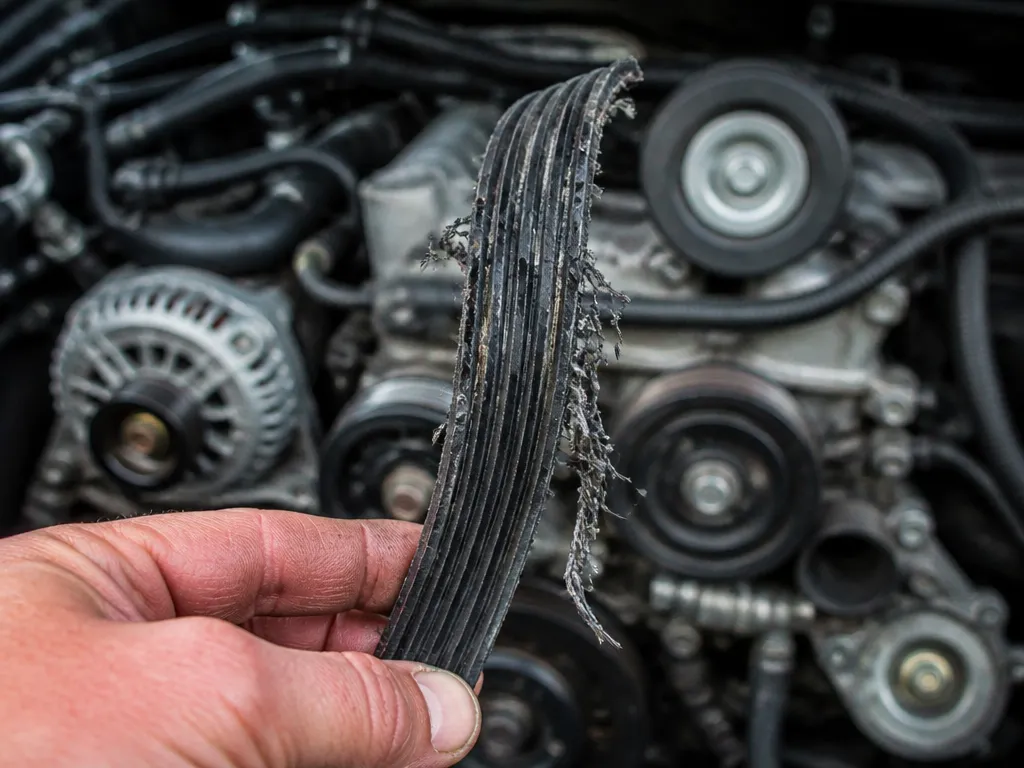
Squealing, a glossy belt surface, cracking, frayed edges, or a new warning light can signal that the belt or its supporting hardware needs attention before it fails. None of these signs proves the belt alone is at fault, so the sound and the belt path should be checked together.
| Priority | What you notice | What it may indicate | Action |
|---|---|---|---|
| 1 | Fraying, missing ribs, a split belt, or belt material hanging loose | Severe belt deterioration or misalignment | Stop using the vehicle until it is inspected |
| 2 | Repeated squeal, chirp, or whine from the belt area | Slip, contamination, poor tension, or a rough pulley | Arrange prompt diagnosis |
| 3 | Cracks, glazing, hardened rubber, or visibly damaged ribs | Wear that can reduce reliable belt grip | Schedule inspection and replacement advice |
| 4 | Battery or charging warning, especially with belt noise | The alternator may not be turning correctly | Reduce driving and investigate immediately |
| 5 | Temperature warning or rising temperature with belt symptoms | A belt-driven cooling component may have stopped working | Stop safely and shut the engine down |
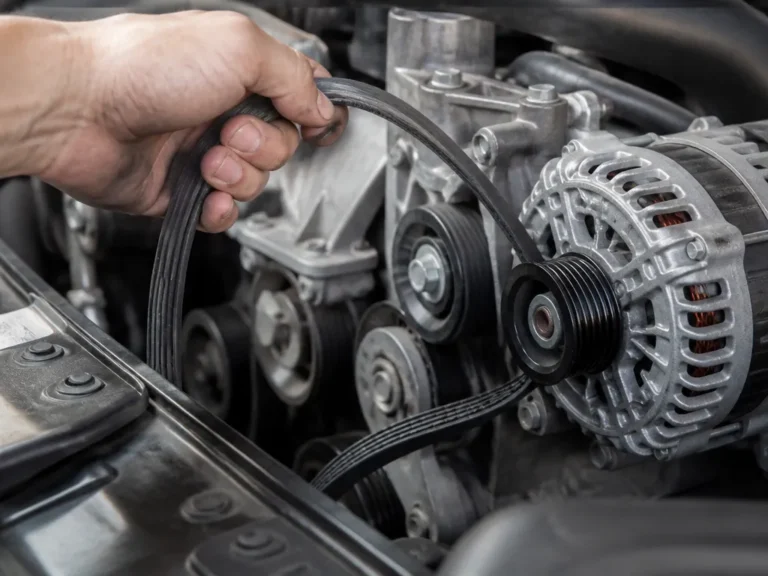
The table’s first three rows concern visible or audible belt-path problems. A shiny, smooth surface can point to slipping, while frayed edges or uneven rib wear can point to pulley misalignment or a tension problem. A belt that looks intact can still be unreliable if an idler or tensioner bearing is noisy, rough, loose, or wobbling.
Warning lights are supporting evidence, not a belt diagnosis. A charging warning may appear when the alternator is no longer being driven; a temperature warning may follow if a belt-driven cooling component stops. Treat either warning as urgent when it occurs with squealing, burning odor, belt dust, or a sudden change in accessory operation.
Inspect immediately for visible damage, a new belt-area noise, warning lights, or any sign of overheating. A quiet belt with minor surface wear can usually be scheduled for inspection, but there is no reliable universal mileage number for replacement without the vehicle’s belt specification and service guidance. Ask the technician to inspect the belt, tensioner, idlers, pulley alignment, and contamination together.
Preventing Belt Breakage With Maintenance And Setup Checks
Prevent belt breakage by inspecting the complete belt drive at routine service, correcting alignment or tension problems, and replacing damaged supporting parts instead of fitting a belt alone. Follow the vehicle maker’s maintenance schedule, but inspect sooner after fluid contamination, unusual belt noise, or work near the front of the engine.
Emergency Steps If Your Serpentine Belt Snaps On The Road
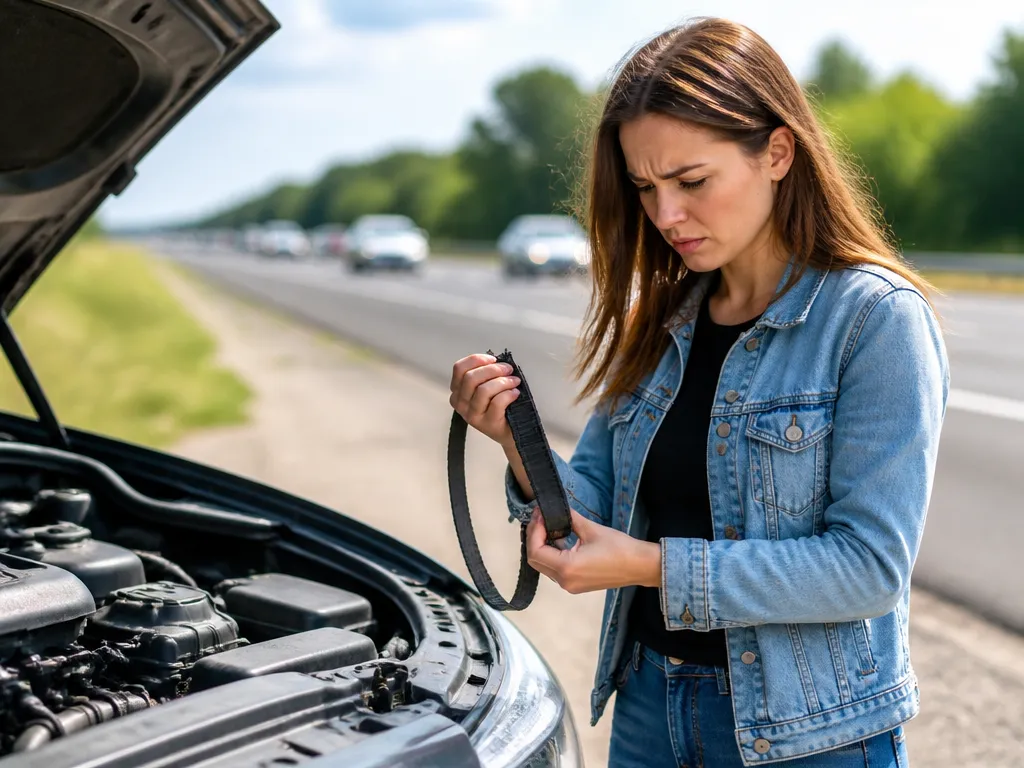
After a serpentine belt snaps, reduce the vehicle’s load, move to a safe stopping place only if the vehicle remains controllable, and shut the engine down before overheating or other secondary damage develops. Treat a temperature warning, steam, a burning smell, heavy steering, or belt debris as a reason to stop immediately rather than attempt to reach a repair shop.
Quick Summary
If the serpentine belt breaks, treat the vehicle as a stop-and-tow problem unless you can move only far enough to reach a safe stopping place without overheating or losing control.
Your next action should be to shut the engine off in a safe location and arrange roadside assistance, telling the mechanic that the serpentine belt failed and which warning lights, noises, steering changes, or temperature symptoms appeared.
Frequently Asked Questions
Can A Serpentine Belt Break Even If It Looks Acceptable?
It can. A belt may fail because of a damaged tensioner, pulley misalignment, contamination, or an accessory that is beginning to seize, and those problems may not be obvious from the belt’s outer surface.
A visual inspection is useful, but it does not clear the entire belt drive. The pulleys and tensioner need inspection whenever a belt breaks unexpectedly or fails soon after replacement.
Is A Serpentine Belt The Same As A Timing Belt?
They are different parts with different jobs. The serpentine belt drives external accessories, while a timing belt operates inside the engine’s timing system on vehicles that use one.
Do not assume that replacing one addresses a problem with the other. Check the vehicle’s service information or have a mechanic identify the failed belt before ordering parts.
Will A Jump-start Solve The Problem After The Belt Breaks?
A jump-start may get the engine running if the battery has discharged, but it does not restore the belt-driven alternator. The battery can continue losing charge because the alternator is no longer being driven.
Treat a jump-start as a diagnostic or recovery step, not a repair. Repeated attempts can leave the vehicle unable to restart and do not address the failed belt or the reason it broke.
Why Would A Replacement Belt Break Soon After Installation?
A repeat failure often points to a problem beyond the belt itself. Possible causes include incorrect routing, a damaged tensioner, a misaligned pulley, contamination, or an accessory bearing that binds or seizes.
The repair should include a check of the complete belt path. Fitting another belt without finding the cause risks another failure and may leave the same underlying component damaged.
How Can I Tell Whether The Repair Diagnosis Is Complete?
Ask the technician to identify the failed part and explain how it caused the belt failure. The inspection should account for the belt path, tensioner, idler pulleys, accessory pulleys, alignment, contamination, and any belt fragments.
A credible diagnosis should also explain whether the alternator, cooling system, and other belt-driven accessories still operate correctly. If the recommendation is simply “replace the belt” after an unexplained break, ask what ruled out a seized or misaligned component.
Can I Replace The Belt Myself?
That depends on access to the belt path, the tensioner design, the correct routing information, and your ability to inspect the pulleys afterward. A belt installed on the wrong route can leave an accessory undriven or create a new alignment problem.
Professional help is the safer choice if the routing is unclear, the tensioner is difficult to release, a pulley wobbles or grinds, or the belt broke because of an unknown cause. The repair is incomplete until the supporting hardware has been checked.