
Can I Drive Without A Serpentine Belt? Risks, Steps, Costs
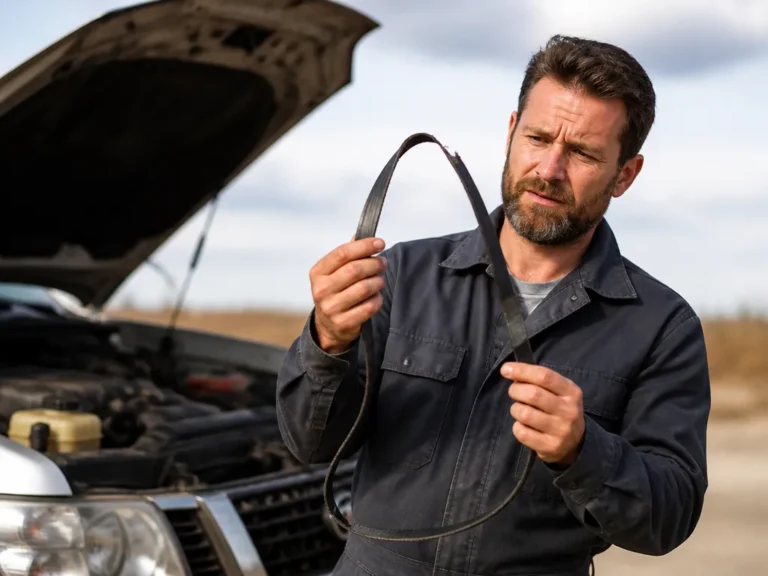
You should assume the answer is no. A serpentine belt drives the alternator and, on many vehicles, the water pump and other accessories. If the belt is missing or broken, charging can stop, cooling may be affected, and steering assistance may be lost, depending on the vehicle.
If the belt snaps or comes off, pull over and stop at the first safe opportunity. Do not plan to drive to a repair shop. If you must move the vehicle out of immediate danger, keep the distance and engine load as low as possible, then arrange a tow.
Can You Drive Without The Serpentine Belt?
Driving without a serpentine belt is unsafe because the belt may power the charging system, cooling system, power steering, and air conditioning. The exact consequences depend on the vehicle’s design, but losing one belt can disable several systems at once.
If you suspect the belt is gone, treat the problem as urgent. A squeal, a visible belt off the pulleys, a burning-rubber smell, or charging and temperature warnings are reasons to reduce speed and pull over safely. Do not continue simply because the engine still runs.
What You Can Do Right Now If The Belt Fails
When a belt fails on the road, focus on getting out of traffic and preventing further engine damage. If the temperature gauge rises, you see steam, or a temperature warning appears, shut the engine off as soon as it is safe to do so.
If you must move briefly to reach a safer spot, such as a nearby parking area, do so cautiously and for the shortest distance possible. Once stopped, switch off the engine and let the engine bay cool before inspecting it.
If the temperature rises or you see steam, stop driving immediately. Do not restart the engine until the vehicle has been inspected.
How Does The Serpentine Belt Power Your Car’s Accessories?
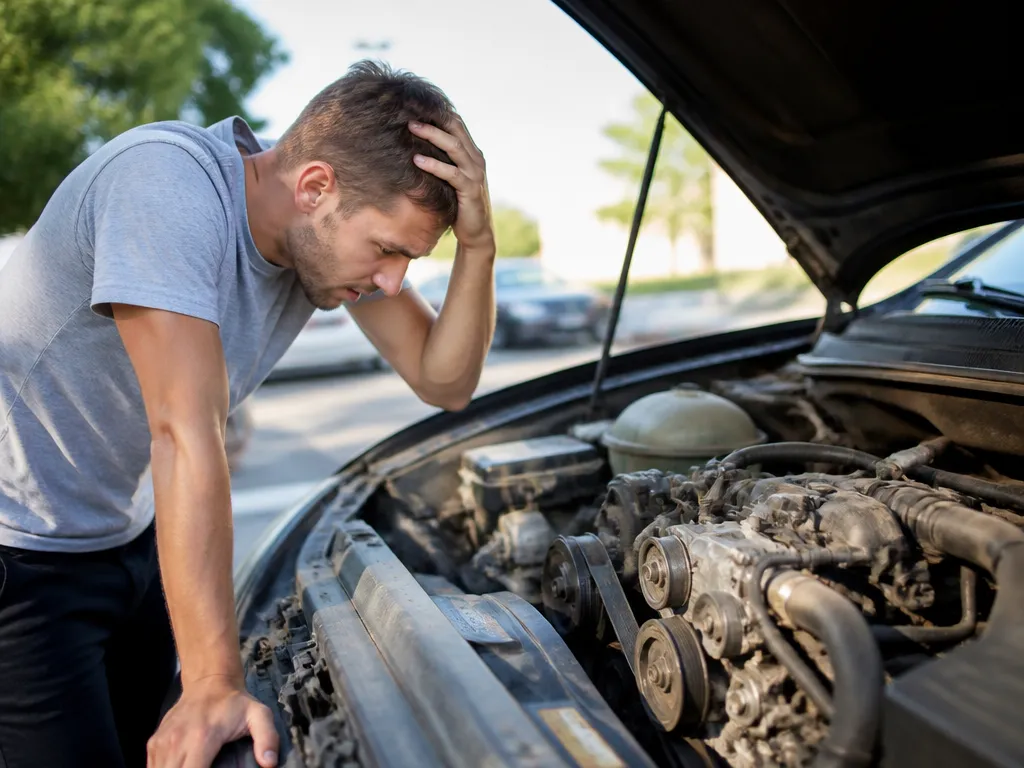
A serpentine belt transfers rotational power from the crankshaft to several accessories. Because those components share the same belt path, one belt failure can affect several systems at once.
Which Factors Raise The Risk When The Belt Is Missing?
The risk depends on which accessories the belt drives, the engine’s temperature, the electrical demand, and how long the engine continues to run. Engine load, traffic conditions, weather, and the condition of the belt-drive hardware can also affect what happens next.
Do not use a short distance, low speed, or idling as reassurance. If the belt is missing or no longer tracking correctly, the vehicle needs inspection rather than a driving test.
What Steps Should You Take Right After The Belt Fails?
Reduce the chance of overheating or electrical failure, get to a safe stopping place, and arrange professional help. Do not keep running the engine to see whether the vehicle can make it farther.
Do next: arrange a tow and ask the repair facility to inspect the belt path, tensioner, idler pulleys, and belt-driven accessories. Tell the technician how long the engine continued running and which warning lights or symptoms appeared.
What Damages And Costs Could Occur If You Drive Without It?
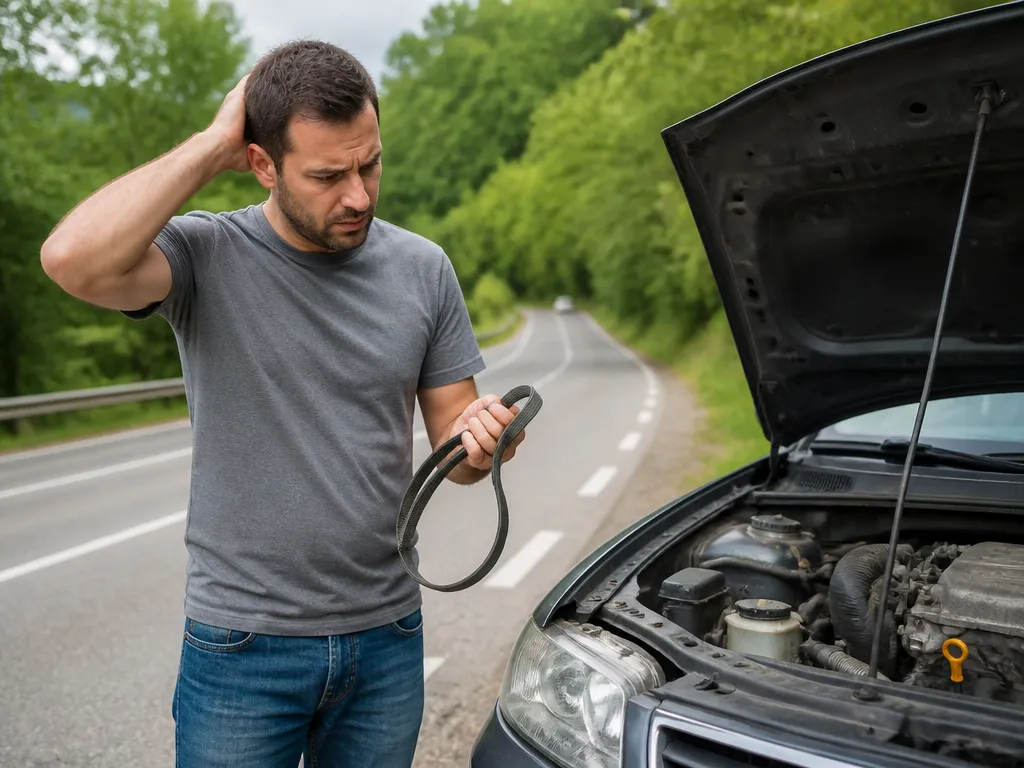
Driving without a serpentine belt can turn a belt replacement into a larger repair. The outcome depends on which accessories the belt drives, whether a pulley or tensioner caused the failure, and whether the engine overheated.
| System or part | What can fail when belt drive is lost | How it typically shows up | Repair cost outcome |
|---|---|---|---|
| Alternator | The alternator stops receiving belt drive and may stop charging | Battery or charging warning, dimming electrical functions, or a discharged battery | The repair may involve the belt, the alternator, the battery, or more than one of these |
| Power steering pump (if belt-driven) | Steering assistance can be lost | Steering effort increases, sometimes with noise or a harsh steering feel | A damaged pump or related fluid and belt-drive work may add to the repair |
| Water pump / cooling circuit (if belt-driven) | Coolant circulation can be reduced or stopped | Rising temperature gauge, overheating warning, or steam | Overheating can lead to engine damage in addition to the belt and water-pump repair |
| A/C compressor (if belt-driven) | The compressor loses belt drive | A/C stops producing normal cooling | The compressor or other belt-drive components may need repair if a component seized |
| Idler pulleys, tensioner, belt path hardware | A seized or misaligned component can throw off or damage the belt | Rattling, grinding, belt dust, or visible misalignment | The tensioner, idler, pulley, or related hardware may need replacement along with the belt |
The least serious outcome may be a belt replacement after the cause is confirmed. Costs increase when a seized component damages the belt or when the engine runs hot. Exact totals depend on the vehicle, parts, access, and labor rates, so ask for an itemized estimate covering the belt and diagnosis of the belt-drive system.
Are There Edge Cases The Obvious Answer Misses?
Some vehicles use electric components where others use belt-driven accessories. That can change which systems stop working, but it does not make a missing or damaged belt safe to ignore. The exact engine and accessory layout must be confirmed before making any decision.
Design And Drivetrain Cases
Some hybrid and other electrified vehicles use electric systems for functions that are belt-driven on conventional engines. Even so, the alternator, water pump, power steering, or other accessories may still depend on a belt, depending on the design. Check the vehicle’s service information rather than assuming the belt is unnecessary.
An electric water pump can change the cooling system’s behavior, but it does not guarantee that the engine can run safely with a missing belt. Other belt-driven components may still fail, and the vehicle may have a separate fault that caused the belt to come off.
Belt Condition Cases
A slipping or partially damaged belt can create an unstable middle ground in which some accessories work intermittently. Charging may come and go, steering assistance may vary, or the A/C may stop and restart. These symptoms mean the belt is not transmitting power reliably.
Driving-situation Cases
Gentle driving in mild conditions may appear to delay the symptoms, but it does not establish that the vehicle is safe. The outcome depends on the belt layout and whether charging and cooling remain available.
Use a simple rule: if you cannot verify that the belt and the systems it drives are operating correctly, arrange a tow instead of testing the vehicle’s limits.
What Do Mechanics Say About Driving Without A Serpentine Belt?
A cautious repair approach treats a failed or missing serpentine belt as a reason to get the vehicle off the road. The belt may drive essential accessories, and continued operation can turn a belt problem into an overheating, charging, steering, or pulley failure.
General Consensus: Avoid Driving Without The Belt Altogether
Do not plan to limp farther than necessary simply because the engine is still running. If the belt is broken, separated, or clearly slipping, stop driving except to reach an immediately safer position.
Continuing to drive can leave the vehicle without charging or cooling support and may place additional strain on belt-driven components. A tow is usually the safer way to protect the engine and identify the cause of the failure.
When To Seek Immediate Professional Inspection And Why
Seek inspection when the belt is missing, shredded, thrown off its pulley path, or accompanied by warning lights and belt-related noise. Steam, a rising temperature gauge, or a charging warning requires stopping as soon as it is safe.
If you drove after the belt failed, tell the repair facility how long the engine ran and under what conditions. That information helps determine whether the technician should check for overheating, a discharged battery, or damage to the belt-drive components.
How To Communicate Belt Concerns Effectively With A Shop
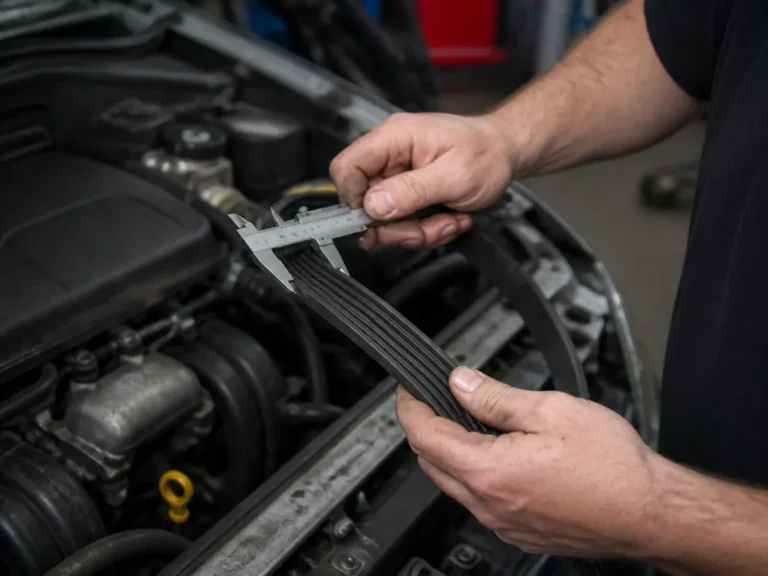
When you call or write to the shop, describe when the problem began, what you saw, what the dashboard displayed, and whether the belt is missing, loose, glazed, frayed, or separated. Only inspect the belt with the engine off and cooled down.
This information helps the shop inspect the part that failed first, such as the belt, tensioner, pulley, or accessory, and then check for secondary damage.
Where Is The Belt Located And How Can You Inspect It Safely?

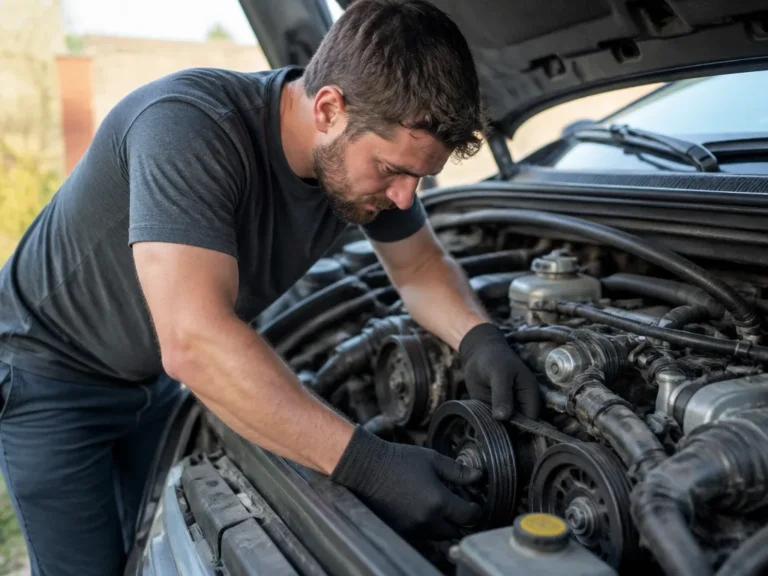
The serpentine belt is mounted on the outside of the engine and follows a loop around several pulleys. It is usually near the front of the engine bay. Look for a wide, ribbed rubber belt connected to pulleys such as the crankshaft pulley, alternator pulley, and tensioner.
Use the routing diagram for the exact engine and model year if you need to identify the pulleys. Do not attempt to reinstall a belt unless you know the correct routing and have confirmed that the underlying pulley or tensioner problem is not still present.
Quick Summary
Do not drive a conventional vehicle without its serpentine belt. The belt may operate the charging system, water pump, power steering, and A/C, and the vehicle can suffer further damage if the engine continues to run.
| Scenario | Decision |
|---|---|
| Belt missing/broken/separated | Stop driving and arrange a tow |
| Belt slipping intermittently | Move only to a safer position if necessary, then arrange inspection or towing |
Next action: Pull over safely, shut down if overheating or serious warnings appear, and call for a tow. Do not restart the engine except when necessary to move out of immediate danger.
Frequently Asked Questions
How Can I Get A Reliable Repair Estimate For A Failed Serpentine Belt?
Give the repair shop the vehicle’s year, make, model, engine, and the belt’s condition. Explain whether it is still present, loose, frayed, or completely missing. Ask for an itemized estimate covering the belt, labor, and inspection of the tensioner, idler pulleys, and belt-driven accessories.
A belt-only estimate may not cover the cause of the failure. A seized pulley, damaged tensioner, or failing accessory can damage a replacement belt if it is not found first.
How Long Should I Expect The Repair To Take?
There is no dependable universal repair time. Some vehicles have an accessible belt path, while others require removal of nearby components. A failed pulley or accessory adds diagnostic and replacement work.
Ask whether the estimate includes diagnosis as well as installation. If the belt failed without an obvious cause, replacing the belt alone may not resolve the problem.
How Can I Tell If My Vehicle Is One Of The Exceptions With Less Dependence On The Belt?
Check the owner’s manual or the manufacturer’s service information for the accessory-drive layout. Confirm whether the water pump, power-steering system, and charging system are driven mechanically by the belt or operate through separate electric systems.
Do not infer the answer from the vehicle being a hybrid, electric-assisted, or newer model. Confirm the exact engine and trim because different versions can use different accessory arrangements.
Could A New Belt Fail Again If I Replace It Without Checking Anything Else?
It could. A replacement belt does not correct a seized accessory, damaged tensioner, misaligned pulley, or failing pulley bearing that caused the original failure.
Ask the technician to inspect the belt path and the related pulleys before fitting the replacement. The important question is, “What caused the old belt to fail?”
What Information Should I Give A Roadside Technician Or Repair Shop?
Report when the problem began, any squealing or grinding noise, warning lights, changes in steering effort, temperature-gauge movement, and whether the belt is visibly missing or damaged. Tell them whether the engine was shut off immediately or continued running.
Include the vehicle identification details and your exact location. A clear description helps the technician decide whether the vehicle needs a tow and which components require inspection.
Can A Dashboard Warning Light Confirm That The Serpentine Belt Has Failed?
A warning light can identify a related system problem, but it cannot confirm the belt as the cause by itself. Charging, temperature, steering, and accessory faults can produce overlapping symptoms.
With the engine switched off and cooled down, inspect whether the belt is present and correctly routed. Compare what you see with the vehicle’s belt diagram or service information. Never reach near the belt or pulleys while the engine is running.