How Does A Serpentine Belt Break? Causes, Signs, And Fixes
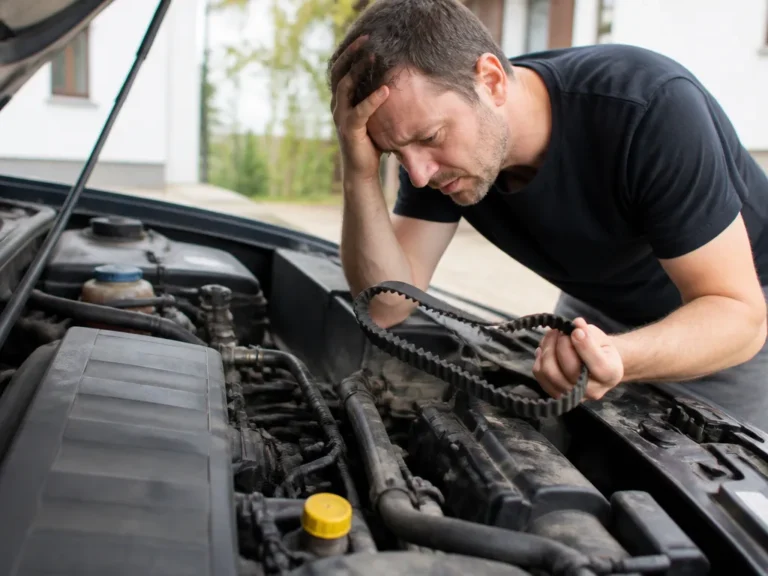
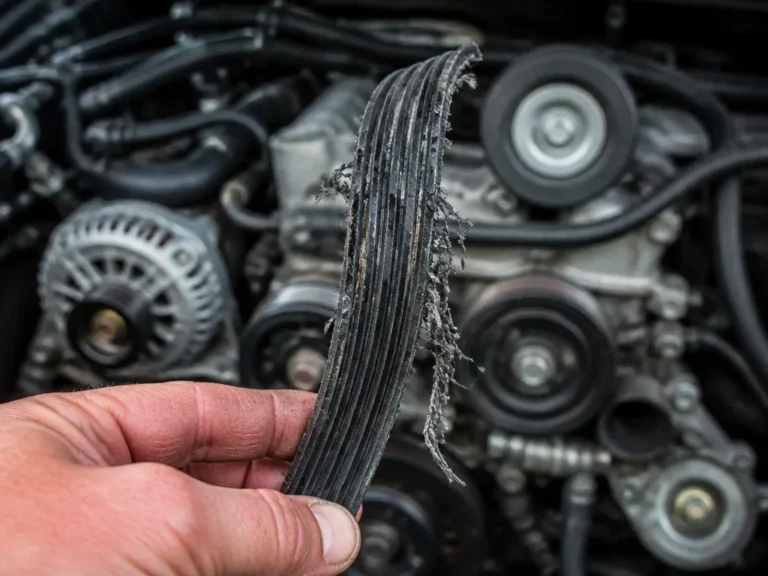
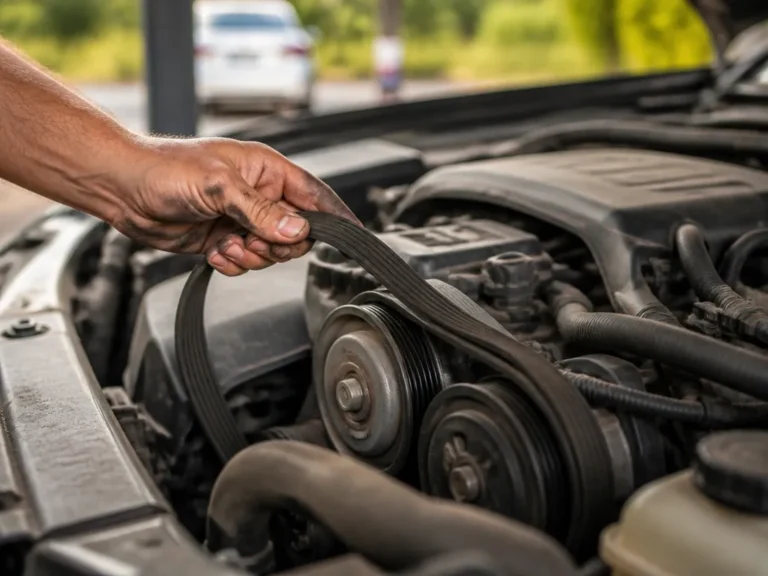
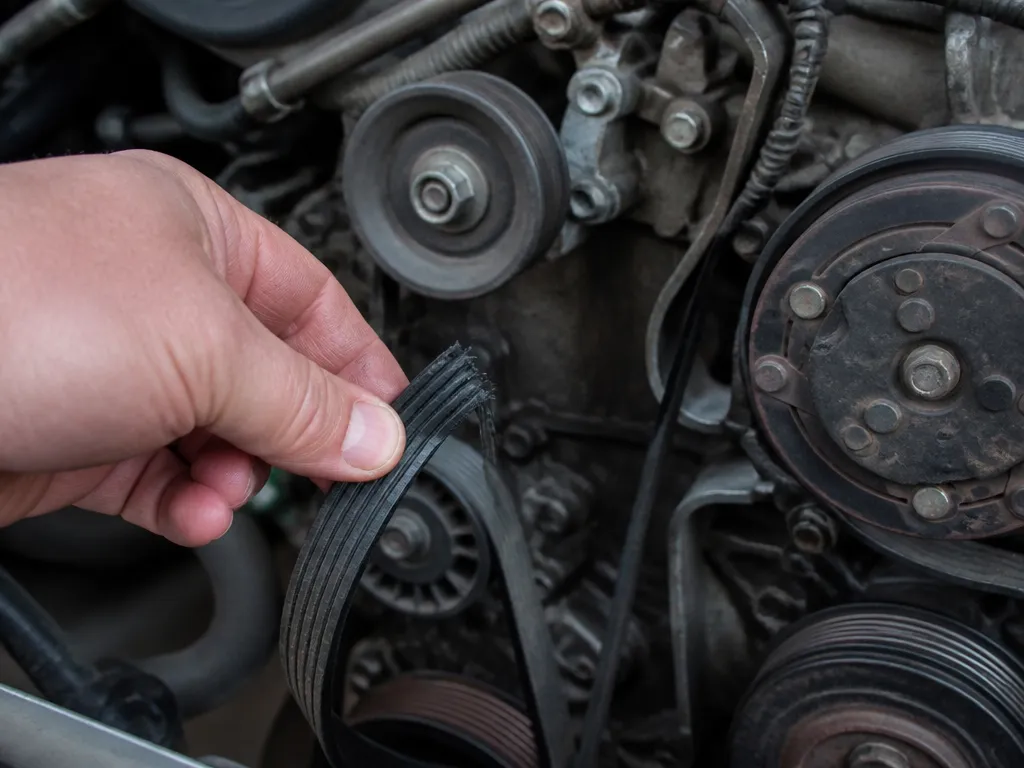
A serpentine belt can break after slipping, overheating, cracking, fraying, or tracking incorrectly. The final separation may look sudden, but damage often develops first. Missing ribs, exposed cords, edge fraying, glazing, cracking, or rubber dust should be treated as warning signs rather than normal wear.
When a damaged belt is replaced, inspect the pulleys, tensioner, routing, and belt path as well. A worn bearing, seized accessory, misaligned pulley, incorrect belt, or fluid contamination can damage the replacement in the same way.
What Makes A Serpentine Belt Break In The First Place?
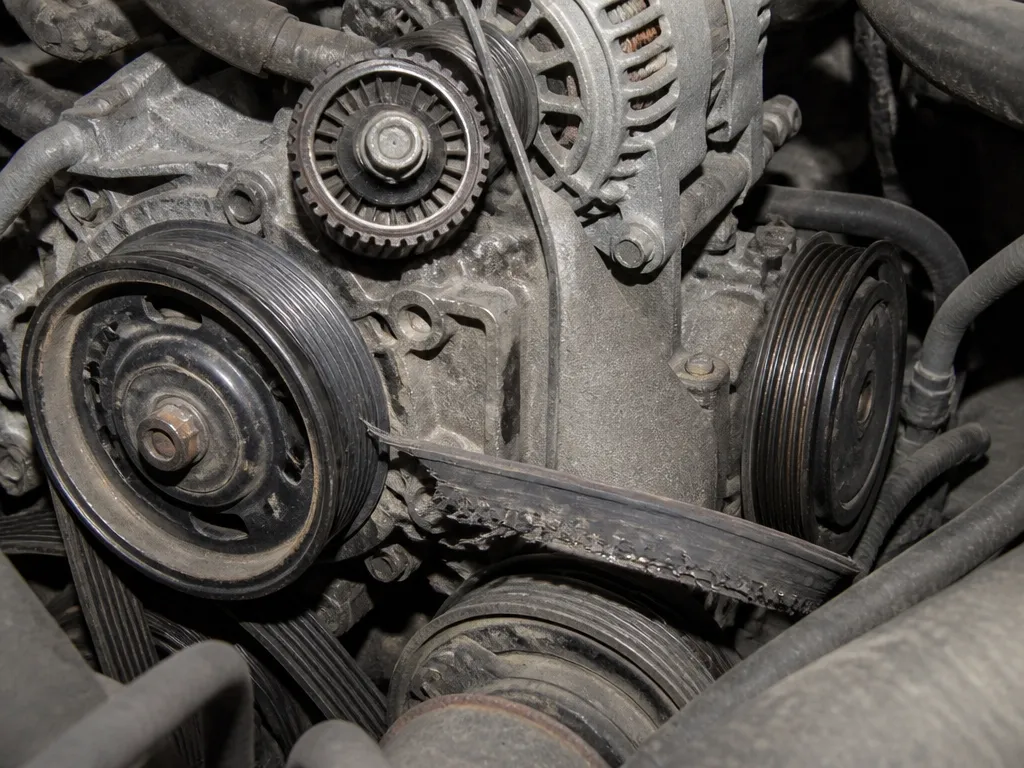
A serpentine belt breaks when the forces in the accessory drive exceed what its rubber and internal cords can withstand. Slip, excessive tension, repeated bending, heat, contamination, misalignment, and pulley problems can weaken the belt until it frays or separates.
These problems can overlap. For example, a misaligned pulley may make the belt rub against an edge, while inadequate tension allows slip and adds heat. Once the belt begins shedding material or losing ribs, continued operation can make the damage worse.
How The Belt Works: Friction, Pulleys, And Tension Forces
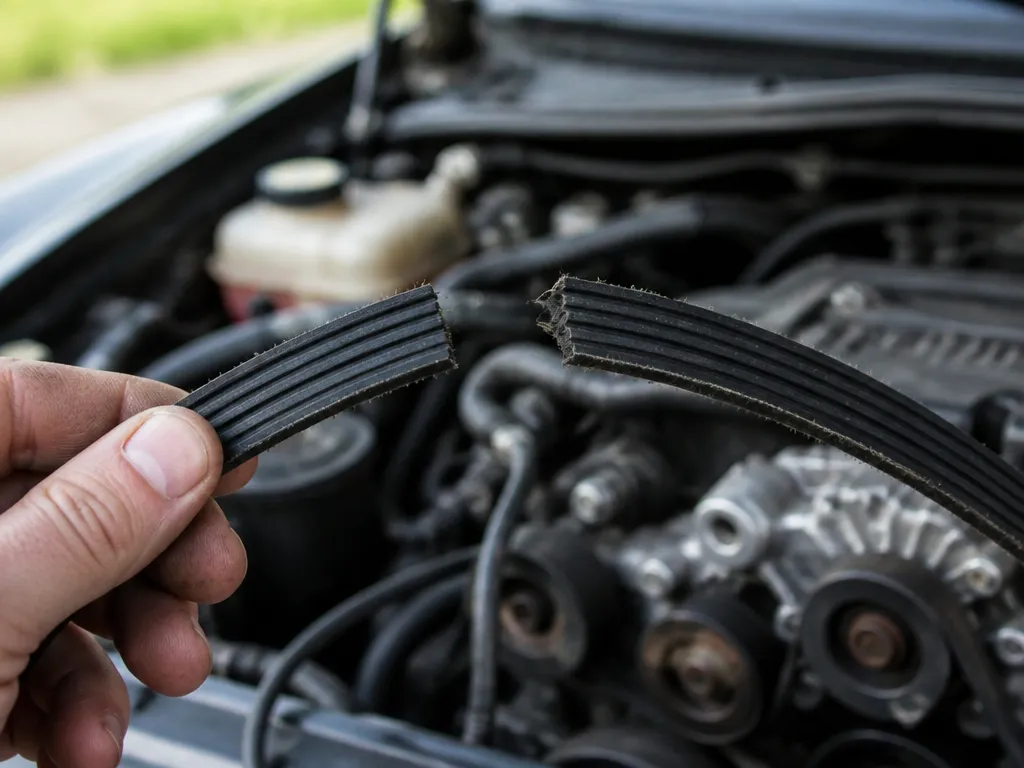
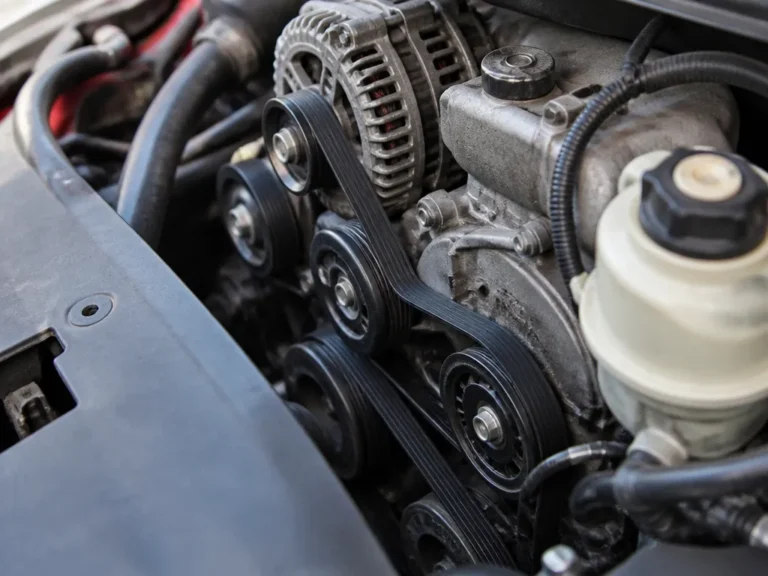
A serpentine belt transfers power through contact between its ribs and the pulley grooves. The belt must also bend smoothly around each pulley and remain under suitable tension. If it slips, walks sideways, or encounters abnormal resistance, the belt can wear more quickly.
Practical takeaway for diagnosis: inspect for two broad patterns: signs of slip, such as glazing or squeal, and signs of tracking or bending trouble, such as one-sided wear, fraying, or a belt that walks toward a pulley edge. The belt may be the visible casualty rather than the original fault.
What Variables Increase Belt Breakage Risk And By How Much
The amount by which any one factor increases breakage risk depends on the vehicle and the condition of the entire drive. There is no reliable universal percentage, temperature limit, tension figure, or service-life reduction to apply. Use the visible wear pattern, contamination evidence, accessory behavior, and the vehicle’s documented service information together.
Which Maintenance Check Leads To The Next Decision
Inspect the belt and the components around it before deciding whether to monitor it, replace it, or investigate a drive-system fault. A replacement belt is unlikely to last if the condition that damaged the old one remains.
What To Inspect First When You Suspect A Cause
If the belt has one-sided edge wear or rides off-center, inspect the routing, pulley alignment, brackets, and tensioner first. If it is glazed or damaged near one particular pulley, inspect that pulley and the accessory it drives for roughness or excessive resistance. If contamination is present, find and repair the leak before fitting another belt.
Common Causes Of Breakage: What Usually Goes Wrong
A belt can break when the accessory drive causes it to slip, mis-track, overheat, or flex against a weakened section. The belt may be the first part that visibly fails, even when a pulley, tensioner, accessory, or fluid leak started the problem.
Wear patterns can help narrow the diagnosis. One-sided wear suggests tracking or alignment trouble, contamination suggests a leak or loss of traction, widespread cracking suggests deterioration, and localized damage may point toward a particular pulley or accessory. These clues are not substitutes for checking the complete drive.
Failure Outcomes, Costs, And Engine Damage Risk
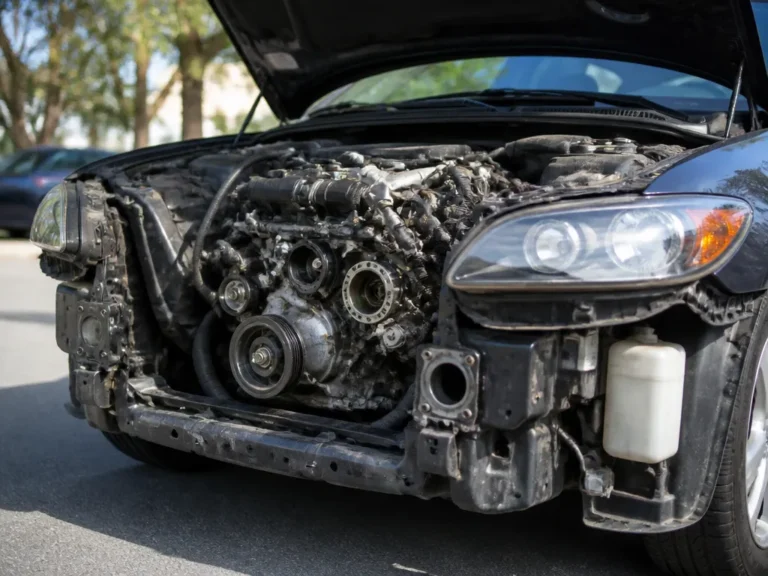
When the serpentine belt breaks, every accessory driven by that belt stops receiving power. Depending on the vehicle, that may affect the alternator, coolant pump, power steering, air conditioning, or other components. The engine may continue running briefly, but continuing to drive can create safety or overheating risks.
| What fails when the belt breaks | What you may notice right away | Why it matters for damage | What to check after the break |
|---|---|---|---|
| Alternator drive | Battery warning, loss of charging, or dimming lights | The vehicle may lose electrical power and stop running | Inspect the alternator pulley, belt-path debris, and charging system |
| Coolant pump drive, on vehicles where the pump uses this belt | Rising temperature or an overheating warning | Continued overheating can cause serious engine damage | Verify the pump and pulley condition, coolant level, and possible leaks |
| Power steering, if driven by the belt | Heavier or less predictable steering | Steering control can become more difficult | Check the power-steering pump and pulley for seizure or wobble |
| A/C compressor, if driven by the belt | A/C stops operating | Loss of A/C is usually not destructive by itself, but it confirms that belt drive has been lost | Check the compressor pulley and belt path for roughness or seized drag |
After a belt breaks, do not assume the belt itself was the only problem. Inspect the pulleys, tensioner, accessory bearings, routing, and belt path before installing another belt. A stuck idler, damaged pulley, seized accessory, or fluid leak can cause the replacement to fail as well.
Inspection Priorities That Prevent The Second Failure
With the engine off and cool, inspect accessible pulleys for rough bearings, seizure, wobble, sharp edges, or signs of rubbing. Look for oil or coolant around the belt route and remove loose belt fragments from the engine bay and pulley grooves.
Cost And Time Drivers You Can Control
Repair time and cost depend on whether the belt is the only failed part and how accessible the drive is. A failed tensioner, idler, pulley, accessory, or fluid leak can require additional diagnosis and repair. If the engine overheated after the belt broke, further checks may be needed before the vehicle is returned to service.
Replace the belt only after you have checked or repaired the condition that caused the slipping, tracking problem, overheating, or material loss.
Do not continue driving after a belt break merely to reach home. If the belt drives the coolant pump, the engine may overheat. If it drives the alternator, the vehicle may lose charging power. Loss of power steering can also affect vehicle control, depending on the design.
Preventing Repeat Failure After Replacement
Confirm the routing, ensure every rib is seated in its matching groove, and check that the tensioner moves as specified for the vehicle. Recheck pulley smoothness, alignment, and the belt’s tracking after any related repair.
Edge Cases That Cause Confusing Or Misleading Diagnoses
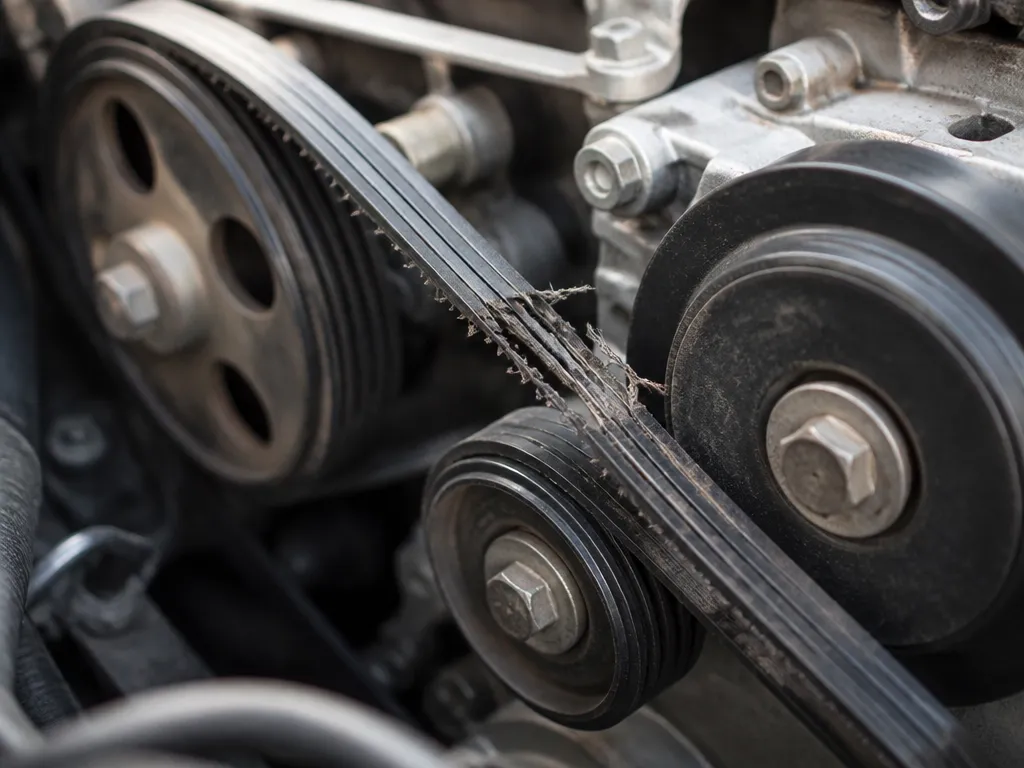
A belt can look intact while the problem lies in a pulley, routing path, tensioner, or contamination. A visual check should therefore cover the entire drive rather than the belt surface alone.
Quick Summary
A serpentine belt can break when slip, heat, contamination, misalignment, excessive resistance, repeated bending, or deterioration weakens it until the rubber and internal cords separate. Replacing the belt alone may not solve the problem.
Your next action should be a cold-engine inspection of the belt, its routing, the tensioner, and every accessible pulley. If the belt is damaged or contaminated, treat the repair as a drive-system diagnosis rather than a belt-only replacement.
Frequently Asked Questions
How Much Does A Serpentine-belt Repair Usually Cost?
There is no reliable single price for this repair. The bill depends on whether the belt is the only failed part, how accessible it is, and whether the tensioner, idler pulley, accessory, or another component also needs attention. A fixed figure would not apply to every vehicle or repair.
Ask for an itemized estimate separating the belt, labor, diagnosis, and any pulley or tensioner work. A quote for only the belt may not solve the problem if another component caused the damage.
Can I Replace A Serpentine Belt Myself?
A capable home mechanic may be able to replace the belt when the routing diagram, belt application, and tensioner design are clear. The important checks are correct routing, full rib engagement, suitable tension, pulley alignment, and free pulley movement.
Work with the engine switched off and cooled, and keep hands and clothing away from moving parts. Do not rely on memory for routing. If the old belt has shredded, compare the actual path with the vehicle’s routing diagram before fitting anything.
What Should A Repair Shop Prove Before I Approve The Repair?
Ask the shop to identify the damaged belt area and explain the suspected cause. A useful inspection should cover belt tracking, pulley alignment, tensioner movement, idler and accessory bearings, routing, and signs of oil or coolant contamination.
Request the recommended repair in writing, including which components were tested and which will be replaced. If the proposal includes only a new belt after severe edge wear, shredding, or a quick repeat failure, ask how the other possible causes were ruled out.
Does A Serpentine-belt Problem Qualify For A Parts Warranty?
Warranty coverage depends on the belt brand, seller, vehicle warranty, and terms of the repair. A defective part, labor, and damage caused by a seized pulley may be treated differently. There is no universal coverage rule.
Keep the receipt, part number, installation date, and repair invoice. If the belt fails again, those records can help determine whether the part failed or an unresolved pulley, tensioner, alignment, or contamination problem caused the repeat damage.
What Information Should I Collect Before Getting A Quote?
Record the vehicle’s year, make, model, engine, mileage, and whether it uses one belt or more than one. Take clear photographs with the engine off, including the visible belt path, missing ribs, frayed edges, tensioner position, and deposits near the pulleys.
Write down when the noise or visible damage began, whether the belt was recently replaced, and whether any accessory stopped working. This information can help the technician distinguish a belt-only repair from a drive-system diagnosis and reduce the risk of ordering the wrong belt.
How Can I Verify That The Replacement Belt Is The Correct One?
Check the part number against the vehicle application. Compare the replacement with the removed belt for rib count, length, width, and profile, while recognizing that the old belt may already be stretched or damaged. Physical fit alone does not prove that the belt is correct.
After installation, inspect the belt with the engine off. Every rib should sit fully inside its matching groove, the belt should follow the specified route, and it should track centrally rather than walking toward an edge. Stop and have the fit checked if anything is uncertain.