
Fix Drive Belt Squealing When Cold With Fast Tests And Parts
If a belt squeals on a cold start and quiets as the engine warms, belt slip is one possible explanation. Common suspects include a worn or contaminated belt, inadequate tension, a weak tensioner, pulley misalignment, or a pulley bearing that adds drag. A noise that continues after warm-up, grows louder under accessory load, or comes with grinding, wobbling, or belt damage needs a broader inspection.
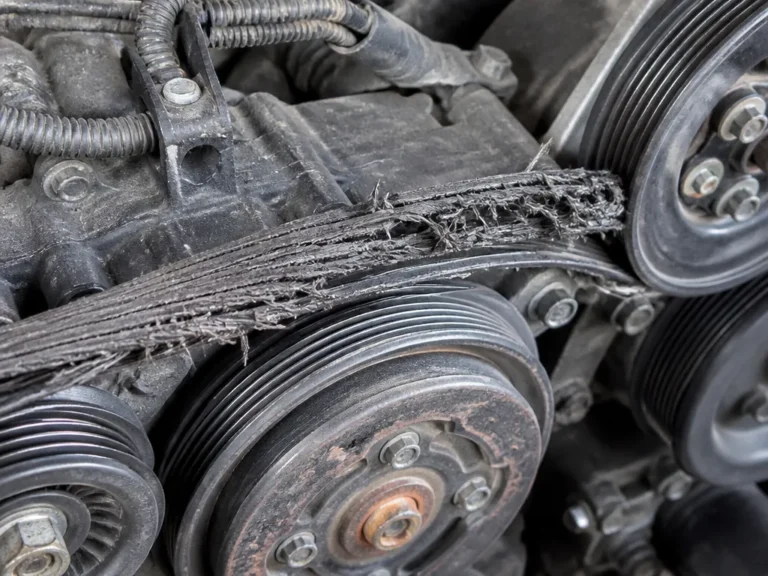
Begin with the engine off and the components cool. Keep hands, clothing, and tools away from belts and pulleys whenever the engine is running. Inspect the belt for glazing, cracks, fraying, separation, contamination, or missing ribs. Watch for uneven tracking or pulley wobble. If you smell burning rubber, see a damaged belt, or hear grinding or rattling, stop running the engine and arrange an inspection.
What Is Cold-start Belt Squeal?
Do not continue convenience tests if you smell burning rubber, see a separated or frayed belt, or observe severe belt flutter or pulley wobble. Confirm the pattern safely, then diagnose the system with the engine off wherever possible.
What Mechanical Causes Produce It?
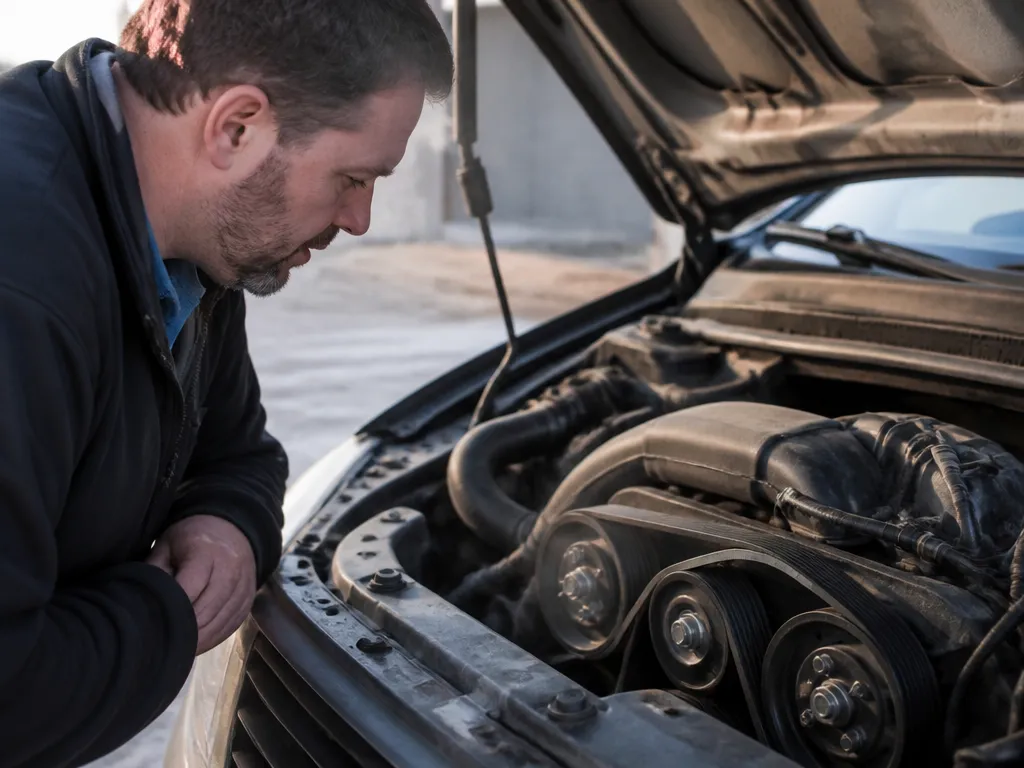
Cold-start squeal can result from lost belt grip, inadequate tension, poor pulley alignment, or extra resistance in a pulley or accessory. The sound alone cannot distinguish those causes, so combine it with belt condition, tracking, and pulley checks.
Cold conditions can expose a marginal belt or accessory drive because belt grip, material flexibility, and component movement change with temperature. That pattern is a clue to inspect the system, not proof that cold weather alone caused the fault.
Top Suspects And Distinguishing Sounds
Use sound, belt condition, and movement together. No single symptom reliably identifies the failed component.
How Should You Diagnose It Starting From A Cold Engine?
Use the same cold-start conditions that normally produce the noise, but keep the inspection hands-off whenever the engine is running.
What Repair Options Match Each Identified Cause?
Repair the confirmed fault and then repeat a cold-start check. A belt replacement alone is appropriate only when the belt is damaged and the tensioner, pulleys, routing, and accessories pass inspection.
Diy Vs Professional: When Should You Call A Shop?
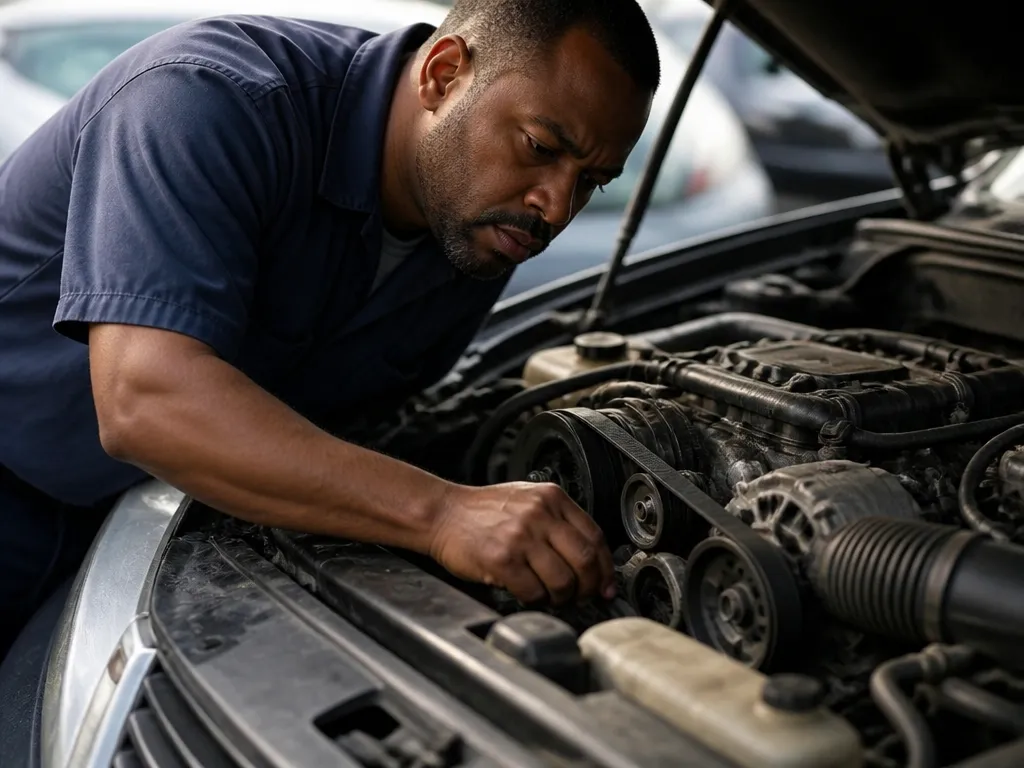
Choose based on access, the belt system’s design, and whether you can verify the diagnosis. An exposed accessory belt with clear routing may be suitable for a careful DIY repair. Tight access, uncertain diagnosis, high spring tension, special tools, or any work involving timing components favors professional service.
| Situation | DIY likelihood | Reason to call a shop |
|---|---|---|
| Accessory drive belt is exposed and routing is visible | Higher | Proceed only if you can inspect the belt, pulleys, tensioner, and final tracking safely |
| Tensioner access requires special tools or risky leverage | Medium | Improvised leverage can damage hardware, brackets, or bearings |
| Work would involve timing belt timing components | Lower | Incorrect timing or tension can cause serious engine damage |
| Belts overlap multiple covers, brackets, or underbody access is needed | Medium to low | Complex access increases the chance of incorrect routing, incomplete fastening, or missed wear |
| Vehicle is still squealing after a belt-only replacement | Low | The remaining fault may involve the tensioner, pulley bearing, alignment, or a binding accessory |
| Warranty matters (vehicle still under coverage) | Case-by-case | Follow the warranty and service requirements before starting work |
If you can reach the accessory belt system safely and verify the repair with cold and warm checks, a belt or accessible pulley repair may be practical. If the job involves timing components, hazardous tension, poor access, or an uncertain diagnosis, use a shop.
What Raises The Risk For Diy
Timing belts and components that require precise alignment are the clearest boundary for many DIY repairs. High-tension systems also require the correct tool and procedure. Complex access makes it easier to miss a seized idler, rough bearing, loose fastener, or incorrect belt path.
Safe Diy Scope And Precautions
Limit DIY work to inspections and repairs you can perform safely and verify afterward. Check belt condition with the engine off, inspect pulley play only where access is safe, and observe a cold start without touching rotating parts. Stop running the engine if the belt is visibly slipping, damaged, or moving abnormally.
What Are Typical Costs And Part Considerations?

Cost depends on the failed component, vehicle access, part specification, and labor time. A belt-only repair is generally a different job from replacing a tensioner, pulley, or binding accessory. Get the failure identified before approving a group of parts.
| Likely fix path | Parts you may replace | What drives cost | DIY vs shop impact |
|---|---|---|---|
| Belt slip from belt wear or glazing | Accessory belt only | Belt specification, routing complexity, and access | Lower when access is straightforward and the rest of the system passes inspection |
| Tensioner not holding grip | Automatic tensioner and possibly related idlers | Tensioner design, required tools, seized fasteners, and access | Labor and access can make this substantially more involved than a belt replacement |
| Worn idler or pulley bearing | Idler pulley or specific accessory pulley | Whether the pulley is separately serviceable or part of an assembly | May require additional disassembly |
| Misalignment or binding accessory | Alignment correction and the damaged or binding hardware | Diagnosis time, disassembly, and the source of the misalignment or drag | Labor can exceed the cost of the individual part |
For OEM versus aftermarket parts, match the belt, tensioner, and pulleys to the vehicle’s required specification. A cheaper part is not a saving if it causes incorrect tracking or repeat labor. Ask for the exact part numbers, the failed-component evidence, and whether related pulleys or the tensioner passed inspection.
Ask for a parts-and-labor estimate tied to a diagnosis. Compare the price of a belt-only repair with the price of a belt and confirmed tensioner, idler, or pulley repair. Be cautious about replacing the entire system without a clear reason for each component.
How Can You Prevent Future Squeals And Maintain The Belt System?
Prevention means catching belt damage, contamination, poor tracking, tensioner wear, and pulley problems before they cause a breakdown. Use the vehicle’s maintenance schedule and service information rather than a universal replacement interval.
Pre-emptive replacement rule: replace a belt that shows glazing, cracking, separation, contamination, or edge damage. Address pulley roughness, bearing play, and misalignment at the same time so the replacement belt is not exposed to the original fault.
Edge Cases And Misdiagnosis Pitfalls?
Cold-start noise can change as engine speed, temperature, and accessory load change. Treat the pattern as a clue and verify it with safe belt, tensioner, pulley, and alignment checks.
Rpm Vs Load: The Quickest Trap
If the noise appears only in a particular engine-speed range, it may be belt slip, but it may also be resonance from a pulley, accessory, or bearing. If it changes when you engage the air conditioning, steering load, or electrical demand, inspect belt grip and the accessory receiving that load.
Fix approach: reproduce the sound only from a safe position. Compare engine-speed changes with accessory-load changes while watching belt tracking without touching the belt. A change under load narrows the search but does not identify the part by itself.
Belt Squeal Vs Bearing Or Pulley Noise
Belt slip is often high-pitched and may fade as conditions stabilize. Bearing or pulley faults are more likely to produce roughness, growling, rattling, or intermittent noise. A belt can look intact even when a pulley bearing is failing.
Fix approach: inspect for belt witness marks, glazing, off-center running, pulley play, and roughness with the engine off. Replace the failed component rather than repeatedly fitting belts without checking the drive system.
Cold-weather And Long-idle Ambiguity
Temperature, moisture, contamination, and extended sitting can change belt grip and make an existing marginal condition more noticeable. That does not prove the belt is defective, so compare the symptom under similar starting conditions where practical.
Fix approach: record whether the noise is becoming more frequent, louder, or more persistent. A worsening pattern calls for diagnosis rather than continued observation alone.
After Replacement: Why The Squeal Still Persists
If the noise continues after a belt replacement, possible causes include inadequate tension, a failing tensioner or idler, misalignment, a rough bearing, contamination, or an accessory that binds under load.
Fix approach: confirm routing and alignment, then inspect tensioner movement, pulley condition, and accessory operation. If the sound remains, stop making belt-only replacements and identify the remaining fault.
Quick Summary
A cold-start squeal that fades as the engine warms is consistent with belt slip, but it can also involve tension, alignment, a pulley bearing, or an accessory. Start with belt condition and routing, then inspect the tensioner and pulleys.
| Decision trigger | What it changes | Figure you already observed |
|---|---|---|
| Squeal fades during warm-up | Prioritize belt condition, tension, routing, and tracking before replacing other parts. | Observe the warm-up pattern |
| Squeal persists after warm-up | Broaden the search to tensioner, pulley bearings, alignment, contamination, and accessory binding. | Compare cold and warm operation |
| Noise changes with accessories or load | Inspect belt grip and the accessory or pulley associated with that load. | Use the observed load pattern |
| Squeal repeats after parts are fully warm | Treat it as an ongoing mechanical fault rather than a cold-only symptom. | Use warm-engine behavior |
Next action: Reproduce the cold start safely, note whether the noise fades after warm-up, then inspect belt wear, routing, tension, tracking, pulley condition, and accessory load response.
Frequently Asked Questions
Can A Cold-start Squeal Mean Something Other Than Belt Slip?
Yes. A tensioner, pulley bearing, misalignment, contamination, or binding accessory can produce a similar sound. Changes when you engage the air conditioning, steering load, or electrical demand can help identify the area that needs inspection, but they do not prove which component has failed.
Localize the sound from a safe position, then compare belt behavior during the cold phase with the behavior after warm-up.
Should I Drive If It Squeals, And What’s The Risk If I Do?
Do not treat a brief squeal as harmless by default. Continued slip can damage the belt, and a failing tensioner, pulley, or accessory can worsen without warning. Avoid driving and arrange an inspection if the noise persists, the belt moves abnormally, you smell burning rubber, see belt dust or damage, or steering or charging behavior changes.
If the belt and accessory drive appear normal and the noise is brief, consult the vehicle’s service guidance and monitor it closely rather than assuming it will resolve itself.
Will Replacing Just The Belt Fix A Cold-only Squeal Every Time?
No. A new belt may not correct inadequate tension, a failing tensioner, pulley roughness, misalignment, contamination, or a binding accessory. Replace the belt alone only after the rest of the drive has been inspected.
Verify the repair with a cold-start check and confirm correct routing, tracking, and tension.
What Should I Ask A Shop To Do If I Bring The Car In?
Ask for a diagnosis that connects the symptom to a specific component. The inspection should cover belt condition and routing, tensioner operation, pulley and bearing condition, alignment, contamination, and accessory response under load.
If the shop recommends several parts, ask what was found on each part and what symptom supports replacing it. Confirm that the belt path will be checked after reassembly.
If I Do Nothing, How Will This Usually Change Over Time?
The noise may remain limited to cold starts, or it may become more frequent, louder, or present under accessory load as the belt, tensioner, pulley, or accessory deteriorates. A damaged belt or failing bearing can also leave the vehicle without normal accessory operation.
Track whether the sound changes between cold and warm starts, whether it responds to accessory load, and whether belt dust, odor, wobble, or visible damage appears.
How Can I Verify A Parts Claim Myself Before Paying?
Ask to see the evidence: belt damage, abnormal tensioner movement, pulley roughness or play, misalignment, contamination, or accessory drag. You can inspect visible belt tracking and condition with the engine off, and compare cold and warm behavior from a safe position.
If a pulley or belt is inaccessible, ask what procedure was used, which component failed the inspection, and why the proposed replacement addresses the observed symptom.