What Causes Serpentine Belt Squeals When Cold And How To Fix Them
A serpentine belt that squeals only during a cold start is often slipping briefly because the belt, pulleys, or tensioner do not yet have their normal grip and movement. The same sound can also come from an idler pulley, alternator, water pump, or another belt-driven accessory.
A brief squeal that disappears as the engine warms is less concerning than noise that persists, returns on every start, grows louder, or appears under accessory load. Treat a worsening pattern as a reason to inspect the belt drive rather than assuming cold weather is the only cause.
What Is The Serpentine Belt And What Does It Do?
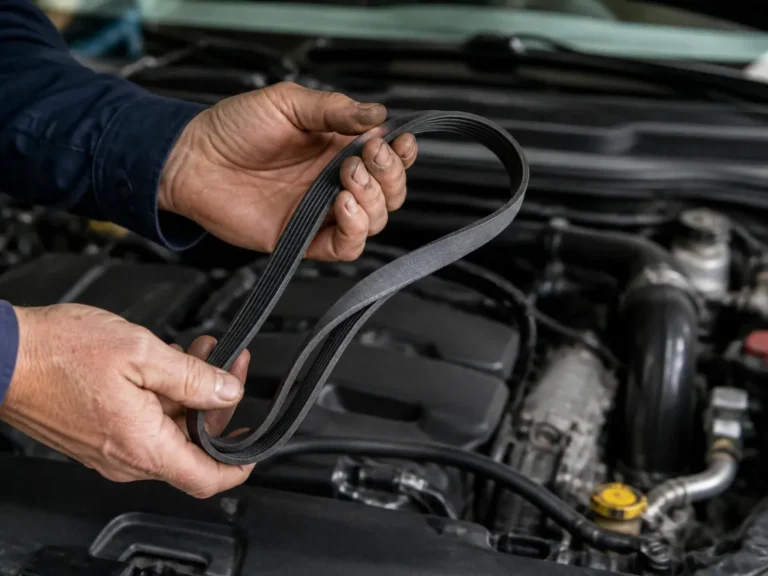
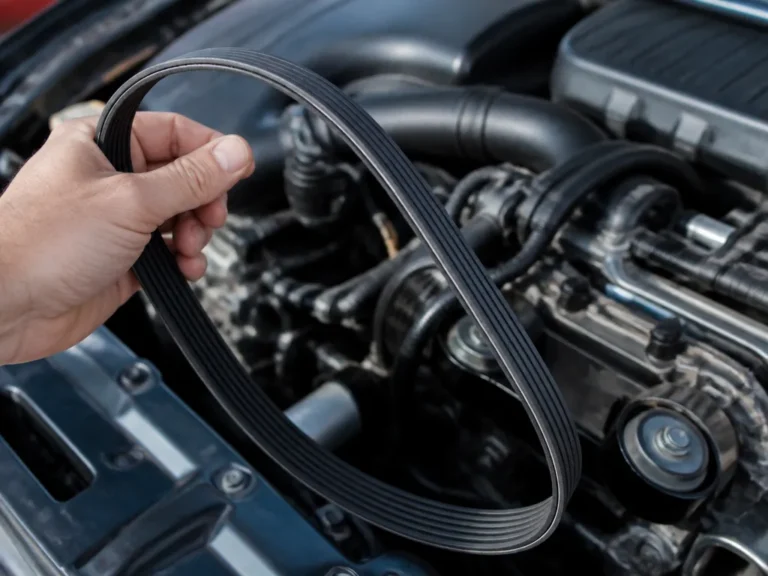
A serpentine belt is a continuous drive belt that transfers crankshaft rotation to several engine accessories through a specific routing path. Depending on the vehicle, those accessories may include the alternator, air-conditioning compressor, power-steering pump, and water pump.
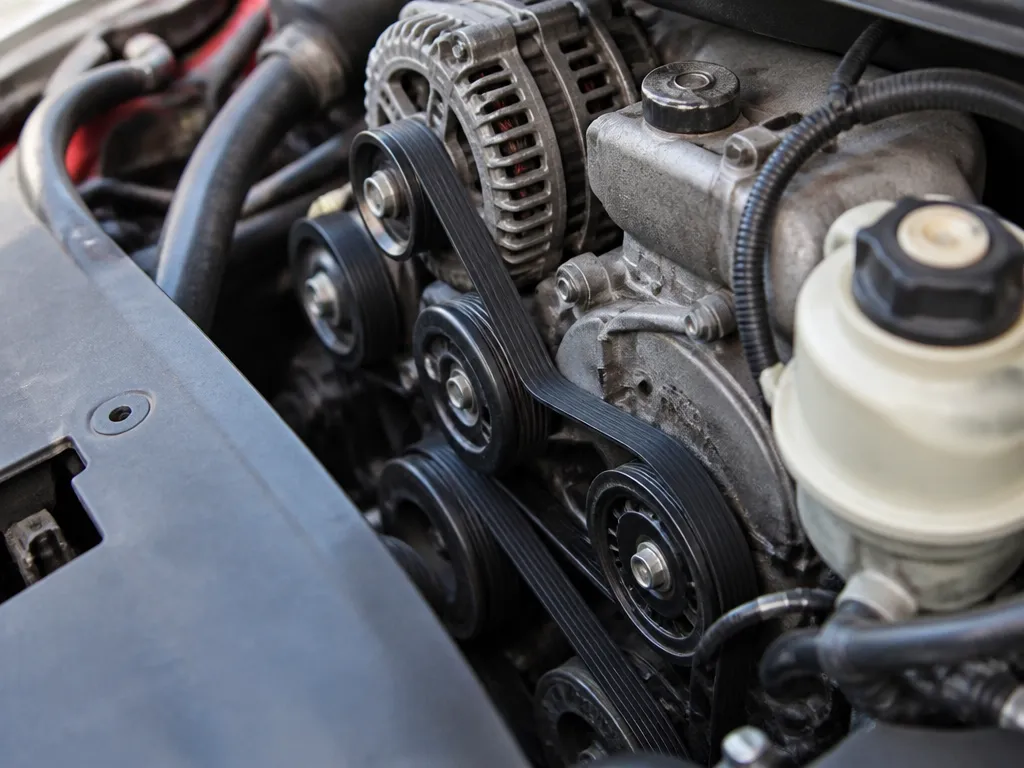
The belt runs around several pulleys. Belt tension and pulley contact keep the accessories turning as the engine runs. The exact layout varies by engine, so the vehicle’s routing diagram and service information matter when inspecting or replacing the belt.
What It Drives Under The Hood
The exact set of components depends on the vehicle, but common belt-driven components include:
Some vehicles use electric power steering or a different water-pump arrangement, so not every serpentine belt drives all of these components.
Key Parts You’ll Hear About During Diagnosis
The tensioner applies force to the belt and compensates for normal belt movement and wear. An idler pulley guides the belt or increases its wrap around another pulley. It may rotate on its own bearing. Routing is the exact path the belt follows, and an incorrect route can change the load on the accessories and prevent the belt from seating correctly.
If the belt slips, an accessory may not turn at the required speed. Depending on the vehicle and the affected component, you may notice charging problems, reduced cooling, heavier steering, or loss of air conditioning.
Why Does It Squeal When The Engine Is Cold?
Cold temperatures can change belt flexibility, surface grip, and the way the tensioner and pulley bearings move. A belt that slips briefly across a pulley can produce a high-pitched squeal. As the belt and pulleys warm, their contact conditions may change and the noise may fade.
A belt with a hardened, glazed, contaminated, or worn surface is more likely to slip when cold. Moisture or condensation can also affect the belt-to-pulley interface temporarily. These conditions do not prove that the belt is the only problem, but they make belt slip a reasonable starting point when the noise is limited to cold starts.
The tensioner can also contribute. A weak, damaged, or sluggish tensioner may not maintain consistent belt contact, especially during the first moments after starting. A tensioner pulley with a rough bearing can create its own squeal or add drag that makes belt slip more likely.
What Cold-squeal Is Often Confused With
A sound from the front of the engine may come from an idler pulley, alternator bearing, water-pump bearing, air-conditioning compressor, or another belt-driven component. Bearing noise may change as the component warms, so a sound that fades during warm-up is not automatically harmless.
Cold-start timing is useful evidence, not a diagnosis by itself. Confirm whether the noise follows belt slip, belt tracking, accessory load, or a particular pulley.
What Factors Drive Cold-squeal Intensity And Ranges
Cold-start squeal can vary with belt condition, pulley condition, tensioner performance, moisture, temperature, and accessory load. A change from one morning to the next does not necessarily mean a new failure, but a trend toward louder or longer noise deserves attention.
A squeal that disappears once the belt drive warms points more toward a temperature-sensitive grip or tension problem. A squeal that remains, returns under ordinary operating conditions, or becomes easier to trigger points toward wear, contamination, misalignment, or a failing bearing.
How Do You Diagnose A Cold-start Belt Squeal Step By Step

Begin by reproducing the noise safely, then determine whether it comes from belt slip or from a pulley or accessory. Do not place hands, tools, clothing, or hair near a running engine and its rotating belt drive.
What Fixes Work Best And What Are Their Trade-offs
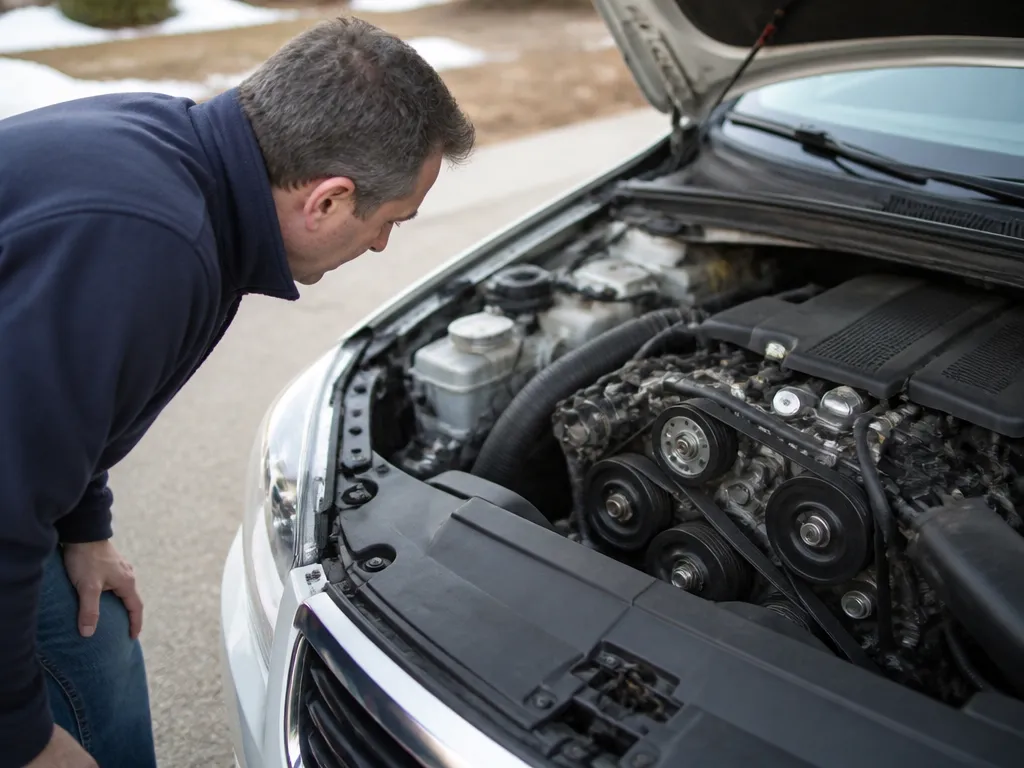
The appropriate repair restores proper belt condition, tension, alignment, and pulley operation. A noise-reducing product may hide the symptom without correcting the cause, so the repair should follow the inspection results.
Belt Replacement (And What Else Should Be Replaced With It)
Symptom pattern: The belt squeals when cold and shows glazing, cracking, fraying, missing ribs, contamination, or other visible damage.
Fix: Replace the belt with the correct part and inspect the complete belt path. Verify the routing before starting the engine.
Trade-off: A new belt will not solve a rough pulley, misalignment, fluid leak, or weak tensioner. If those conditions remain, the replacement belt may squeal or wear prematurely.
Tensioner Or Pulley Replacement (Often The “Real Fix” When Squeal Persists)
Symptom pattern: The noise persists after warm-up, returns frequently, changes with load, or occurs with abnormal belt tracking. Inspection finds a weak or damaged tensioner, pulley wobble, rough rotation, or bearing noise.
Fix: Replace the failed tensioner, idler, or accessory component according to the vehicle’s service procedure. Correct any alignment or contamination problem at the same time.
Trade-off: This can cost more than replacing the belt alone, but installing a belt on a defective tensioner or pulley often leaves the original problem in place. The correct repair may require replacing an assembly rather than servicing an individual internal part.
Belt Dressing And Other Temporary Fixes (What To Use, And When To Stop)
Belt dressing and similar products may alter the sound temporarily, but they do not repair a worn belt, damaged pulley, weak tensioner, misalignment, or fluid contamination. Some products can also affect belt material or pulley grip. Do not use them as a substitute for diagnosis, and follow the vehicle and product manufacturer’s instructions.
If the squeal is strong, persistent, worsening, or accompanied by belt dust, glazing, abnormal tracking, or pulley play, stop relying on temporary treatments and arrange a proper inspection.
What Risks, Costs, And Failure Modes Come With Not Addressing It

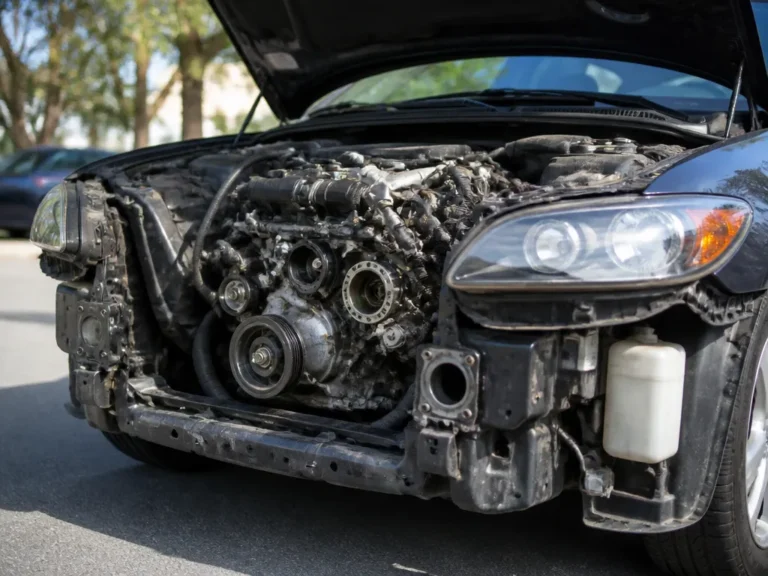
Ignoring a recurring serpentine-belt squeal can allow slip and wear to progress. If the belt comes off or breaks, the vehicle may lose one or more belt-driven accessories. The consequences depend on the engine design and which components share that belt.
| What happens if you ignore it | Likely failure mode | What you may notice first | Why it can get expensive |
|---|---|---|---|
| Continued cold slip | Glazing, edge wear, rib damage, or accelerated pulley wear | Squeal becomes more frequent, louder, or easier to trigger | The belt problem may expand into tensioner or pulley repair |
| Accessory drive instability | Inconsistent accessory speed or belt tracking | Charging symptoms, changing belt noise, or visible belt movement | Electrical or mechanical symptoms can lead to incorrect parts replacement |
| Loss of cooling or steering assist on applicable vehicles | A belt-driven water pump or hydraulic steering pump may stop operating correctly | Overheating signs, heavier steering, or a change in steering assistance | Continued driving can create a breakdown or additional damage |
| Complete belt failure | The belt breaks, shreds, or comes off the pulley path | Sudden loss of accessory function or a loose belt in the engine bay | The vehicle may require towing and a full belt-drive inspection |
The cost depends on the vehicle, the failed component, parts availability, and labor access. A belt-only repair is generally a different job from replacing a tensioner, idler, or accessory, and exact pricing must be confirmed for the specific vehicle.
Driving Safety And When To Stop
If the squeal is accompanied by a charging warning, overheating, loss of steering assistance, smoke, a burning-rubber smell, severe belt movement, or a rapidly changing noise, stop driving when safe and arrange an inspection or tow. These signs may indicate that the belt is no longer operating reliably.
What Edge Cases Could Mislead You In Diagnosing Cold Squeal
Cold-start noises can be difficult to identify because several components operate at the same time. The sound’s location, timing, and response to load provide clues, but no single clue proves which part has failed.
Noisy Components Masquerading As The Belt
An alternator bearing, idler, water-pump bearing, air-conditioning compressor, or another accessory can squeal or squeak during startup. A bearing may become quieter as it warms, so warm-up quieting does not rule out a mechanical problem.
If the belt shows no obvious damage or abnormal movement but the noise consistently seems to come from one pulley, have that component checked. Avoid removing or loosening the belt with the engine running.
Squeal Appears Only Under Certain Loads Or Temperatures
If the sound occurs only when the air conditioner, electrical system, or another belt-driven accessory places extra demand on the belt, the cause may be marginal tension, belt wear, or a pulley problem. On vehicles with hydraulic power steering, steering load can also affect belt demand. Do not force the steering against its stop to reproduce a noise.
A squeal that disappears when warm can still indicate a developing fault. If it begins earlier, lasts longer, or appears in milder conditions than before, inspect the belt drive again.
Terrain, Climate, And Vehicle-specific Quirks
Cold damp weather, short trips, hills, and increased accessory use can change the belt load and the sound you hear. Those conditions may expose a marginal belt or tensioner without being the original cause.
Routing and accessory arrangement vary by vehicle. If the noise repeatedly points to one area of the belt path, treat that location as a targeted inspection point instead of assuming the belt itself is defective.
When To Seek Professional Help
Get professional help if you cannot identify the source safely, the belt tracks abnormally, the belt is damaged, a pulley feels rough or loose, or the noise persists after warm-up. Professional inspection is also appropriate when the belt drives a critical component or when replacement requires a routing or tensioning procedure you do not know.
How Can You Prevent Future Squeals And When To Schedule Maintenance
Prevention means inspecting the belt system before a minor cold-start noise becomes a failure. The correct inspection interval depends on the vehicle, so use the maintenance schedule for the specific engine rather than relying on a universal mileage or time limit.
Decision rule: If the squeal is becoming longer, more frequent, louder, or easier to trigger, stop treating it as a normal cold-weather quirk. Reinspect the belt path and repair the component identified by the diagnosis.
Quick Summary
A serpentine belt that squeals only during a cold start may be slipping because of cold surface conditions, belt wear, inadequate tension, contamination, or pulley problems. A noise that persists after warm-up or worsens over time needs closer diagnosis.
| Condition | What it changes | Figure tied to the decision |
|---|---|---|
| Squeal fades as the engine warms | Prioritize belt condition, belt grip, tensioner operation, and pulley inspection | No universal duration |
| Squeal persists after warm-up | Look for a damaged belt, weak tensioner, misalignment, contamination, or a pulley or bearing fault | Use the vehicle’s warm-up pattern |
| Squeal appears only in cold conditions | Supports a temperature-sensitive grip or tension issue, but does not rule out a bearing problem | Pattern-based |
| Noise changes with accessory load | Supports further inspection of belt tension, belt condition, and belt-driven accessories | Vehicle-dependent |
Next action: Inspect the belt with the engine off, reproduce the noise safely from a distance, and determine whether the evidence points to the belt, tensioner, pulley alignment, or another accessory before replacing parts.
Frequently Asked Questions
How Much Should A Serpentine Belt And Tensioner Repair Cost, And What Drives The Variation?
Exact cost figures are not available as a reliable universal amount. Pricing varies with the vehicle, access to the belt system, parts prices, labor rates, and whether the repair involves only the belt or also the tensioner, idler pulleys, or another accessory.
Ask for an estimate that identifies each proposed part and explains how the diagnosis supports replacing it. Compare the estimate with pricing for the exact vehicle and location rather than using a generic figure.
Can I Keep Driving If The Squeal Is Only On The First Cold Start?
A brief cold-start squeal may not mean immediate belt failure, but it indicates that the belt system deserves inspection. Driving may be possible while you arrange service if there are no warning lights, overheating symptoms, visible belt damage, or loss of accessory function.
Do not continue driving normally if the noise is worsening, persists after warm-up, appears under increasing loads, or is accompanied by charging, cooling, steering, smoke, or burning-rubber symptoms.
What Counts As “Too Much” Cold-squeal Duration, And When Does The Fix Need To Be Scheduled Urgently?
There is no universal duration that applies to every vehicle. The important change is whether the sound is brief and stable or whether it is becoming longer, louder, more frequent, or present after the engine has warmed.
Schedule service promptly when the noise persists after warm-up, the belt shows damage, the belt tracks abnormally, or new symptoms suggest a pulley or accessory problem. Stop driving when safe if charging, overheating, steering, smoke, or severe belt symptoms appear.
Will Belt Dressing Or Temporary Belt Treatments Permanently Solve A Cold Squeal?
No. Such products may change the sound temporarily, but they do not repair a worn belt, weak tensioner, damaged pulley, misalignment, or fluid contamination. They may also affect belt material or grip, depending on the product and application.
Identify the source first and follow the vehicle manufacturer’s service guidance. A damaged or contaminated belt generally needs correction or replacement rather than repeated noise treatment.
How Can I Verify A Claim From A Shop That “The Tensioner Is Bad” Before Paying?
Ask what the technician observed and how it relates to the noise. Useful evidence may include abnormal tensioner movement, belt flutter or tracking, pulley roughness, visible wear, or a cold-start pattern that changes when the tensioner or belt load changes.
Ask whether the belt, idlers, accessory bearings, alignment, and contamination were also checked. If the explanation does not connect the proposed repair to the observed symptoms, consider a second opinion.
When Should I Get Professional Help Instead Of Doing It Myself?
Get professional help when you cannot safely isolate the source, the belt is difficult to access, the belt path is unclear, or inspection finds abnormal tracking, pulley play, bearing noise, contamination, or visible belt damage. Professional service is also the safer choice when the belt drives a critical cooling or steering component.
Move from DIY observation to professional inspection if the noise is progressing, occurs under warmer conditions, continues after warm-up, or is accompanied by charging, overheating, steering, smoke, or burning-rubber symptoms.