Understanding How Does The Emergency Brake Work On Disc Brakes?
On a disc-brake vehicle, the emergency brake is usually the parking-brake system. It applies the rear brakes through a mechanism separate from the service-brake hydraulics, then releases so the wheel can rotate without abnormal drag.
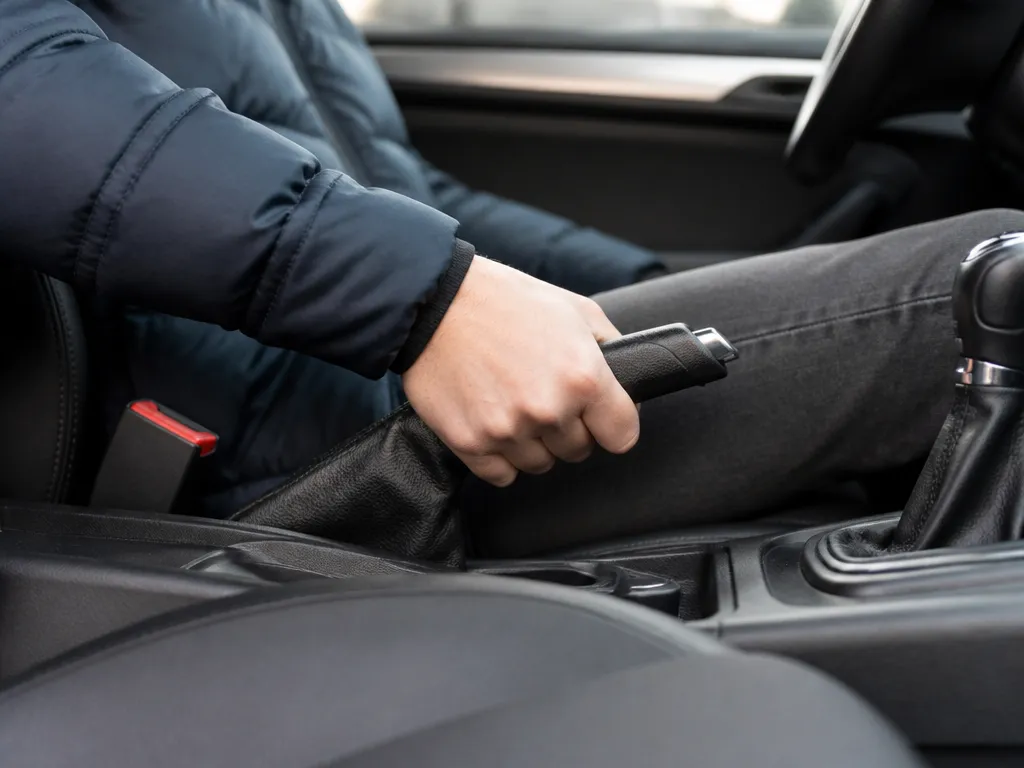
The actuator may be a hand lever and cable or an electric parking-brake motor. If the brake fails to hold, remains partly applied, or produces heat and resistance after release, the parking-brake mechanism needs inspection.
What Is The Emergency Brake In A Disc Brake System?
An emergency brake is a backup means of securing or slowing a vehicle when the normal service-brake system cannot be used. On many vehicles, the same hardware is called the parking brake because its primary purpose is to keep a stationary vehicle from rolling.
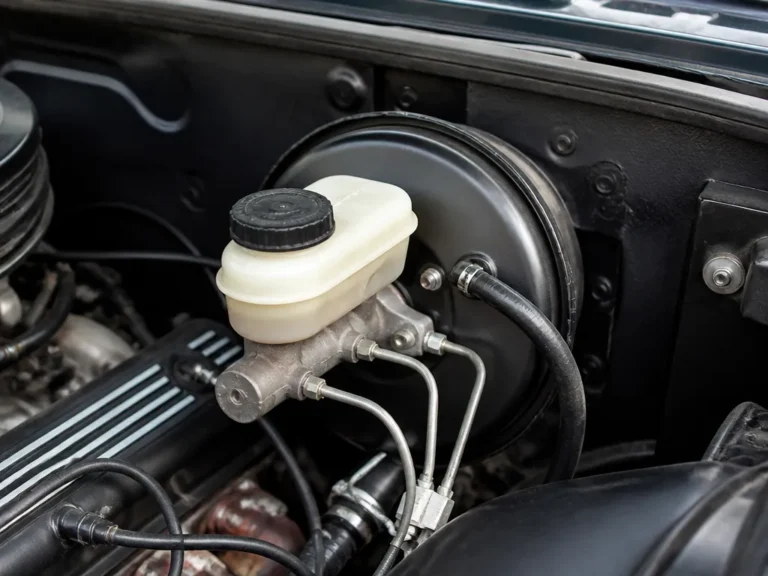
During normal braking, the brake pedal sends hydraulic pressure to the calipers. The calipers push the pads against the rotors. The parking-brake system uses a different actuation path, such as a cable, lever, electric motor, or screw mechanism, to create clamping force at the rear brakes.
Do not treat the parking brake as a substitute for normal braking while driving. It is mainly designed to hold the vehicle and provide backup control, not to absorb repeated high-energy stops. If the service brakes fail, apply the parking brake gradually and keep the vehicle under control while moving toward a safe stopping place.
Parking Brake Vs Emergency Braking Distinction
“Parking brake” describes the everyday function: holding a stopped vehicle in place. “Emergency braking” describes using that system as a backup when the service brakes are impaired. The hardware may be the same, but the operating conditions are different.
Common Terminology And Scope
Depending on the vehicle and region, the system may be called a parking brake, handbrake, emergency brake, or EPB, meaning electronic parking brake. The exact design matters. Some systems act directly through the rear calipers, while others use a separate drum mechanism inside the rear rotor.
Which Components Interact During Emergency Brake Activation In A Disc Brake?
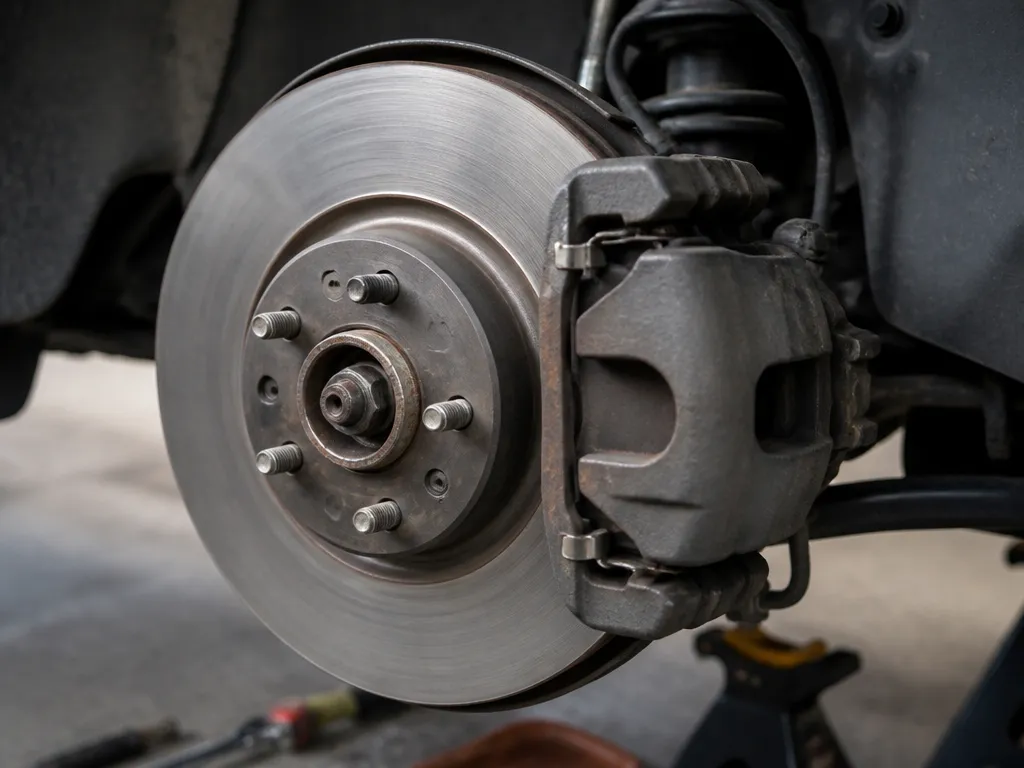
The parking-brake system uses several parts to create holding force at the wheel.
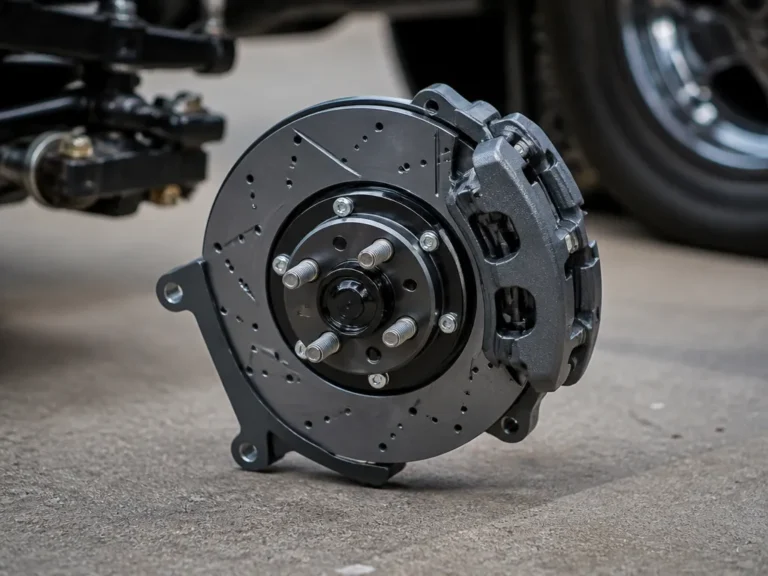
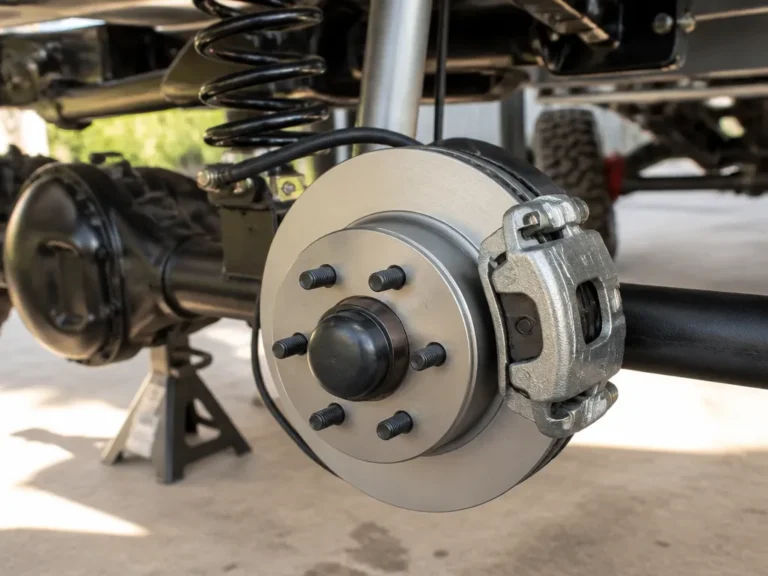
The rotor is the disc that turns with the wheel. The caliper holds the pads and provides the structure that generates clamping force. The pads press against the rotor and convert that force into braking torque.
In a cable-operated system, a cable transmits movement from the hand lever or foot pedal to a lever at the rear brake. In an electronic system, an EPB actuator uses an electric motor and gearing to move the caliper mechanism. Some vehicles use a separate drum and shoes inside the rear rotor instead of using the disc caliper for parking-brake operation.
The service brake and parking brake can therefore use the same rotor and pads while relying on different ways to move them. The service brake uses hydraulic pressure. The parking brake uses mechanical leverage or an electric actuator.
| Component | Role during emergency brake activation |
|---|---|
| Rotor | Friction surface that is clamped and slowed |
| Caliper | Holds the pads and provides the structure for clamping force |
| Pads | Convert clamping force into braking torque |
| Cable or EPB actuator | Moves the parking-brake mechanism at the rear brake |
The operating chain is straightforward: the driver moves a lever, pedal, or switch; that input moves the parking-brake mechanism; the mechanism presses the pads or shoes against the rotating assembly; and friction resists wheel rotation. A fault anywhere in that chain can cause weak holding or incomplete release.
How Does The Emergency Brake Mechanism Engage The Rotor And Caliper?

The parking brake creates force through a mechanism separate from the service-brake pedal circuit. Its exact operation depends on whether the vehicle uses a cable, an electronic actuator, or a separate drum mechanism.
Both designs need enough travel to apply firmly and enough return movement to release. A control can feel normal even when a cable, caliper, actuator, or internal screw is not completing its movement.
What Is The Activation Sequence From Input To Braking Effect?
My rule for safe operation: treat persistent wheel drag after releasing the parking brake as a malfunction, not as a condition that will correct itself with driving.
Which Variables Govern Emergency Brake Performance And What Values Matter?
Parking-brake performance depends on the force applied at the friction surface, the amount of mechanical travel available, the condition of the pads and rotor, and the freedom of the cable, caliper, or actuator.
There is no universal clamp-force, travel, pad-thickness, rotor-size, or temperature threshold for every disc-brake system. Use the vehicle maker’s specifications for those values. If the brake has excessive lever travel, will not hold, or drags after release, compare the measured condition with the vehicle’s service requirements rather than relying on a generic adjustment.
What Are Common Failure Modes, Costs, And Safety Risks?

Parking-brake faults usually fall into two dangerous categories: the brake fails to hold, or it stays partly applied. The first can allow the vehicle to roll. The second can create heat, wear, and loss of braking performance.
| Failure mode | What you notice | Why it happens | Safety risk | Typical cost driver |
|---|---|---|---|---|
| Sticking caliper or seized brake hardware | The brake does not release fully, or a wheel develops a hot or burning smell | Corrosion, restricted caliper movement, or a parking-brake mechanism that does not return | Drag and possible loss of control from uneven braking | Inspection, seized hardware, caliper repair, or replacement labor |
| Cable damage or incorrect adjustment | Weak holding, uneven application, excessive lever travel, or visible cable damage | Corrosion, fraying, kinks, stretching, or incorrect tension | The vehicle can roll if clamping force is insufficient | Cable replacement and adjustment |
| EPB actuator, wiring, or calibration fault | Warning light, intermittent operation, or inconsistent release | Actuator, wiring, sensor, control-module, or calibration problems | The brake may not hold or may bind | Electrical diagnosis, actuator testing, or calibration |
| Pad or rotor condition causing poor contact | Reduced holding ability, grinding, chatter, or uneven wear marks | Worn or contaminated pads, an uneven rotor, or incorrect clearance | Lower holding power and possible vibration | Pad, rotor, or related brake service |
Treat a brake that will not hold as an immediate parking safety problem. Treat a brake that will not release as a driving and component-damage risk. EPB warning lights also deserve prompt attention because the fault may prevent application or leave the brake partly applied.
How Is The Emergency Brake Disengaged And How Can You Verify Release?
Disengage the parking brake by reversing its apply command, then confirm that the control, indicator, and wheel behavior all agree. A control that says “off” does not prove that the mechanism has fully returned.
If release is incomplete, do not “burn it off” by driving. Stop in a safe place, confirm the control position, and arrange an inspection for mechanical binding or EPB faults before continuing.
What Edge Cases Can Affect Operation And How Should You Troubleshoot Them?
Some conditions make the parking brake appear to work while reducing its holding ability or preventing complete release. Separate command problems from mechanical binding, because they require different tests.
Maintenance And Inspection For Reliable Emergency Brake Function
Use a consistent inspection routine. Check the control and indicator, confirm application and release, and then inspect the cable, actuator, caliper, pads, and rotor when symptoms point to a mechanical problem.
| Check item | What you’re looking for | How to inspect | Typical interval |
|---|---|---|---|
| Control indicator behavior | Consistent applied and released indications without unexpected warnings | Operate the brake and watch the dashboard indicator | Whenever you use it and during service visits |
| Apply and release feel | Firm, repeatable engagement and complete release without drag | Apply and release the brake, then check for abnormal resistance | Periodically and whenever the feel changes |
| Cable tension and routing, if fitted | No binding, fraying, kinks, corrosion, or unexplained slack | Inspect the accessible cable path and connections | During brake service and after symptoms appear |
| Caliper hardware freedom | No corrosion, sticking, or partial engagement | Inspect moving hardware and signs of uneven pad contact | During brake service and when drag occurs |
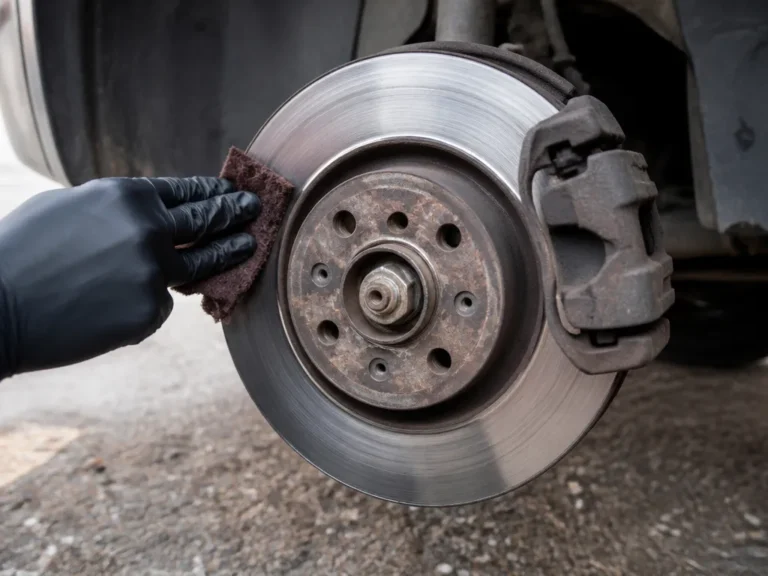
| Pad and rotor condition | Even contact, no serious glazing, contamination, or abnormal wear | Inspect the friction surfaces during brake service | At brake service and whenever holding or release changes |
| Electronic parking-brake diagnostics, if fitted | No stored actuator, sensor, wiring, or calibration faults | Check the system with suitable diagnostic equipment | When a warning appears or service information calls for it |
Start with the indicator and control operation. Then check application and release, followed by the cable or actuator and the caliper hardware. If the brake drags or a warning returns, stop routine use and arrange diagnosis.
Lubrication, Tension, And Clearance Checks
On cable systems, inspect for kinks, corrosion, damaged sheathing, and incorrect tension. On calipers, check that the moving hardware is free and that contamination is not restricting movement. Keep lubricants away from pads, rotors, shoes, and other friction surfaces.
Diagnostics, Warning Lights, And Safe Testing Practices
Treat an EPB warning as an unknown system state until it has been diagnosed. Use proper wheel chocks and vehicle supports for any inspection. Do not repeatedly apply the brake while investigating suspected binding, because additional heat can worsen the fault.
Quick Summary
An emergency brake on a disc-brake vehicle uses a mechanical or electronic actuator to apply the rear brake independently of the normal hydraulic service-brake circuit.
Your next action should be a controlled release check: disengage the brake, confirm the dashboard status, and verify that the vehicle moves without abnormal drag. If a warning or physical symptom remains, stop driving and arrange a brake inspection.
Frequently Asked Questions
Can A Vehicle With Rear Disc Brakes Still Use A Separate Drum-style Parking Brake?
Yes. Rear disc brakes do not guarantee that the parking brake operates inside the disc caliper. Some vehicles use a small drum mechanism inside the rear rotor, while others use a caliper-mounted mechanical or electronic actuator.
Check the vehicle’s service information before ordering parts or assuming that a caliper replacement will correct a parking-brake fault.
Can I Drive Normally After The Parking-brake Warning Light Goes Out?
Not necessarily. The warning light reflects what the vehicle’s switch or control module detects. It does not always prove that a cable has released, an actuator has returned fully, or a caliper is free.
After release, watch for a hot wheel, burning smell, pulling, unusual resistance, or scraping. Stop and arrange an inspection if any of these signs appears.
How Long Can A Parking-brake Fault Wait Before Repair?
A fault that leaves the brake partly applied should be addressed immediately because continued driving can heat the rotor, pad, and caliper. A fault that leaves the vehicle unable to hold securely also needs prompt repair.
If the brake applies and releases normally but a warning remains, arrange diagnosis soon. The vehicle manual may specify a temporary operating procedure for that system.
How Can I Verify That A Repair Actually Fixed The Parking Brake?
Ask the repairer to demonstrate that the brake applies firmly, holds the vehicle under the specified test conditions, and releases without residual drag. The control indicator should match the actual brake state.
After a cautious drive, compare the temperature and smell around the rear wheels without touching brake parts. One noticeably hotter wheel, renewed resistance, or a returning warning indicates that further diagnosis may be needed.
Should I Replace The Caliper If The Electronic Parking-brake Motor Does Not Operate?
Not automatically. The fault may be in the motor, wiring, fuse, switch, control module, position feedback, calibration, or the caliper’s mechanical screw mechanism.
Request a scan of the parking-brake system and an actuator test before authorizing parts. Some systems require electronic service mode or calibration after repair.
What Information Should I Give A Technician Before Diagnosis?
Record when the problem occurs, whether it affects applying or releasing, whether a warning appears, and whether the vehicle pulls or develops heat or smell at one wheel. Mention recent brake work, a discharged battery, towing, water exposure, or freezing weather if relevant.
Describe the exact control behavior rather than only saying that the emergency brake is broken. That distinction helps separate a command or electrical problem from a seized cable, actuator, or caliper mechanism.