
Can You Drive Without A Serpentine Belt? Here’s What To Do Now
You may be able to start an engine without a serpentine belt, but you should not drive it. The belt commonly drives the alternator and other accessories, so removing or breaking it can stop battery charging and disable systems such as power steering, air conditioning, or engine cooling, depending on the vehicle.
Move only far enough to reach a safe stopping place if necessary. Do not plan to finish the trip. Continued driving can leave you with a dead battery, heavy steering, inadequate cooling, or another loss of vehicle function.
Can You Drive Without A Serpentine Belt?
Generally, no. Driving without a serpentine belt is unsafe because several important systems may stop working when the belt breaks or slips. The engine might start and run briefly, but that does not mean the vehicle can continue safely.
Direct Verdict: Don’t Plan To Drive Without It
If the belt is missing, broken, or badly deteriorated, get off the road and arrange a tow. The belt commonly drives the alternator and may also drive the water pump and power-steering pump. Which systems are affected depends on the vehicle.
A vehicle may continue for a short time on the battery after a sudden belt failure. That is not a dependable operating window. If you must move, limit it to reaching a safe stopping place and stop as soon as conditions allow.
Why The Belt Matters Even If The Engine Runs Briefly
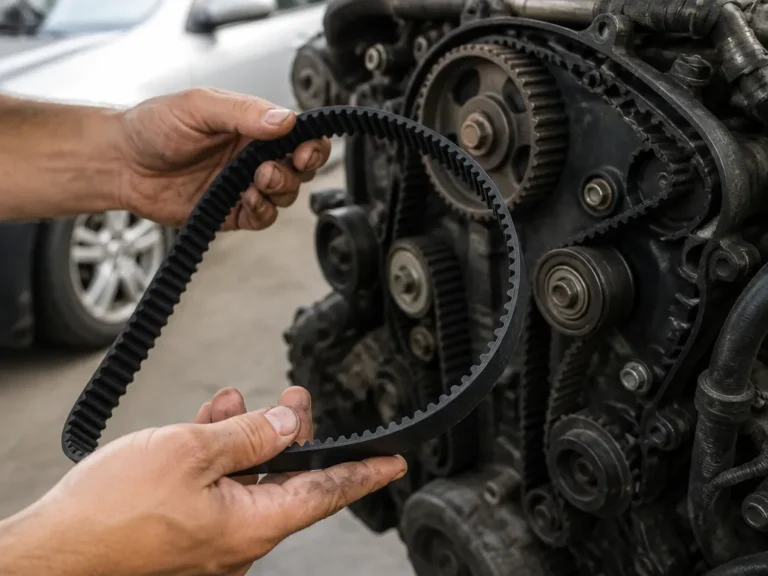
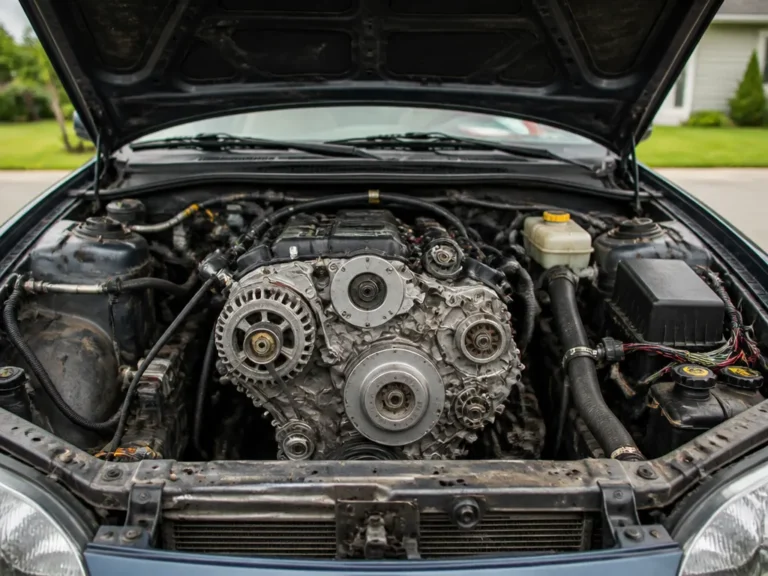
The serpentine belt transfers crankshaft power to belt-driven accessories. Depending on the engine, those accessories can include the alternator, power-steering pump, water pump, air-conditioning compressor, and other pumps or fans.
Bottom line: if the belt is missing or no longer gripping the pulleys, pull over safely and arrange a tow or repair. Do not use a brief period of continued operation as a reason to keep driving.
What Does The Serpentine Belt Actually Do In Your Engine?
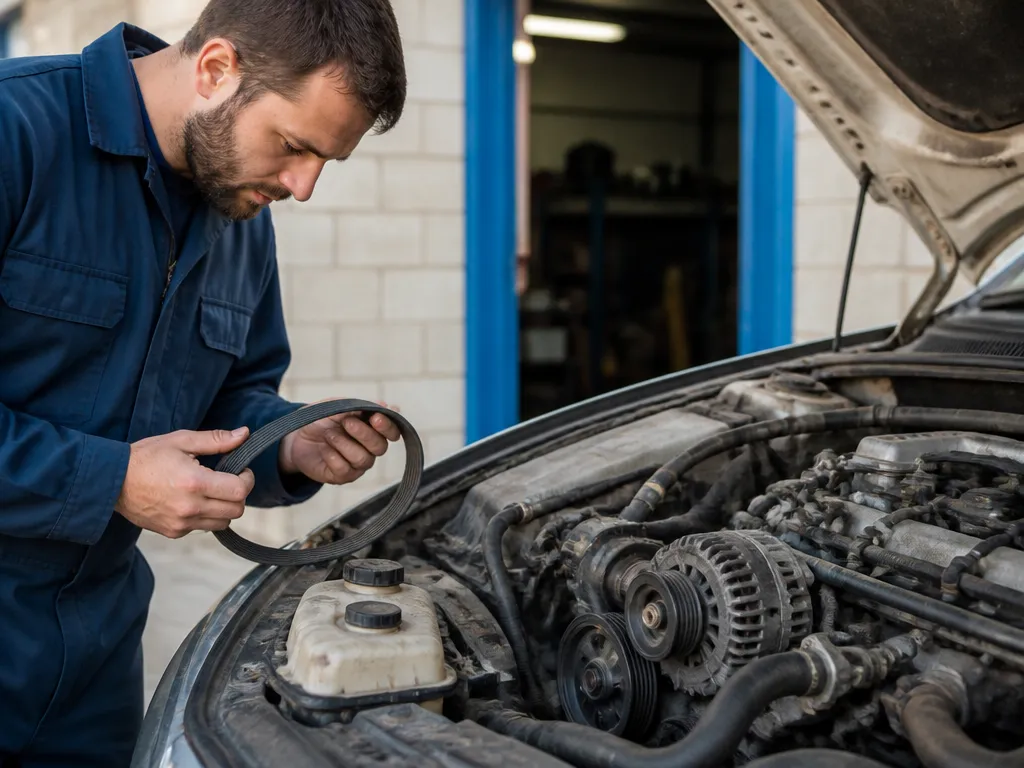
A serpentine belt transfers rotational power from the crankshaft to the engine’s belt-driven accessories.
The engine can therefore keep turning even when the accessories no longer receive power. That distinction explains why a vehicle may run briefly but still be unsafe to drive.
What Happens When The Belt Fails Or Is Removed?
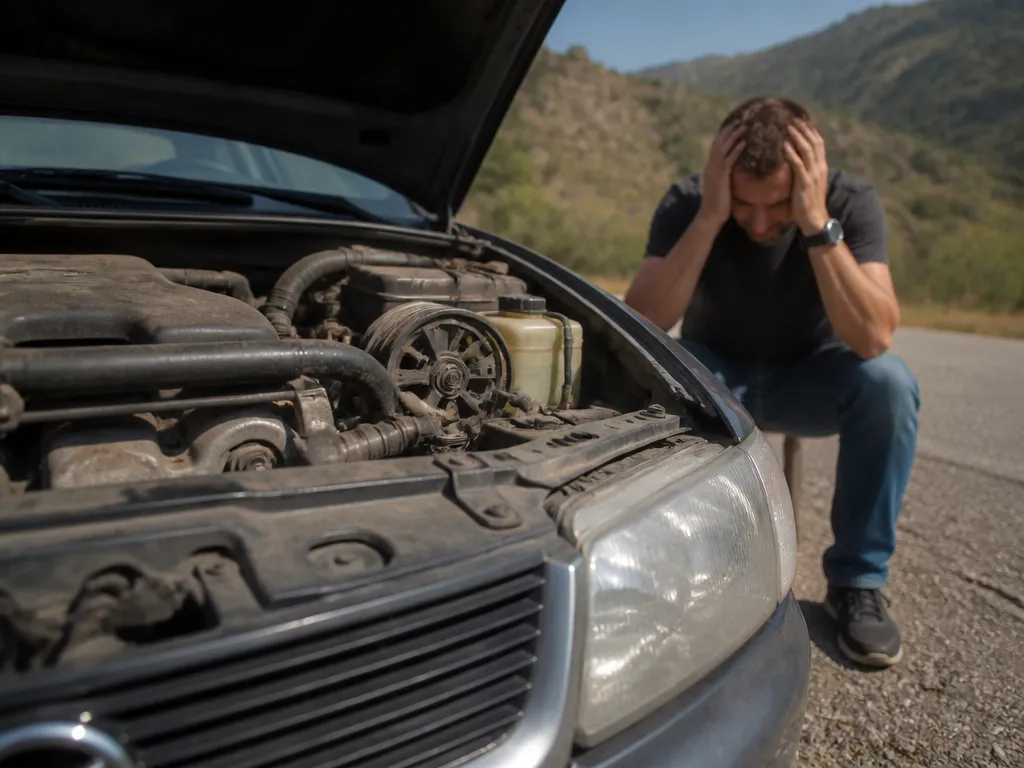
When the serpentine belt fails or is removed, every accessory that depends on that belt stops receiving mechanical power. The exact result depends on the vehicle’s layout, but charging, steering assistance, cooling, and air conditioning may be affected.
Electrical Problems And Battery Drain
If the alternator is belt-driven, a broken or severely slipping belt can stop it from charging the battery. A charging warning light may appear, and electrical performance may weaken as the battery’s available power falls. The timing depends on the battery, the vehicle’s electrical load, and the condition of the belt.
Replacing the belt may not be enough. The technician should also inspect the tensioner, pulleys, and alternator for the fault that caused the belt to fail.
Cooling System Issues And Overheating Risk
If the water pump is driven by the serpentine belt, coolant circulation can be reduced or stopped when the belt fails. Engine temperature may then rise. Other vehicles use an electric water pump or a different belt arrangement, so the effect must be confirmed for the specific model.
Stop driving at the first sign of overheating. After the engine cools, have the belt system and cooling system inspected before restarting or continuing.
Power Steering Loss (And Steering Becomes Heavy)
On vehicles with a belt-driven hydraulic power-steering pump, steering assistance may fade or disappear after belt tension is lost. Steering can become especially difficult at low speeds or while turning. Vehicles with electric power steering may behave differently, but they can still lose charging or other belt-driven functions.
The repair requires more than installing a belt if a seized pulley, damaged pump, or failing tensioner caused the failure. Those parts should be checked before the replacement belt is put into service.
Ac Or Other Belt-driven Accessory Shutdown
Air conditioning may stop working when the belt no longer drives its compressor. Other belt-driven accessories can also stop or operate unreliably. A squeal, chirp, or grinding noise may appear before the belt fails.
Inspect the pulleys and accessories if the belt failed suddenly. A seized accessory or damaged pulley can destroy a replacement belt.
What Are The Immediate Safety Steps If The Belt Fails On The Road?
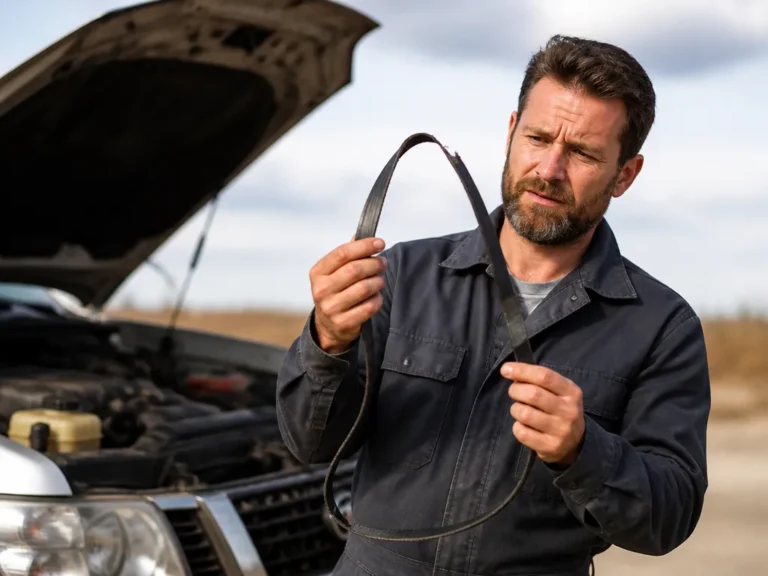
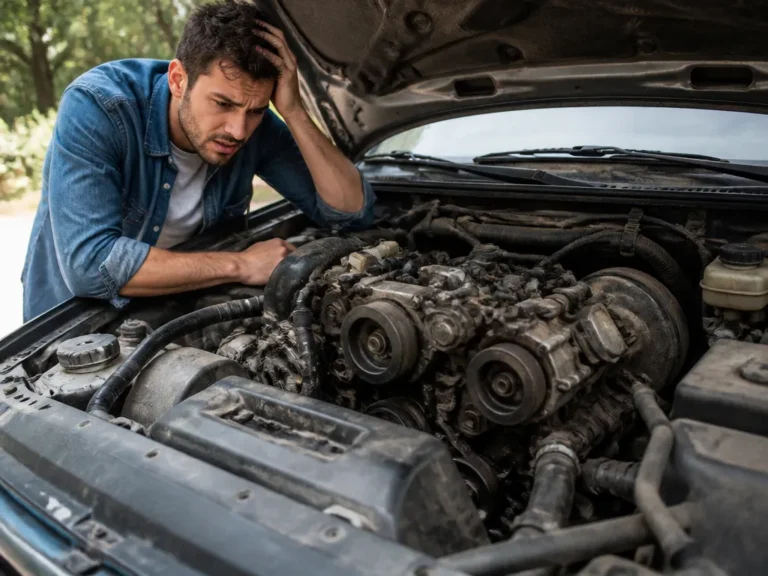
Get the vehicle out of traffic if you can do so safely, then shut it down and call for help. A broken or visibly slipping belt should be treated as a stop-and-secure situation.
My rule: if the belt is broken or clearly slipping, secure the vehicle and arrange a tow. Trying to nurse it along risks losing charging, cooling, or steering assistance.
Once help is on the way, stay with the vehicle when practical, particularly on a busy road. If you must exit, use the passenger side when possible and keep away from moving traffic.
How To Inspect The Belt And Recognize Wear Signs?
If you cannot tell whether the belt is safe, do not keep driving to monitor it. Have the belt and its related components inspected.
What Are The Replacement Intervals And Maintenance Guidelines?
Follow the replacement interval in the owner’s manual or the vehicle’s maintenance information, then replace the belt sooner if inspection finds damage. There is no single replacement mileage that applies to every vehicle.
Exact replacement intervals vary by make, model, engine, and belt design. Use the vehicle’s service information rather than a universal mileage figure.
What About Costs And Towing Options?
Plan for two possible expenses: the belt repair and transportation to a repair facility. Exact current prices were not established, so the table below does not provide unsupported price ranges. Request a written estimate that separates parts, labor, diagnosis, and towing.
| Item | Typical cost range (approx.) | What affects the price |
|---|---|---|
| Serpentine belt (parts only) | Not established; obtain a vehicle-specific quote | Belt type and brand, vehicle make, engine, and parts source |
| Belts-related parts (if needed) | Not established; obtain a vehicle-specific quote | Whether an idler, tensioner, pulley, or accessory also needs replacement |
| Labor for belt replacement | Not established; obtain a vehicle-specific quote | Access, engine layout, and the components that must be removed |
| Total typical repair (belt only) | Not established; obtain a vehicle-specific quote | Labor, vehicle complexity, and whether diagnosis finds another fault |
| Towing (tow truck) | Not established; obtain a local quote | Distance, location, time, vehicle condition, and service provider |
A belt-only repair costs less than a repair that also requires a tensioner, seized pulley, accessory, or cooling-system work. Ask the shop to identify the failed component before authorizing additional parts.
Towing Options And Roadside Service Scenarios
Roadside assistance is usually the safest option when the belt is broken or visibly slipping. If the vehicle can move, limit movement to getting out of immediate danger or reaching a safe service location, then arrange transport.
Ask for the tow distance, possible extra charges, and what happens if the vehicle loses power during loading or movement. Have the repair estimate itemize the belt, related parts, labor, diagnosis, and tow.
If the belt is missing, shredded, or followed by charging or accessory warnings, treat the situation as a tow request rather than a reason to drive farther.
Costs vary with location, vehicle complexity, and the parts that failed. Confirm current pricing with a local towing provider and repair shop.
Edge Cases And Exceptions To The Obvious Answer
Some vehicles use electric power steering, electric water pumps, multiple belts, or a different accessory layout. Those designs can change which functions stop first, but they do not make a failed serpentine belt safe to ignore. The vehicle may still lose charging or another belt-driven function.
| Vehicle / belt setup | What may keep working longer | What still becomes unsafe | What you should do |
|---|---|---|---|
| Electric power steering (EPS) | Steering assistance may not depend on the serpentine belt | Charging and other belt-driven accessories may still fail | Pull over promptly and do not extend the trip to test the system |
| Electric water pump (some layouts) | Coolant circulation may not stop with the serpentine belt | Charging and other belt-driven functions can still be lost, and overheating remains possible if another fault is present | Watch the temperature warning and arrange a tow after confirming belt failure |
| Non-serpentine belt layouts or multiple belts | A separate belt may continue to drive some accessories | The failed belt may still control charging, cooling, steering, or another essential function | Confirm which belt failed and follow the vehicle-specific service guidance |
| “Emergency limp” behavior | The vehicle may reduce some loads or continue operating briefly | It cannot guarantee safe charging, cooling, or steering under changing conditions | Use any remaining operation only to reach a safe stop |
These exceptions affect the symptoms and timing, not the basic advice. An electric system may delay one failure, but it does not make continued driving predictable. Stop if you see a warning light, rising temperature, loss of electrical power, or worsening steering.
Emergency Limp Modes And Practical Limits For Safety
A limp mode or temporary period of normal operation is not a substitute for a working belt. Treat warning lights, temperature rise, loss of electrical power, or heavier steering as reasons to stop, secure the vehicle, and call for a tow.
Quick Summary
Do not plan to drive without a serpentine belt. Depending on the vehicle, a failed belt can stop battery charging, reduce or remove steering assistance, stop a belt-driven water pump, and disable air conditioning or other accessories.
The exact effects depend on the vehicle’s design. Electric power steering or an electric water pump may remain functional, while a separate belt may continue to drive some accessories. Those exceptions do not guarantee safe or reliable travel.
Repair and towing prices vary by vehicle, location, labor, and the parts that failed. Obtain current, itemized quotes rather than relying on a universal figure.
Next action: pull over safely, switch off the engine, and call for roadside assistance or a tow.
Frequently Asked Questions
Can I Bypass A Failed Accessory With A Shorter Serpentine Belt?
Do not assume a shorter belt will work. Some engines have an approved alternate belt route, while others require every pulley in the original path. An incorrect route can cause rubbing, misalignment, or loss of a component the engine needs.
Verify the route in the vehicle’s service information or ask a technician to confirm it for the exact engine. An improvised bypass is not a sound roadside repair.
Does A New Serpentine Belt Need A New Tensioner Or Idler Pulley?
Not automatically. The tensioner and idler pulleys should be checked for rough bearings, wobble, binding, or poor alignment while the belt is removed. A new belt will not fix a pulley problem.
Replace related parts when inspection finds a defect, when a seized pulley caused the failure, or when the vehicle’s service instructions require it. Ask the shop to identify the failed part rather than replacing every pulley by default.
How Can I Confirm That The Replacement Belt Is The Correct One?
Use the vehicle identification number, engine specification, and manufacturer’s parts information. Vehicles in the same model range can use different belt lengths or routing.
Before starting the engine, compare the installed path with the correct routing diagram and check that every rib is seated in its pulley grooves. The belt should not ride on an edge or sit partly outside a groove.
Why Would A Replacement Belt Fail Again Soon After Installation?
A repeat failure often points to a problem beyond belt age. Possible causes include a damaged tensioner, misaligned or seized pulley, oil or coolant contamination, incorrect routing, or an incorrect belt.
Have the complete belt drive inspected before installing another belt. Replacing the belt without finding the cause risks another breakdown.
Can I Check The Belt System Myself Without Removing The Belt?
You can inspect the routing, look for edge wear or missing ribs, and compare the belt with the routing diagram. Do this with the engine off, the key away from the vehicle, and the belt cool enough to inspect safely.
A visual check cannot prove that a bearing, tensioner, or pulley is healthy. Keep fingers, clothing, and tools away from a running belt. Leave removal and pulley checks to a qualified technician if the belt is damaged, noisy, misaligned, or difficult to assess.
What Should I Ask The Repair Shop To Confirm After A Belt Failure?
Ask whether the technician checked the tensioner, idler pulleys, accessory pulleys, routing, and any belt fragments left in the belt area. The shop should also confirm that the replacement belt is seated correctly.
Ask whether charging and cooling systems operate normally after the repair. A written explanation can distinguish a simple belt replacement from a repair requiring additional parts and gives you a record if the belt slips or fails again.