
How Does A Parking Brake Work On Disc Brakes? Mechanics, Epb Vs Mechanical
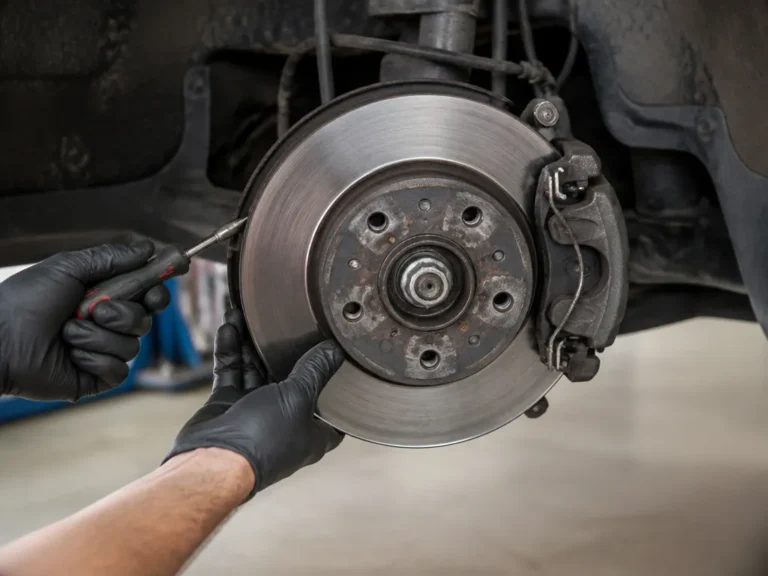
On a disc-brake system, the parking brake holds the vehicle by moving a separate mechanical mechanism that presses the pads against the rotor. That mechanism may be operated by a cable and caliper lever, or by an electric motor controlled by an electronic parking-brake system (EPB). Once applied, the mechanism must stay in position without continued hydraulic pressure or continued effort from the driver.
The service brake uses hydraulic pressure from the brake pedal to move caliper pistons. The parking brake uses a cable, lever, cam, screw, or motor-driven actuator to create and retain pad pressure. Releasing it reverses that movement or commands the actuator to back off so the pads no longer remain tightly clamped against the rotor.
What Moves Inside A Mechanical Disc Parking Brake Caliper
A mechanical disc parking brake transfers the driver’s pull through a cable to a lever or arm on the caliper. That external movement operates a separate mechanism inside or attached to the caliper. Depending on the design, the mechanism may use a cam, lever, screw, ratchet, or another arrangement to move the pads or a pad carrier.
What Moves Inside An Electric Parking Brake (Epb) On Discs
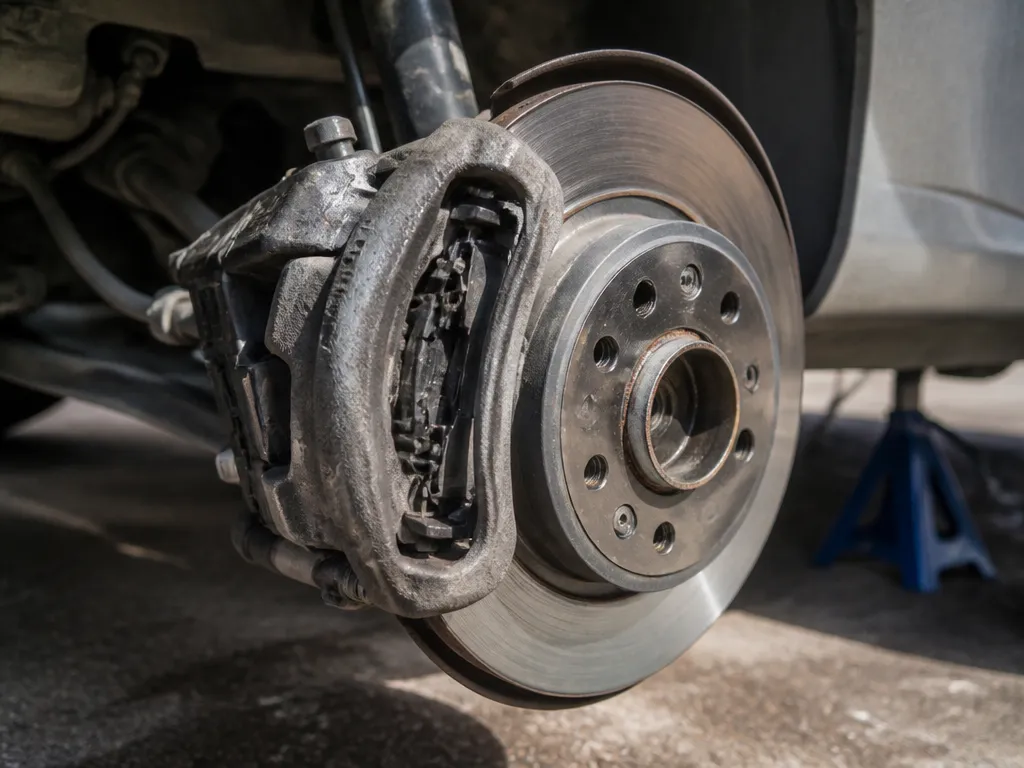
An electric parking brake replaces the hand-operated cable command with an electric actuator and electronic control. Many EPB designs use a motor to drive a screw or another mechanism at the caliper, but the exact actuator arrangement differs between vehicles.
Diagram-style Walkthrough (Labeled Set Vs Release)
Set path: the driver operates the EPB switch, the control system commands the actuator motor, the motor moves the caliper screw or lever, the internal mechanism advances, and the pads contact the rotor. A retaining mechanism or control strategy keeps the applied position.
Release path: the driver requests release, the motor reverses or otherwise returns the actuator, the screw or lever backs off, pad pressure falls, and the system stops when the specified released condition is reached.
Mechanical Vs Epb: The Components And Forces That Differ
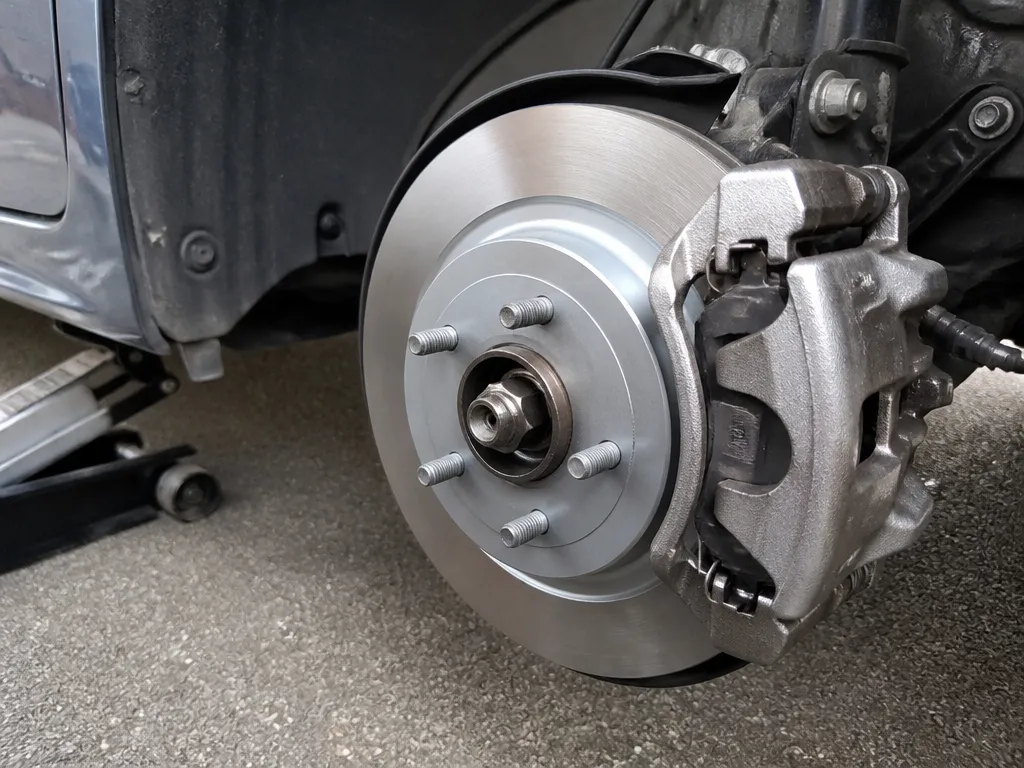
Both systems aim to press disc-brake pads against a rotor and keep them there while the vehicle is parked. The main difference is how the application movement begins and how release is controlled.
| Disc parking brake type | Primary “set” motion path | Primary holding method | What controls release and clearance | Biggest risk for drag after set |
|---|---|---|---|---|
| Mechanical (cable/lever integrated caliper mechanism) | Driver pull to cable, then cable to the caliper lever, cam, screw, or related mechanism | A retaining or self-locking feature in the handle, cable system, caliper, or mechanism | Reverse driver actuation and return of the caliper mechanism | Binding, corrosion, cable problems, or a lever or mechanism that does not return fully |
| Electric (EPB) | Driver switch or vehicle command to an actuator motor, then motor to the caliper mechanism | Mechanical retention and the vehicle’s EPB control strategy, depending on design | Motor-controlled return to the specified released position | Actuator failure, incomplete retraction, binding, or a control fault |
In both systems, the result depends on the caliper mechanism reaching the applied position and returning far enough on release. A mechanical system can lose movement through cable friction or binding. An EPB can have actuator, wiring, control, or calibration-related faults. Vehicle-specific service information is needed to identify the correct test and adjustment procedure.
How Each Design Minimizes Continuous Pad Drag After Set
A mechanical system is intended to hold the applied position when the brake is set and to release when the cable and caliper mechanism return. A seized cable, external lever, cam, or screw can leave the pads partly engaged after the handle is released.
An EPB commands the actuator to a released position. If the motor, mechanism, wiring, or control system does not complete that movement, the pads may continue rubbing even though the switch has been operated. Rotor heat, a scraping noise, or uneven wear can be clues, but the cause must be confirmed on the vehicle.
Why Reduced Drag Matters
Pad contact that continues while the vehicle is moving can create unwanted friction and heat and may contribute to accelerated or uneven wear. It can also produce rubbing noise. Persistent contact after release is not a normal substitute for the small running clearance intended by the brake design.
The quickest way to identify the basic architecture is to look at the control and hardware: a cable-operated system has a physical cable and caliper lever, while an EPB uses a switch and electric actuator. Some vehicles combine different arrangements, so confirm the design before servicing it.
What Changes The Result: Stroke, Clearance, And Design Numbers
Effective travel and clearance determine whether the parking-brake mechanism can reach its applied position and return on release. The correct values are specific to the caliper and vehicle. There is no universal clearance, cable travel, motor travel, or number of handle clicks that applies to every disc-brake system.
Pad-to-rotor Clearance, Cable Friction, And Effective Travel
Pad-to-rotor clearance affects release and application. The mechanism must take up the intended clearance before it creates useful clamp force, then back off enough to prevent substantial rubbing. Wear, incorrect parts, contamination, or a sticking mechanism can change that behavior.
Cable condition affects mechanical travel. Stretch, corrosion, damaged cable housing, poor routing, or binding can reduce the movement that reaches the caliper lever. The handle may move while the caliper mechanism still fails to reach its intended position.
Effective travel is movement available after losses. Any movement consumed by cable friction, a bent component, or a seized caliper mechanism is unavailable for pad clamping or release. The correct remedy depends on the failed part, not simply on tightening the cable.
Epb Motor Travel Limits And Calibration Implications
EPB systems depend on controlled actuator movement. The motor must move the caliper mechanism far enough to apply and release it. The control system may use vehicle-specific limits, feedback, or calibration procedures. A failure in the motor, mechanism, wiring, sensor input, or control system can affect operation.
What to check on EPB. Note warning lights, unusual motor noise, incomplete release, and any stored fault codes. Before replacing rear pads or forcing a piston, follow the vehicle’s service procedure because some systems require an electronic service or maintenance mode.
Troubleshooting Symptoms Mapped To The Exact Mechanism Cause
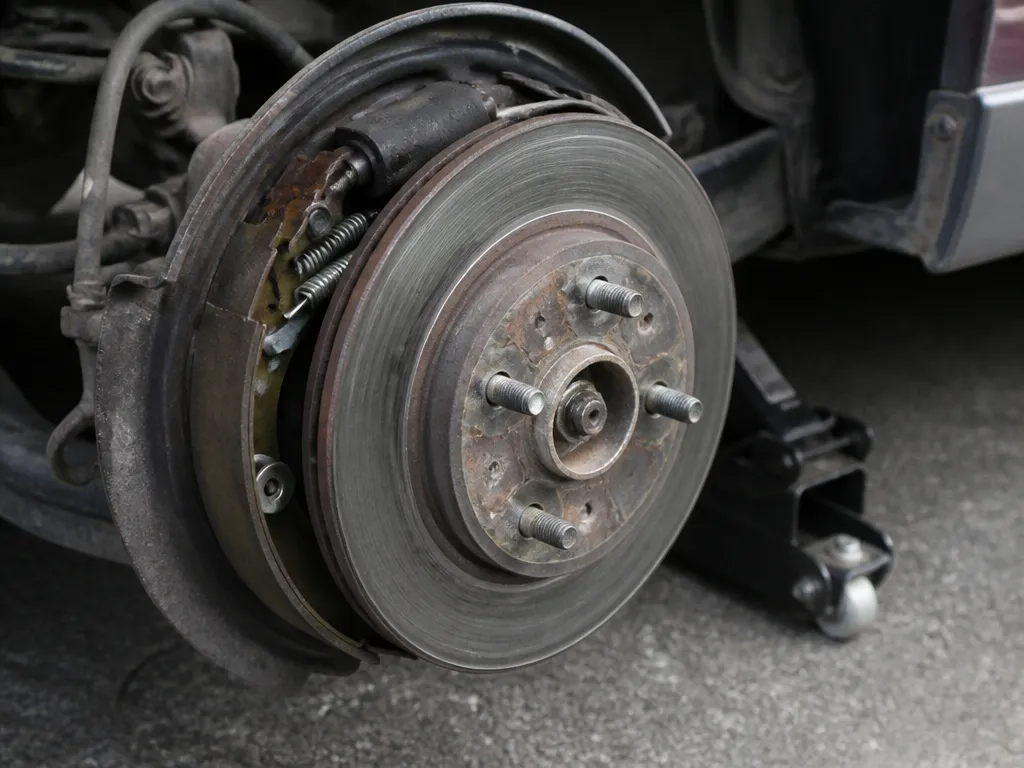
Match the symptom to the part of the operation that may have failed: application, retention, or release. These observations narrow the inspection; they do not replace a vehicle-specific diagnosis.
Inspection And Verification Checklist For Mechanical Vs Epb
Use these checks to observe the set and release cycle without assuming that every system uses the same adjustment or service method. Do not work beneath an unsupported vehicle, and follow the vehicle’s service instructions before disconnecting or retracting an EPB actuator.
| Mechanism type | What to verify | How to check (in the real world) | Good sign | Bad sign you should act on |
|---|---|---|---|---|
| Mechanical disc parking brake | Cable routing and binding | Inspect for kinks, crushed housing, corrosion, damaged strands, and unusual slack. Observe movement at the caliper when the control is operated where this can be done safely. | Free, consistent movement through the intended range. | Sticking, uneven movement, damaged housing, frayed strands, or a lever that does not return. |
| Mechanical disc parking brake | Lever travel and ratchet steps | Observe consistent engagement and whether the applied position remains secure. Do not rely on a universal click count. | Repeatable engagement without slipping. | Slipping, incomplete engagement, excessive free movement, or failure to return. |
| Mechanical disc parking brake | Pad contact evidence | After a controlled set and release, check for rubbing, unusual heat, or wear differences. Do not touch a hot rotor. | The vehicle holds when set and rolls without persistent rubbing after release. | Continued scraping, unusual heat, smell, or uneven wear. |
| Mechanical disc parking brake | Release restoration (no regrind) | After release, listen for rubbing during a cautious check and inspect for renewed drag. Stop if the brake becomes hot or the vehicle does not move freely. | No persistent scraping or resistance attributable to the parking brake. | Grinding, squealing, heat, or a caliper lever that remains partly applied. |
| EPB on disc brakes | Command and response | Operate the system according to the vehicle instructions and observe the indicator, sound, application, and release. | Consistent application and release with no warning. | Incomplete release, no response, abnormal noise, or warning indicators. |
| EPB on disc brakes | Actuator motor sound and travel time | Listen for abnormal sounds and note whether the sides appear to respond consistently when the design allows comparison. | Predictable operation without grinding or unusual delay. | Grinding, repeated cycling, long delay, or one side behaving differently. |
| EPB on disc brakes | Warning scan expectations | Read EPB-related faults with equipment appropriate for the vehicle when symptoms occur. | No relevant fault during normal operation. | Actuator, calibration, sensor, or control faults that match the symptom. |
| Verification signs (both) | Even rear wear and rotor heat clues | Compare left and right pad condition and inspect rotors for scoring or abnormal contact. Use safe procedures for checking heat. | Similar wear and no continuing heat or rubbing after release. | Uneven pad wear, one rotor consistently hotter, scoring, or signs of prolonged contact. |
Record what happens during one complete set-and-release cycle. For a mechanical system, note cable movement, lever return, handle retention, and any rubbing after release. For an EPB, note switch response, motor behavior, warning indicators, and relevant fault information. Compare left and right rear brake condition, but remember that uneven wear or heat can also result from faults unrelated to the parking-brake actuator.
What To Document Before Repairs (By Type)
For a mechanical system, record lever travel, ratchet engagement, cable condition, caliper-lever movement, and evidence of drag. For an EPB, record application and release behavior, actuator sound, warning-light behavior, and fault codes. Photographing abnormal pad or rotor wear can help connect the symptom to the motion path, retention path, or release path.
Quick Summary
A disc parking brake holds the vehicle by moving a caliper mechanism that presses the pads against the rotor. A cable may supply that movement, or an electric motor may do so through an EPB. A retaining mechanism keeps the applied position without hydraulic pressure.
First identify whether the vehicle uses a cable-operated caliper or an EPB. Then observe a complete set-and-release cycle without placing yourself in a hazardous position. If it will not hold, will not release, produces persistent rubbing, or displays an EPB warning, have the mechanism inspected rather than treating the symptom as a simple adjustment issue.
Frequently Asked Questions
Do I Need To Replace The Entire Caliper If The Parking Brake Fails?
Not necessarily. The fault may be in the cable, external lever, actuator, wiring, control system, or an internal caliper mechanism. The correct repair depends on which part fails its movement or holding test.
A caliper with a seized internal mechanism may require different work from one with a damaged cable or external actuator. Ask for the failed component and the test result supporting its replacement.
How Much Does A Disc Parking-brake Repair Cost?
No reliable universal price applies. Cost depends on the vehicle, brake design, parts, labor, diagnosis, and whether the problem involves a cable, caliper mechanism, motor actuator, wiring, or control system.
Request an itemized estimate separating diagnosis, parts, labor, calibration, and any required pad or rotor work. The vehicle and fault must be identified before a meaningful price can be given.
How Long Can I Drive With A Parking-brake Fault?
There is no universal safe time limit. A brake that will not hold creates a parking hazard, while a brake that does not release can keep the pads against the rotor and create heat and wear.
If the vehicle pulls, smells hot, produces grinding, or has a wheel or rotor that becomes unusually hot, stop driving it and arrange an inspection. Do not continue road testing a suspected dragging brake.
Does An Electric Parking Brake Need Special Service Equipment?
That depends on the vehicle. Some EPB systems require a scan tool or specified service mode before the actuator can be retracted or calibrated. Others permit different service procedures.
Check the vehicle instructions before removing rear pads or forcing an EPB piston back. If electronic retraction, calibration, or fault clearing is required, use equipment that supports that system.
Can A Parking Brake Problem Be Caused By New Pads Or Rotors?
It can be related to recent brake work. Incorrect pad fitment, damaged hardware, an actuator left out of its service position, or a missing calibration procedure can affect application or release.
If the symptom began immediately after pad or rotor replacement, have the installation and required service procedure rechecked before replacing unrelated parts.
What Should I Ask A Shop To Prove Before Approving The Repair?
Ask which component failed and what test identified it. For a mechanical system, that may include cable movement, caliper-lever travel, and full return. For an EPB, it may include actuator response, stored faults, and confirmation that the pads release after the command.
Request photographs of abnormal pad wear, rotor damage, or a seized lever when those findings support replacement. A useful diagnosis should explain whether the parking brake failed to apply, failed to retain, failed to release, or continued to drag.