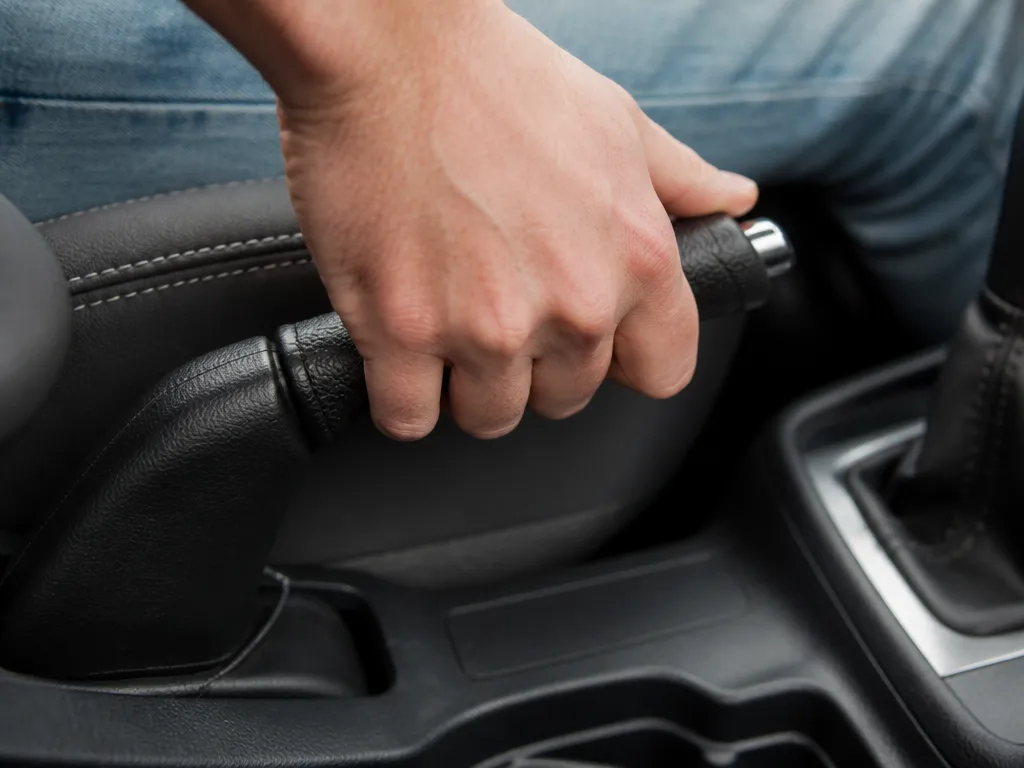
How Does Parking Brake Work With Disc Brakes: Designs Explained
On a disc-brake vehicle, the service brake normally uses hydraulic pressure to press pads against a rotor. The parking brake uses a separate holding mechanism at the rear, operated mechanically by a cable or lever, or electrically by an EPB actuator.
The parking mechanism may clamp the rear disc through a caliper-integrated mechanism, or it may use shoes against a small drum built inside the rotor hat. Because the parking brake can use different hardware from the service brake, weak holding or dragging does not automatically mean the ordinary disc pads are worn.
How Parking Brakes Work With Disc Brakes (Direct Answer)
A disc brake stops the vehicle by clamping pads against a rotor. The parking brake holds the vehicle after the pedal is released by applying a rear-wheel mechanism that remains engaged without continuous brake-pedal pressure.
Service-disc Braking Vs Parking-hold Requirements
Service braking is intended for controlled braking while the vehicle is moving. Parking holding is intended to keep a stationary vehicle from rolling after the driver releases the pedal. Both use friction, but the actuation and the required release behavior differ.
| Function | What creates clamping/force | Typical “where” the friction happens | What must happen when you release |
|---|---|---|---|
| Service braking (disc) | Hydraulic pressure moves the caliper and presses pads against the rotor | The swept rotor surface at the front or rear wheel | Hydraulic pressure falls and the pads regain enough clearance for normal wheel rotation |
| Parking hold | A mechanical cable or linkage, or an electric actuator, applies the parking mechanism | A caliper-related holding surface or a drum-in-hat shoe-and-drum surface | The actuator and friction hardware return far enough to avoid unwanted contact |
The service brake is controlled directly by pedal pressure. The parking brake must remain applied after the driver stops operating the control, so its mechanical arrangement retains the applied force. When released, the mechanism must move back far enough to prevent unnecessary contact. The exact mechanism and amount of movement vary by vehicle.
Hydraulic Pressure Clamping Vs “Hold” Mechanics
Service braking responds to pressure from the brake pedal. Parking holding depends on the position of a cable, lever, screw, cam, shoe mechanism, or electric actuator. That difference explains why a vehicle can stop normally with the pedal but fail to hold when parked, or hold correctly while a parking mechanism later begins to drag.
Why Release Feels Different From Service “Let-off”
Releasing the service brake removes hydraulic pressure. Releasing a parking brake requires the lever, cable, linkage, shoe mechanism, caliper mechanism, or EPB actuator to return. If one of those parts binds or remains misadjusted, the parking friction surface may not clear even though the service brake has released normally.
Design A: Caliper-integrated Mechanical Parking Brake
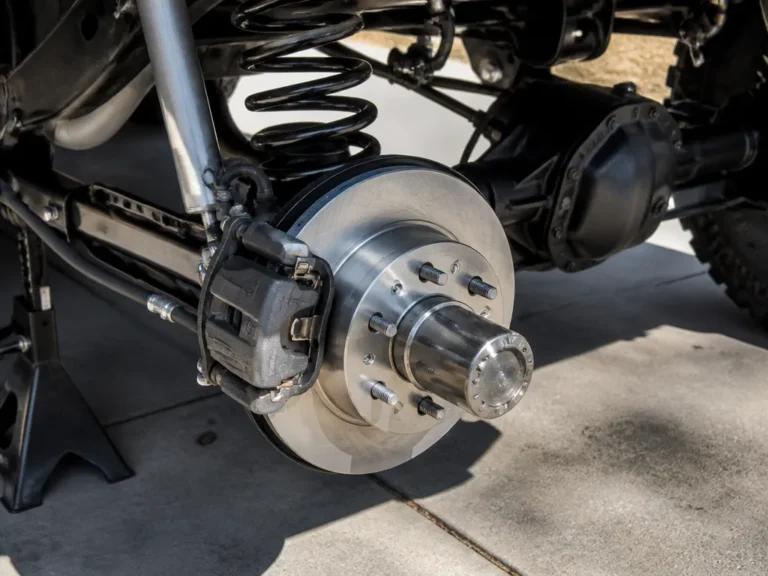
A caliper-integrated mechanical parking brake combines the rear service caliper with a separate parking-brake actuator. A cable or lever moves the internal mechanism, which applies the caliper-related holding hardware without requiring pressure at the brake pedal.
What to look for under the car and at the caliper: Follow the parking-brake cable or linkage to the rear caliper. A visible connection or actuator on the caliper suggests an integrated design. Some layouts conceal part of the mechanism, so the vehicle’s repair information is the safer way to confirm it.
Design B: Drum-in-hat Parking Brake With Rear Discs
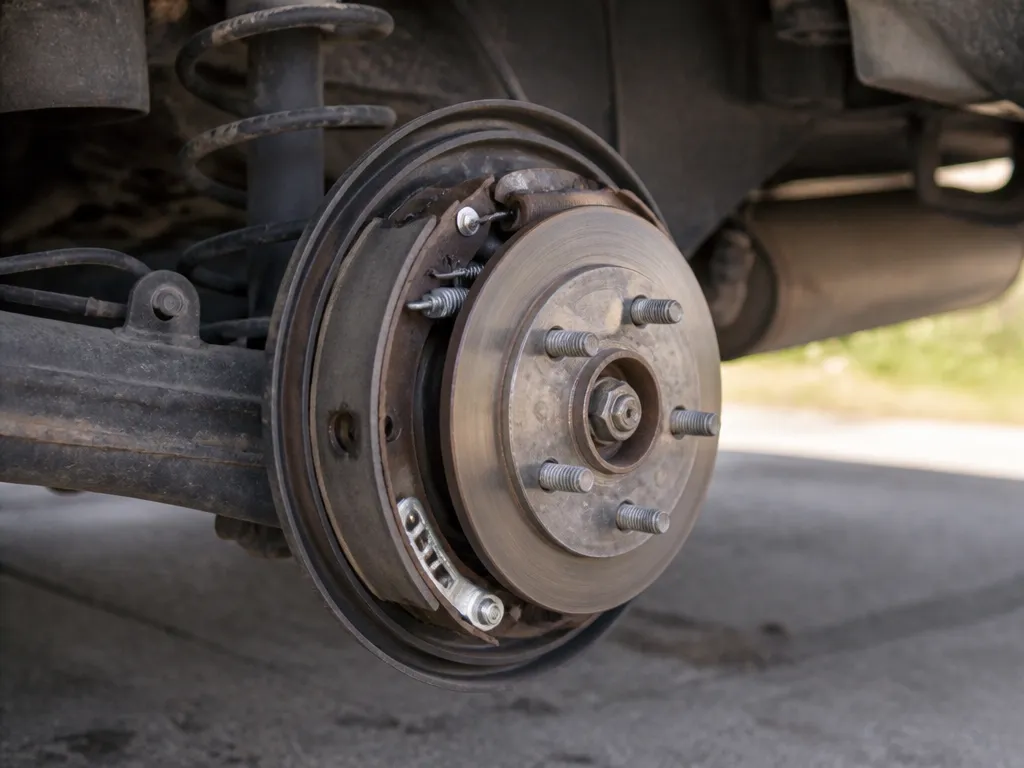
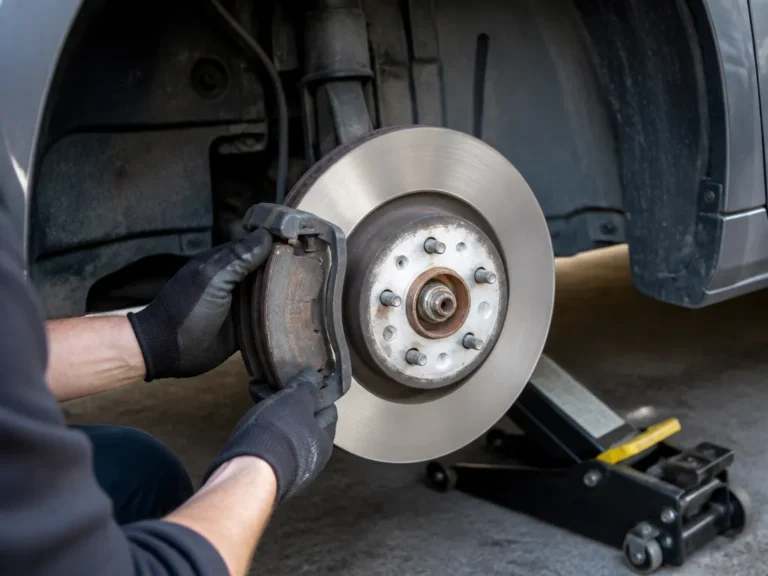
In a drum-in-hat system, the rear rotor includes a drum-shaped inner surface. Small parking-brake shoes press against that surface, while the ordinary service pads press against the rotor’s main disc surfaces. The two functions therefore use separate friction pairings.
In this design, the rear service pads can be in good condition while the parking shoes or their internal drum surface are worn, contaminated, or stuck. The reverse is also possible. The service pads should not be used as a substitute for inspecting the drum-in-hat mechanism.
Epb With Disc Brakes: How The Electric Actuator Holds
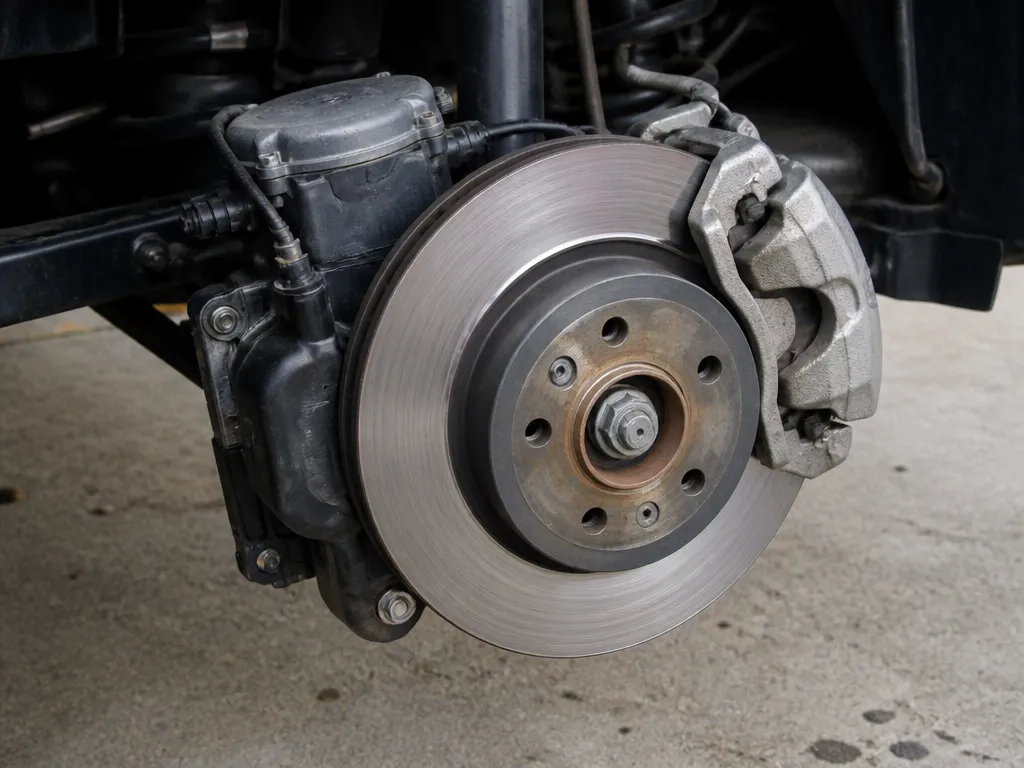
An electric parking brake uses a switch or vehicle control to command an electric actuator. The actuator then moves mechanical hardware at the rear wheel. The friction surface may be part of an integrated caliper or a drum-in-hat assembly, so “electric” describes the actuator, not necessarily the friction surface.
How To Identify Your Car’s Parking Brake Design
Identify the design by tracing the parking-brake cable, linkage, or actuator at a rear wheel. A visual inspection can suggest the layout, but some parts are hidden until the wheel or rotor is removed. Use the vehicle’s repair information before dismantling the brake.
Troubleshooting Weak Hold And Dragging In Disc Setups
Trace the problem from the parking-brake control to the mechanism and then to the friction surface. A weak hold usually concerns application, friction, or adjustment. Dragging usually concerns incomplete release, but other brake faults can produce similar symptoms.
Maintenance That Prevents Confusion With Service Pad Wear
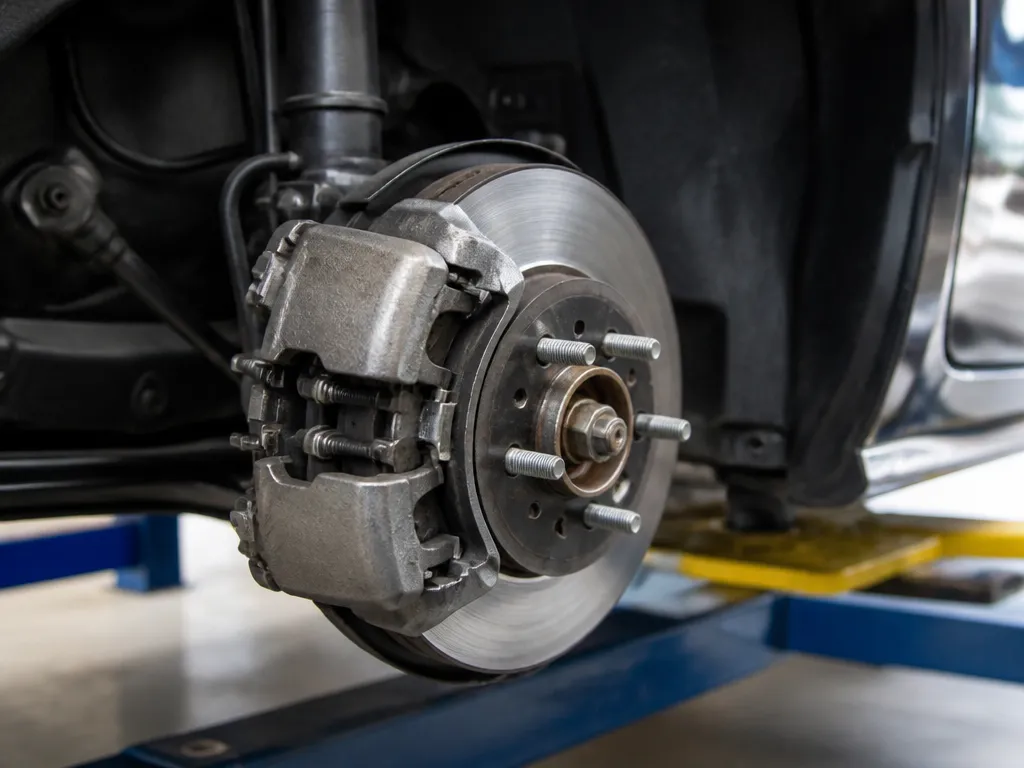
Replacing service pads does not automatically repair a parking-brake problem. The parking function may use a separate cable, actuator, shoe, lever, adjuster, or friction surface, so inspect it as its own system.
Quick Summary
A disc-brake vehicle can hold when parked because a rear parking mechanism applies a friction surface and remains in its applied position after the driver releases the pedal.
Identify the rear design before buying parts. Look for a parking actuator or cable connection at the caliper, or confirm whether the rotor hat contains a separate drum surface. Then check application, release, and clearance safely. Do not road-test a vehicle with a suspect parking brake.
Frequently Asked Questions
Will A Parking-brake Repair Cost More Than Replacing Rear Brake Pads?
It can, because the fault may involve a cable, caliper mechanism, adjustment hardware, internal shoes, an electric actuator, or a parking friction surface. A rear-pad replacement does not establish the cost of a parking-brake repair, and no single price applies across vehicles.
Ask for a written estimate that separates diagnosis, adjustment, replacement parts, and any required calibration. That prevents a quote for service pads from being mistaken for a complete parking-brake repair.
How Long Can I Wait Before Repairing A Weak Parking Brake?
Arrange an inspection promptly. A weak parking brake may allow the vehicle to move after it is parked, particularly where the vehicle is not level. Continued use can also leave an incompletely released mechanism in contact with a friction surface.
Until it is repaired, follow the vehicle manufacturer’s instructions for securing it and do not rely on the parking brake alone if it does not hold reliably. Do not use a public road to test whether it will hold.
Can A Dead Battery Prevent An Electric Parking Brake From Releasing?
It can, depending on the vehicle’s design and its approved emergency-release procedure. Some vehicles provide a manual release, while others require an external power supply or workshop equipment.
Do not force the caliper, cable, or actuator. Check the vehicle handbook for the specified release method. If the method is unavailable or unclear, arrange professional recovery rather than dragging a locked wheel.
Is A Parking-brake Problem Covered By The Same Warranty As Ordinary Brake-pad Wear?
There is no universal answer. Coverage depends on the vehicle warranty or service contract, the failed component, the fault, and the maintenance history. Friction material may be treated differently from mechanical or electronic hardware.
Have the repairer identify the failed part in writing before making a claim. “Brake problem” is too vague to establish whether the issue concerns a wear item, actuator, adjustment hardware, or electrical component.
What Should I Ask A Repair Shop To Prove Before Approving Replacement Parts?
Ask the technician to identify the parking-brake design, show where movement stops in the apply-and-release chain, and state whether the fault is weak application, failure to release, or damage at the friction surface. A visual explanation is more useful than a recommendation to replace all rear brake parts.
For an electronic system, ask whether a fault code, actuator test, or calibration procedure supports the diagnosis. For a mechanical system, ask what binding, excess clearance, or uneven movement was observed. The appropriate test depends on the vehicle’s service procedure.
When Should I Stop Driving And Arrange Professional Recovery?
Arrange recovery if a rear wheel remains unusually hot, the vehicle pulls, there is smoke or a strong burning smell, the parking brake will not release, or the vehicle rolls when it should be secured. These conditions can indicate active friction, a locked mechanism, or unreliable holding ability.
A parking brake that merely feels less effective still needs prompt inspection. Severe drag or unreliable holding removes the sensible margin for driving to a repair shop. Do not test the fault on a public road.