
Is 4mm Brake Pads Ok? Safety, Wear Signs, And Replacement Timing
If your brake pads measure 4 mm of friction material, they may still be usable, but that measurement alone does not establish that they are safe. Compare it with the minimum thickness specified for your vehicle, and check the pad across its entire contact surface. If the measurement includes the backing plate, or the pad is much thinner at one edge, the reading is misleading.
Treat 4 mm as a prompt for inspection and replacement planning rather than a universal safety threshold. Check the wear pattern, rotor condition, caliper hardware, warning indicators, and brake feel. Grinding, a soft pedal, pulling, vibration, or a brake-system warning requires prompt inspection regardless of the measured thickness.
Are 4mm Brake Pads Safe To Keep Using?
Brake pads measuring 4 mm can be acceptable for continued use only if that is the thickness of the friction material, the measurement remains above the vehicle manufacturer’s specified minimum, and the pad is wearing evenly. The rotors, caliper, hardware, and brake feel also need to be free of obvious problems.
| Situation | What you should see at 4 mm | My call |
|---|---|---|
| Typical street use, even wear | Friction material remains across the pad face, with no obvious taper or metal contact | May be serviceable temporarily, but plan a recheck and replacement |
| Above your vehicle’s minimum | The measured friction material exceeds the limit in the vehicle’s service information | May be acceptable if the rest of the system checks out |
| Uneven wear or contamination | One edge is substantially thinner, or the surface is damaged or contaminated | Do not assume 4 mm is safe; arrange an inspection |
| High heat demands | The vehicle is regularly used for hard braking, hills, towing, or similar demanding conditions | Plan replacement sooner and seek advice about the next inspection |
| Approaching the minimum limit | The measured friction material is close to the specified replacement limit | Schedule replacement rather than relying on the average reading |
The key question is whether the thinnest part of the friction material remains above your vehicle’s specified minimum. Even wear and normal brake feel make temporary use more reasonable. Uneven wear, noise, vibration, pulling, or a changed pedal feel calls for inspection instead of an assumption that 4 mm is adequate.
When 4mm Is Usually Serviceable
A 4 mm reading may be workable for temporary use when it measures friction material across the pad face, the wear is even, and the rotor shows no sign of damaging contact. It is still a point at which to plan the next inspection and replacement, not a reason to ignore further wear.
Why 4mm Is Not A Universal Safety Threshold
Pad design, vehicle design, driving conditions, and wear patterns vary. A pad can measure 4 mm at one location and be substantially thinner elsewhere. Sticking caliper hardware or uneven contact can also make a single measurement unrepresentative.
The Difference Between Temporary Use And Planned Replacement
Temporary use means confirming the measurement, checking the wear pattern, verifying the vehicle’s minimum, and arranging a follow-up plan. Planned replacement means treating the pads as maintenance due soon, particularly when the vehicle will face demanding braking conditions.
How To Find The Correct Minimum Pad Thickness
Use the manufacturer’s service information for the exact vehicle and brake setup. A generic thickness rule cannot replace the specified wear limit for the pads fitted to your car.
Compare the thinnest friction-material measurement with the vehicle’s stated pad wear limit. If you can find only a generic guideline, treat it as an indication to seek the correct specification rather than as the final decision.
What Changes As Brake Pads Get Thinner
Remaining service life depends on the wear rate and the conditions in which the vehicle is used. Compare the measurement with an earlier check when possible, and allow more margin if the vehicle regularly faces hills, heavy loads, towing, or repeated hard braking.
4mm Compared With New And Minimum-thickness Pads
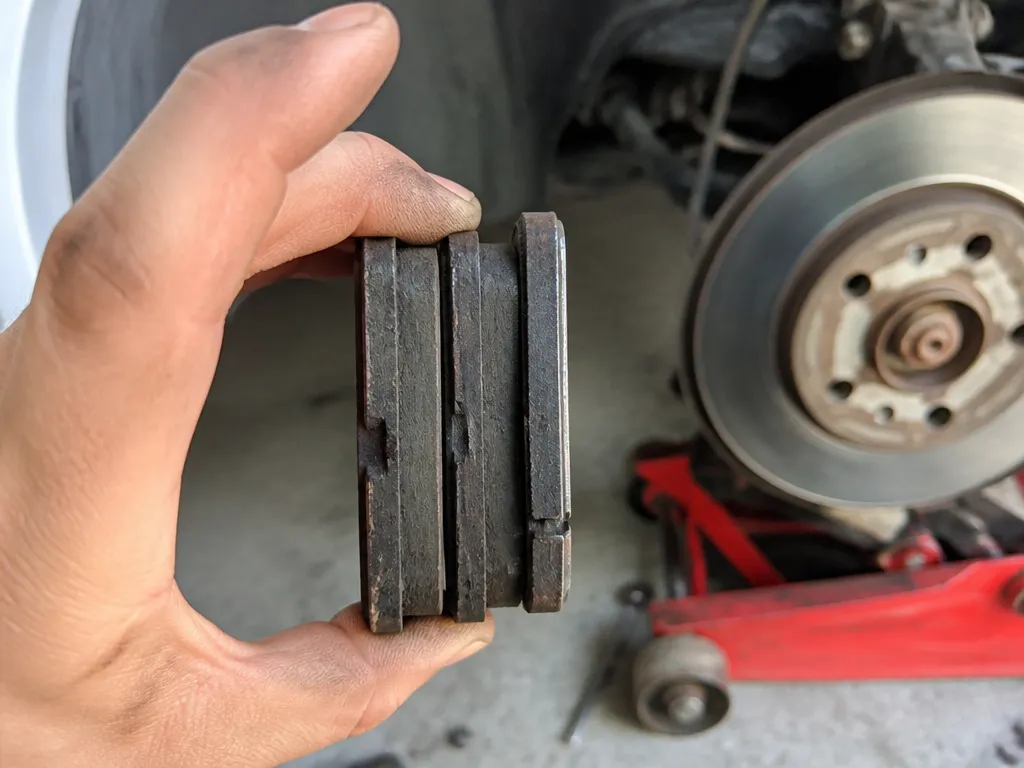
A 4 mm measurement is meaningful only when it is compared with the thickness of the friction material on that specific brake system and its specified replacement limit. New-pad thickness and service limits vary, so avoid treating a generic comparison as a specification.
| Pad condition | Friction material thickness (mm) | How to interpret it | What to do next |
|---|---|---|---|
| New pads | Varies by vehicle and pad design | Provides the starting point for that particular pad, not a universal benchmark | Confirm the specification for the vehicle and replacement pad |
| At your current check | 4 mm | May leave usable material, but only if the reading is friction material and remains above the vehicle’s limit | Measure across the pad face and compare the thinnest point with the specification |
| Manufacturer minimum limit | Specified for the particular vehicle and brake system | Marks the point at which the manufacturer calls for replacement | Arrange replacement when the measured area reaches or approaches that limit |
The difference between 4 mm and the replacement limit may be small. Whether it provides a useful margin depends on wear rate, unevenness, and upcoming driving conditions. Do not convert that difference into a mileage estimate without a previous measurement from the same vehicle.
Typical New-pad Thickness Ranges To Verify
There is no single new-pad thickness that applies to every vehicle. Verify the starting thickness through the vehicle or pad manufacturer’s information, or compare the used pad with a known-new pad of the same specification.
Why Mileage Estimates Vary By Vehicle And Driving Style
Pad wear depends on the vehicle, pad compound, traffic, terrain, load, brake temperatures, and condition of the caliper and rotor. A previous measurement and the distance driven since it was taken are more useful than a generic mileage promise.
Signs Your Brake Pads Need Replacement Now

Some symptoms make the thickness reading secondary. They can indicate damaged friction material, uneven wear, rotor contact, hydraulic trouble, or another brake-system fault. Treat them as reasons for prompt inspection rather than waiting for the pads to become thinner.
| Warning sign | What it can mean | What to do right now |
|---|---|---|
| Wear indicator engaged or visible metal-on-rotor contact | The pad may be at its wear limit or wearing unevenly | Stop driving and arrange an inspection of the pads and rotors |
| Uneven pad wear, taper, or patchy contact | Possible caliper, guide, hardware, or rotor-contact problem | Have the braking hardware checked before continuing normal use |
| Grinding, persistent squealing, or a new high-pitched noise | Possible wear-indicator contact, damaged material, contamination, or metal contact | Arrange prompt inspection; grinding should not be ignored |
| Vibration or pedal pulsation under braking | Possible rotor-surface or pad-contact problem | Arrange an inspection rather than replacing pads without finding the cause |
| Pulling to one side while braking | Possible uneven friction or caliper problem | Stop testing the vehicle and seek an inspection |
| Brake warning light on the dash | A brake-system fault or condition requiring diagnosis | Check the vehicle information and arrange a professional check if the light remains on |
| Low brake fluid or a soft pedal | Possible leak, air, or another hydraulic or component fault | Stop and arrange immediate inspection; do not wait for further pad wear |
Grinding, a brake warning light, low fluid, or a soft pedal warrants immediate attention regardless of pad thickness. Uneven wear and vibration can indicate rotor or caliper problems, so replacing the pads alone may not solve the problem. Ask for the pads, rotors, caliper hardware, and relevant hydraulic components to be checked.
How To Decide Whether To Replace 4mm Pads
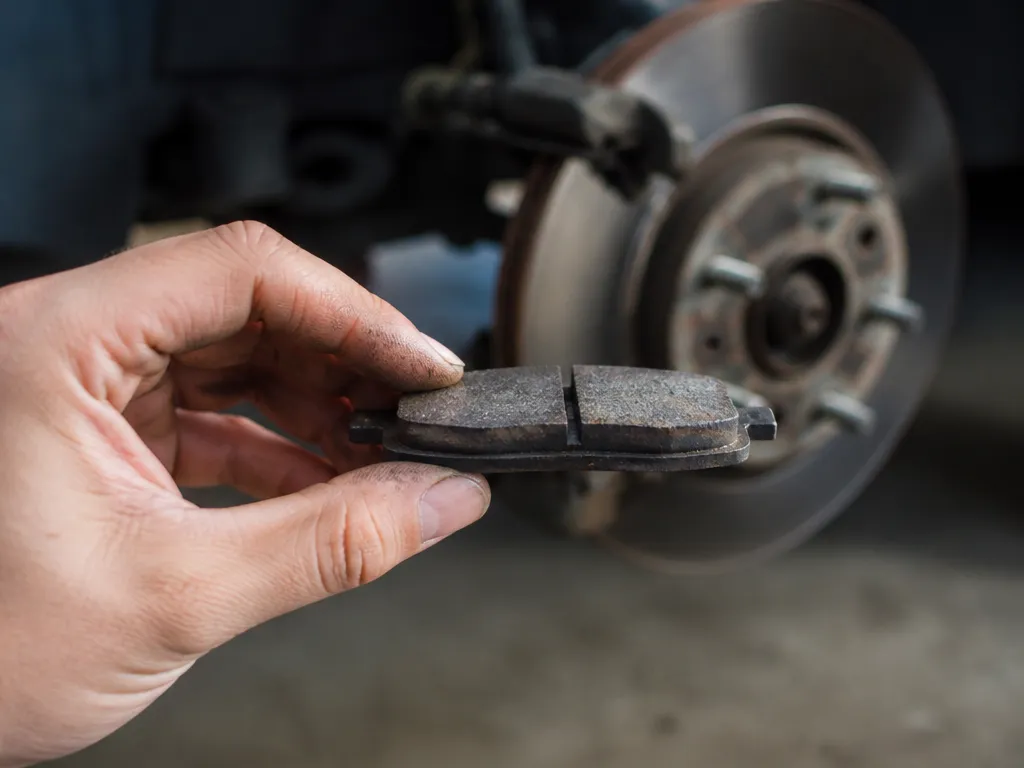
Start with the measured friction material, then consider the wear pattern, the vehicle’s specified limit, the condition of the rest of the braking system, and the driving expected before the next inspection.
Risks Of Waiting Until The Pads Are Thinner
Continuing past the vehicle’s service limit increases the chance of poor brake feel, uneven contact, and damage extending beyond the pads. It can also leave less time to arrange repairs before demanding driving.
| What changes when pads go beyond the service limit | Practical risk to you | What can get damaged | When it shows up |
|---|---|---|---|
| Friction material becomes very low | Less predictable behavior during demanding braking | Pad and rotor surfaces | Repeated braking, long descents, or towing |
| Contact approaches the backing plate area | Noise, inconsistent friction, or reduced braking confidence | Rotors and caliper hardware | After severe or uneven wear |
| Uneven pad wear continues | Possible pulling or braking imbalance | Pad and rotor surfaces | Whenever the underlying hardware problem remains |
| Replacement is postponed despite warning signs | A minor maintenance job may become a broader repair | Rotors, hardware, and related components | Before or during demanding driving |
Waiting can allow heat, uneven contact, or metal contact to damage other parts of the braking system. The risk is greater when the vehicle regularly carries heavy loads, tows, travels on hills, or is used for repeated hard stops.
Rotor Damage And Replacement Costs
Very thin or uneven pads can allow abnormal contact and heat at the rotor. If the rotor is scored, damaged, or outside its service specification, the repair may involve more than replacing the pads. Ask for the rotor condition and measurement to be included in the inspection.
Driving conditions affect how quickly an existing problem becomes noticeable. Long descents, towing, and repeated hard stops place greater demands on the brake system than light, uncomplicated driving.
Uneven Braking And Reduced Confidence
Uneven wear can produce inconsistent contact or pulling and may point to a caliper, guide, hardware, or rotor problem. Those symptoms deserve attention even when one part of the pad still measures 4 mm.
Vibration or noise near the service limit should prompt a check of the rotors and caliper hardware before any decision to continue using the pads.
How Severe Weather, Towing, Hills, And Heavy Loads Change The Risk
Wet, icy, or low-traction conditions can change how often and how firmly a driver needs to brake. Hills, heavy loads, and towing add demand and can reduce the margin for postponing maintenance.
When the vehicle will face those conditions, a pad close to its specified limit deserves earlier inspection and replacement planning.
What Brake Experts Say About 4mm Pads
A technician’s decision should be based on the vehicle’s specified minimum, the thinnest friction-material measurement, the wear pattern, and the condition of the rotors and hardware. A single 4 mm reading is not enough to approve continued use.
| What the pro checks | What “4mm” means in practice | What changes the recommendation | What to ask the shop to verify |
|---|---|---|---|
| Minimum friction-material limit | 4 mm may be usable if it is above the vehicle’s specified limit | The exact service specification and the thinnest measured area | “What is the minimum pad thickness for this vehicle, and is my pad above it across the face?” |
| Wear pattern | Even 4 mm is more reassuring than 4 mm measured only at a thick section | Taper, edge wear, contamination, or caliper and slider problems | “Can you measure several points and show me the uneven areas?” |
| Rotor and hardware condition | 4 mm is less reassuring when the surrounding system shows abnormal contact | Rotor damage, sticking hardware, or inconsistent friction | “Could the rotor or caliper hardware be causing this wear pattern?” |
| Proposed replacement timing | 4 mm may justify monitoring or replacement, depending on the inspection | Wear rate and the driving expected before the next check | “Should I replace now, or what recheck date do you recommend?” |
Ask the shop to connect its recommendation to the vehicle’s actual specification and measurements. If the friction face is even and the system has no warning signs, temporary use may be reasonable. If the pad is uneven or the braking system is showing symptoms, replacement and diagnosis should take priority over the 4 mm average.
Diagram To Clarify The Thickness Comparison
Think of the pad in layers. The friction material is the part measured against the vehicle’s service limit, while the backing plate is not part of that measurement. A new pad has more friction material than a worn pad, but neither the new thickness nor the replacement limit is universal. The important comparison is the thinnest friction-material measurement against the specification for that brake system.
Questions To Ask A Technician Before Approving Replacement
Ask for the minimum specification, the measurements at several points, and an explanation of any uneven wear. Useful questions include: “What is the specified minimum?” “What are the measurements at the inner and outer areas?” and “Do the rotors or caliper hardware explain the wear?” If replacement is recommended at 4 mm, ask whether the reason is the service limit, uneven wear, component damage, or the demands of your upcoming driving.
Quick Summary
Brake pads measuring 4 mm may be usable temporarily, but only when the reading is friction material, the pad is evenly worn, and the measurement remains above the vehicle’s specified minimum.
Next action: measure the friction material at its thinnest point, compare it with the vehicle’s specified minimum, and arrange replacement or a recheck based on that comparison and the condition of the rest of the braking system.
Frequently Asked Questions
How Much Should It Cost To Replace Brake Pads When They’re Around 4 Mm?
There is no reliable price based on thickness alone. Cost varies with the vehicle, pad choice, labor, rotor condition, and whether hardware or other components also need attention.
Request a written estimate that identifies the pads, any rotor work, hardware, labor, and any additional service. That gives you a meaningful comparison between shops.
Should I Drive For A Few Days If My Pads Measure 4 Mm?
If 4 mm is friction material, the pad is evenly worn, the reading is above the vehicle’s specified minimum, and the brakes feel normal, temporary driving may be reasonable while you arrange an inspection or replacement. It is not a blanket approval for continued use.
Be more cautious if the vehicle will be used for towing, hills, heavy loads, or repeated hard braking. Do not continue normal driving with grinding, a soft pedal, pulling, vibration, a warning light, or another significant change in brake behavior.
What’s The Exception Where 4 Mm Might Still Be Risky Even If It Looks Thick?
A reading can be misleading when it was taken at only one location, includes the backing plate, or misses a thinner section. Uneven wear, damaged friction material, rotor problems, or a sticking caliper can also make 4 mm an unsafe assumption.
Any abnormal brake feel, noise, pulling, or vibration should be investigated rather than judged by thickness alone.
What Happens If I Do Nothing And Wait Until The Pads Get Thinner?
Waiting can allow uneven wear, heat, or abnormal contact to affect the rotors and hardware. It also reduces the time available to arrange repairs before demanding driving.
If the pads reach the vehicle’s service limit or symptoms appear, arrange inspection and replacement rather than continuing to monitor the number alone.
When Should I Stop Measuring And Get A Professional Inspection Instead?
Arrange a professional inspection when you cannot measure the friction material across the pad face, when wear is uneven, or when you suspect rotor damage or sticking hardware. Go sooner if the pedal changes, a warning light appears, or the vehicle pulls, vibrates, or makes unusual noise while braking.
Tell the technician what you measured and how you measured it. Ask for the rotors and caliper hardware to be checked as well as the pads.
How Can I Verify A Shop’s Claim That My Pads Are At Or Below The Limit?
Ask the shop to identify the applicable minimum specification and show where and how the friction material was measured. Confirm that the backing plate was excluded and that the thinnest worn area was considered.
If you check the measurement yourself, use the same points and method where possible. If the readings differ substantially, request a clear explanation and a recheck before approving the work.