
How To Check Brake Pads Without Removing Tire? Quick Visual Guide
You can often inspect brake pads through the wheel openings without removing the tire or wheel, but the view may not show enough material for an accurate thickness measurement. Use the check to find obvious wear, damage, or unevenness. If the pad is mostly hidden, treat the result as inconclusive rather than guessing.
From the wheel well, look for exposed metal backing, cracks, chips, flaking, glazing, or a clear difference between the visible inner and outer pad edges. A flashlight and small inspection mirror can improve the view, but neither can reveal sections blocked by the wheel, caliper, or rotor.
Can You Check Brake Pads Without Removing The Tire?
Often, yes. You may be able to see part of the pad through the wheel spokes or from behind the wheel. However, the caliper, rotor, and wheel design can hide much of the friction material, so this method is better for spotting obvious problems than for confirming an exact thickness.
| What you can typically see without removing the tire | What it can tell you | What it cannot tell you well |
|---|---|---|
| Pad edge visible near the caliper | Whether the visible material looks thin or uneven | The full remaining thickness of the pad |
| Shiny, damaged, or heavily marked pad surface | That the pad may need closer inspection | The severity or cause of the surface change |
| Different gaps or pad edges on the same wheel | Possible uneven wear or contact | Whether the caliper, slide, pad, or rotor is responsible |
| Visible grooves or scoring on part of the rotor | Possible rotor damage | The rotor’s full surface condition or thickness |
Use the wheel-well view to ask whether anything looks obviously wrong and whether the visible parts appear consistent. It is most useful for finding extreme wear or clear damage. It is least useful when the pad edge is only partly visible.
What Parts Of The Pad Are Visible Through The Wheel Well?
Usually, only the outer edge or a narrow section of the friction material is visible beyond the caliper. Large wheel openings may reveal more of the pad face, while tightly spaced spokes or a large caliper may leave little to see.
What Limitations Exist When Inspecting Without Tire Removal?
The main limitation is incomplete visibility. You may not be able to see the inner pad, the full friction surface, or the area behind the caliper bracket. That makes exact measurement and diagnosis unreliable.
Why Can Some Pad Wear Be Inferred From The Wheel Well View?
Brake pads sit between the caliper and rotor in a consistent location. If part of the pad edge is visible, its apparent thickness and condition can provide a rough indication of wear. The view remains partial, so it can suggest a problem without proving that the entire pad is serviceable.
Where Is The Brake Pad Located Relative To The Wheel And Rotor?
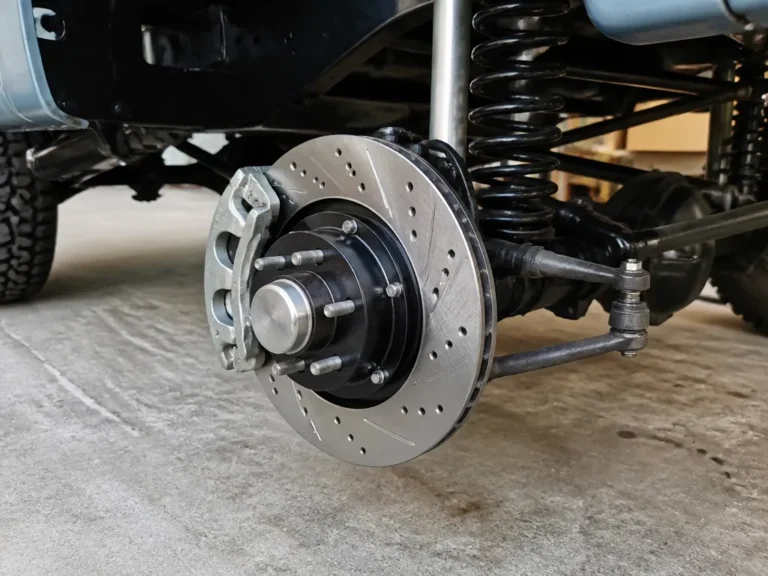
In a disc-brake system, the rotor turns with the wheel and the caliper sits around it. Pads press against the rotor’s two friction surfaces. Through the wheel, you may see a pad edge or a portion of the friction material inside the caliper opening.
How Does Wear Translate To What You See From Outside The Wheel?
As friction material is consumed, the visible layer becomes less prominent relative to nearby caliper or pad hardware. Uneven wear may make one edge look thinner, slanted, darker, or more polished than another.
Any part hidden behind the rotor, caliper, bracket, or wheel spokes remains unconfirmed. A visible edge can show a trend, but it cannot establish the minimum thickness across the whole pad.
What Thickness Or Wear Signs Indicate Pad Attention?
Without removing the wheel, use visible condition rather than an exact thickness figure. A pad that looks very thin, uneven, damaged, or close to its backing plate needs further inspection. If metal appears to contact the rotor, avoid relying on the visual check alone and seek prompt brake service.
There is no dependable numerical threshold to apply when the wheel and caliper block the pad. Measure only a clearly exposed friction edge, and have the pad checked directly when the visible section is too small to judge.
What Is The Step-by-step Inspection Sequence Without Removing The Tire?
Use the same sequence on comparable wheels so you can separate a genuine difference from a change in lighting or viewing angle. The purpose is to identify obvious wear and decide whether a closer inspection is needed.
What Tools And Setup Maximize The Accuracy Of This Check?
Tools can improve visibility and comparison, but they cannot overcome a wheel or caliper that blocks the pad.
| Tool or setup | What it helps you see | How to use it for a wheel-well check | Limit you should assume |
|---|---|---|---|
| Bright flashlight | Exposed pad edges and surface damage | Angle the beam across the pad to reveal changes in texture or thickness | Hidden sections remain hidden |
| Inspection mirror | Areas around spokes and restricted openings | Use it to view an edge that is not on your direct sightline | It cannot show areas blocked by the caliper or rotor |
| Ruler or tape measure | Rough visual scale for an exposed edge | Place it near the visible area without touching the rotor or tire | It does not measure hidden material |
| Caliper | A directly accessible pad edge | Measure only the part that is clearly exposed and identifiable | It may not fit through the wheel opening or reach the friction layer |
| Reference object in a photo | Visual comparison over time | Use the same object and viewpoint when taking comparison photos | It cannot reveal hidden thickness |
| Phone camera | Documentation from angles that are difficult to inspect directly | Focus on the pad edge and take clear images from more than one angle | Glare and poor focus can make the edge misleading |
| Stable vehicle setup | Repeatable viewing angles | Keep the vehicle secure and use a consistent stance | Suspension position and wheel design can still change visibility |
Start with a flashlight and add a mirror if necessary. Use a ruler or caliper only on material that is unquestionably visible. Photos are useful for comparing sides, but they do not turn a partial view into a full measurement.
What To Do To Improve Accuracy Without Making The Inspection Risky
Keep your hands, clothing, and tools away from the rotor and other moving parts. Do not put fingers through the spokes while the wheel or vehicle could move. If the area is hot, wait until it cools. Stop the inspection if you notice rubbing, scraping, unusual heat, or any other condition you cannot safely assess.
What Are The Risks Or Costs Of Relying On This Method Alone?

A wheel-well check can miss a worn inner pad, rotor damage, restricted caliper movement, or installation problems. A normal-looking visible edge therefore does not prove that the entire brake assembly is in good condition.
| What you miss | What can happen | Typical “cost” to you | Why the wheel-well check fails |
|---|---|---|---|
| Hidden or uneven friction material | Wear may continue before the visible edge looks serious | Earlier brake service than expected | The caliper and wheel hide part of the pad |
| Rotor scoring, glazing, or uneven wear | Noise, vibration, or reduced braking quality may persist | Rotor work may be needed as well as pad work | The opening reveals only part of the rotor |
| Restricted slides or uneven caliper contact | Uneven wear can continue between checks | Repeat repairs and additional diagnostic work | A static view cannot confirm caliper movement |
| Incorrect installation or missing hardware | Noise or premature wear may develop | Further inspection and corrective work | Visual access through the wheel is limited |
The main risk is false reassurance. If the opening shows only a narrow edge, or if the inner pad cannot be seen, a closer inspection is more useful than repeated guesses.
After the check, pay attention to grinding, persistent squealing, pulling while braking, vibration, unusual pedal travel, or a change in stopping performance. If any of these occur, arrange a brake inspection promptly rather than relying on the wheel-well view.
Repair prices and inspection charges vary by vehicle and shop. Ask for a diagnostic quote and confirm whether the quote includes wheel removal, pad measurement, rotor inspection, and any required repair.
What Edge Cases Might Mislead You During This Quick Check?

A pad can look acceptable through the wheel while its surface, hidden edge, or companion components need attention. Lighting, wheel design, and vehicle position can also change what appears visible.
How Glazing Or A Caliper Problem Can Fake “Good” Results
Glazed pads may look smooth or unusually shiny. A clean-looking surface does not establish that the pad has normal friction performance or that its thickness is adequate.
A reflective rotor can create glare that hides the pad edge. Change the light angle before deciding that two areas look the same.
A sticking or restricted caliper can wear one pad more than another while leaving the visible pad looking acceptable. The inner pad may be the more worn one and may be difficult to see.
Wheel Design And Vehicle Load Can Change What You See
Wheel geometry can block the pad edge or limit you to one angle. If you cannot obtain a comparable view, mark that wheel as unconfirmed.
Vehicle position and suspension movement can alter the line of sight through the spokes. Use a consistent setup when comparing images, but do not assume a changed angle means the pad itself has changed.
Recent braking can leave the rotor and pad hot or change their surface appearance temporarily. Let the assembly cool before making a close visual judgment.
Practical judgment call: treat a “looks fine” result as provisional when the view is blocked, the angles do not match, or the pad surface looks unusually shiny. Arrange a closer inspection if you cannot see enough material to make a sensible comparison.
How Can Visuals And A Follow-up Plan Confirm Findings And Actions?
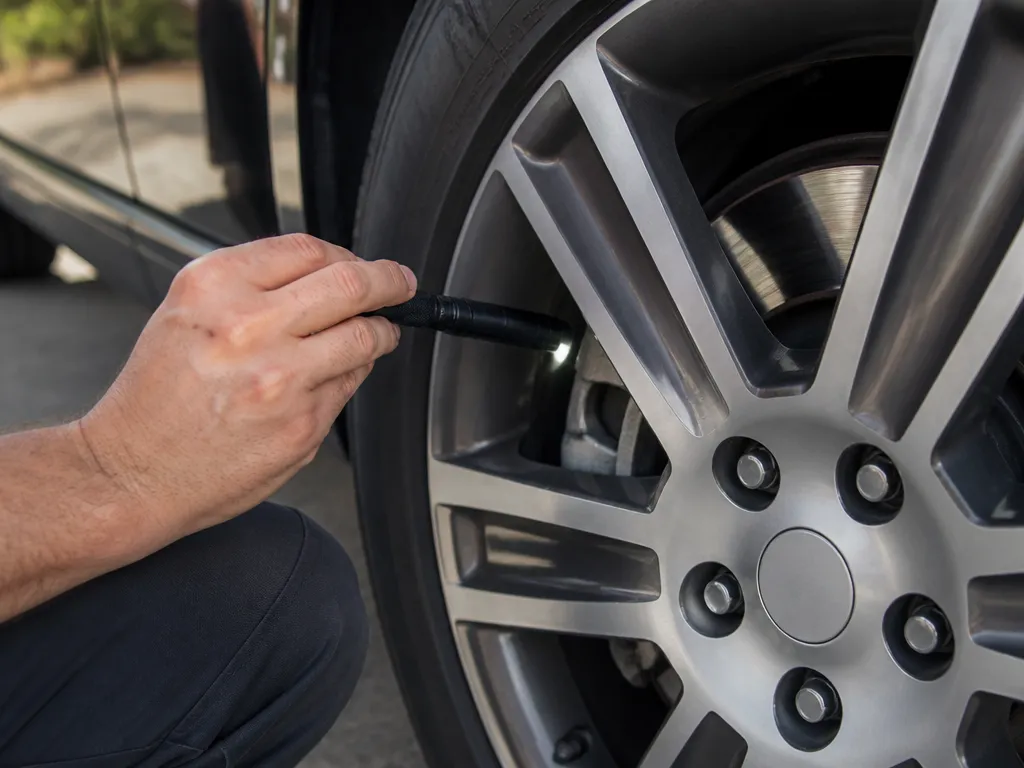
Photos can make the inspection repeatable and help you compare visible areas. They cannot replace a direct inspection when the pad is hidden.
Quick Summary
You can inspect brake pads through the wheel opening to find obvious wear and damage, but you usually cannot confirm full pad thickness while the wheel remains installed.
| What you observe through the wheel well | What it means for pad attention |
|---|---|
| Friction material looks clearly thin or uneven | Arrange service promptly, especially if the inner pad is hidden or the difference is substantial. |
| Friction material is hard to see or blocked | Do not guess. The result is inconclusive. |
| Visible wear looks consistent and no damage is apparent | Use the result only as a preliminary check and respond to any symptoms. |
| Wheel design prevents a repeatable comparison | Confidence is low. Arrange a more complete inspection if the condition matters now. |
Next action: Take clear photos of the visible pad areas on comparable wheels. Arrange a closer inspection if anything looks thin, uneven, damaged, or impossible to verify.
Frequently Asked Questions
How Much Does It Usually Cost To Have A Shop Check Brake Pads If I Do Not Want To Remove The Tire?
There is no reliable single price for a wheel-on brake inspection. The charge depends on the shop, vehicle, and whether the technician must remove the wheel to measure the pads and inspect the rotor.
Ask for a diagnostic quote and confirm whether it includes wheel removal, direct pad measurement, rotor inspection, and any repair recommendation.
If My Wheel-well Check Looks “Okay,” Is It Safe To Keep Driving Until The Next Scheduled Service?
A clear-looking wheel-well view is only a preliminary sign because hidden pad and rotor areas may not be visible. If there are no symptoms and no visible damage, continue to monitor the brakes, but do not treat the check as a complete inspection.
Grinding, significant vibration, pulling, unusual pedal travel, worsening noise, or a change in stopping performance calls for prompt professional assessment.
What Should I Do If My Pads Look Uneven From The Wheel Opening, But The Car Drives Smoothly?
Arrange an inspection even if the vehicle feels normal. Uneven visible wear can be associated with restricted caliper movement, uneven contact, or another condition that a smooth drive will not reveal.
Ask the technician to compare the inner and outer pads and inspect caliper movement and the rotor surface.
Will A Wheel-well Inspection Work The Same On Every Vehicle, Especially With Different Wheel Designs?
No. Spoke geometry, caliper shape, and pad position determine how much of the friction material you can see. Some vehicles provide a useful view, while others leave the pad mostly hidden.
Try more than one angle without placing yourself or your tools near moving parts. If the friction material remains unclear, treat that side as unknown and arrange a more complete inspection.
How Can I Verify A Shop’s Claim That My Pads Are “Fine” Or “Need Replacing” Without Taking Their Word For It?
Ask what the technician observed and whether the pad thickness was measured. A useful explanation should distinguish visible condition from a direct measurement and should mention the inner and outer pads where relevant.
If replacement is recommended, ask to see the remaining friction material and ask whether the rotor and caliper were inspected. If the wheels stayed on, ask how the technician confirmed the hidden pad areas.
What Are The Most Reliable Signs That Mean I Should Stop The Diy Check And Get Professional Help Right Away?
Seek prompt help for grinding, persistent brake noise, unusual pedal travel, significant vibration, pulling during braking, or a noticeable change in stopping performance. Visible metal contact, broken friction material, or severe uneven wear also warrants professional attention.
These signs cannot be ruled out by an incomplete wheel-well view, so do not continue relying on the visual check if they appear.