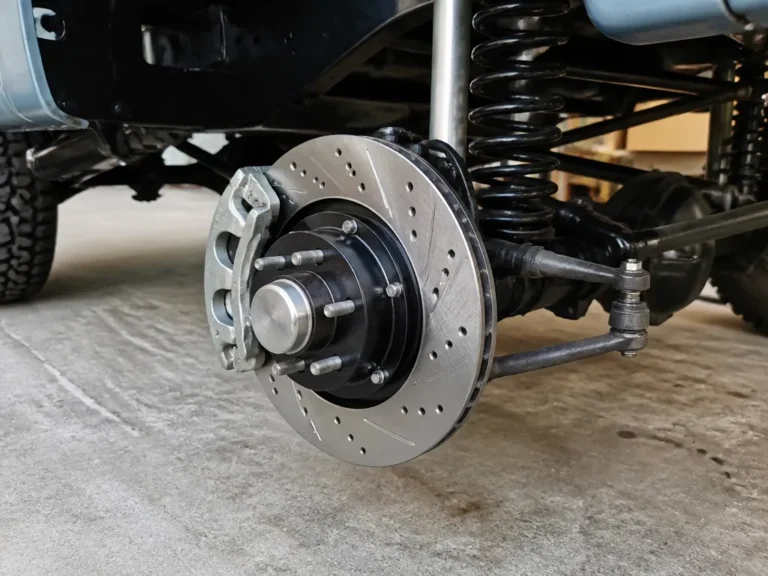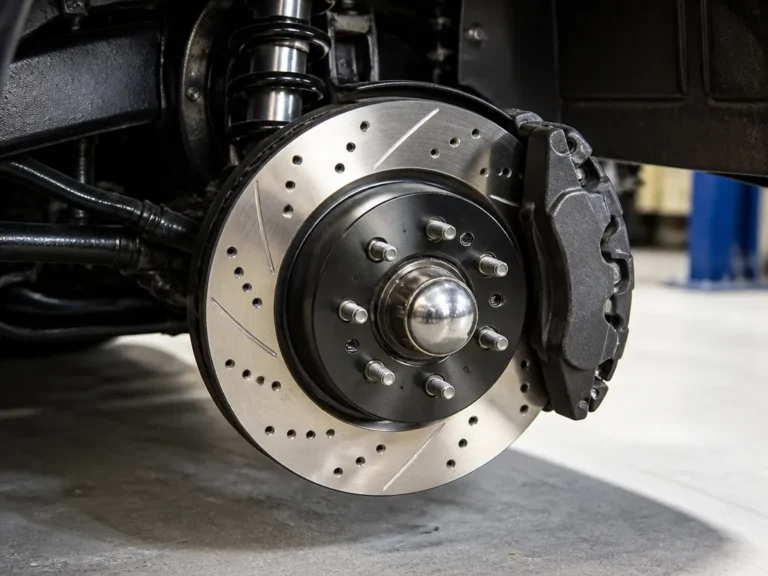
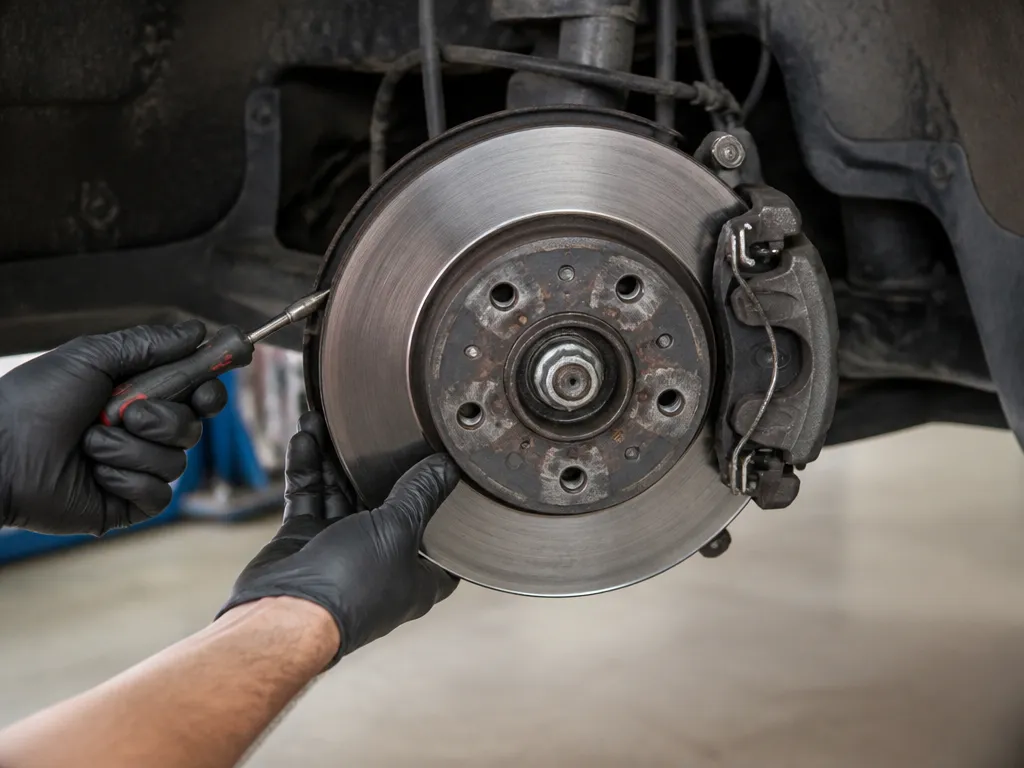
How Does The Parking Brake Work On Disc Brakes? In Detail
A parking brake on a disc-brake vehicle holds the car through a separate mechanical path. Depending on the design, that path expands shoes inside a drum formed in the rotor hat, moves a mechanism inside the rear caliper, or uses an electric motor to drive a caliper mechanism. It does not need continuous hydraulic pressure from the brake pedal.
When you apply it, a cable, linkage, or motor moves the parking-brake mechanism until friction at the drum or rotor prevents the wheel from turning. A mechanical lock, screw, ratchet, or electronic control strategy keeps the mechanism applied after the lever or switch is released. Releasing the brake reverses that movement and restores clearance between the friction surfaces.
What Does The Parking Brake Do On A Disc Brake?
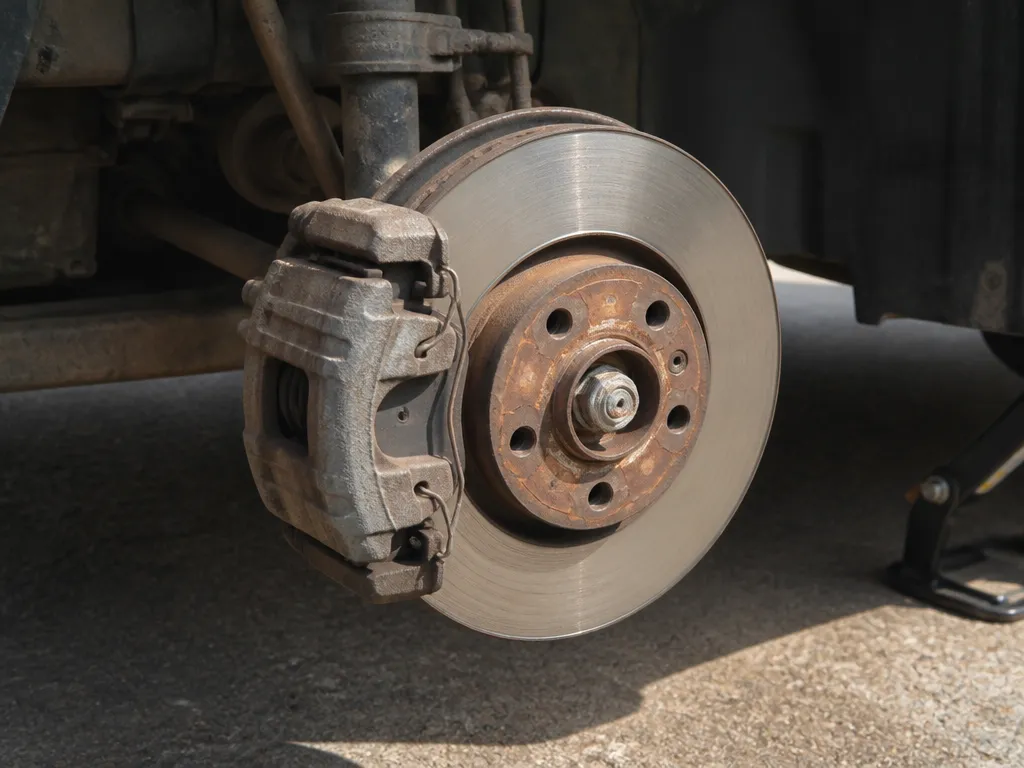
A parking brake keeps the vehicle stationary after the driver releases the foot pedal. It creates friction at the rear wheel through a mechanism that can remain applied without continuous pedal pressure. Its job is static holding, not repeated high-energy stopping like the service brakes.
In normal service braking, pressing the pedal creates hydraulic pressure. That pressure moves pistons in the calipers, which press pads against the rotor. When the pedal is released, hydraulic pressure falls and the service-brake clamp force is removed.
The parking-brake force is applied at the wheel, but the contact point depends on the design. A drum-in-hat system presses shoes against a drum surface formed inside the rotor hat. A caliper-mounted system moves a mechanical actuator that presses the pads against the rotor. An electronic parking brake uses a motor to drive one of those mechanical arrangements.
If the brake feels weak, drags, or releases unevenly, the mechanism may not be reaching its intended position, may not be retaining force, or may not be returning fully. The exact cause depends on the vehicle’s design.
How Does The Parking Brake Turn Actuation Into Clamp Force?

The parking brake converts lever, cable, or motor movement into friction at a stationary part of the brake assembly. That friction creates resistance to rotor and wheel rotation without relying on continued hydraulic pressure.
To identify the design on a particular vehicle, look for the actuator. A cable-operated shoe mechanism is often associated with the rotor hat, while a cable lever or electric motor may be mounted at the rear caliper. The service procedure for that vehicle is the final authority.
How Does A Drum-in-hat Parking Brake Work?
A drum-in-hat parking brake uses a small drum surface formed inside the rotor hat. The rotor and hat rotate with the wheel, while shoes mounted to the stationary backing plate or hub carrier expand against the inner drum surface. That contact produces the holding torque.
Mechanism-level things to watch: Worn or contaminated linings can reduce holding force. A stretched, corroded, or binding cable can limit shoe movement. A seized actuator or adjuster can cause either weak holding or continued drag.
How Does A Caliper-mounted Mechanical Parking Brake Work?
A caliper-mounted mechanical parking brake uses a lever, cable, or linkage to operate a mechanism built into the rear caliper. That mechanism moves the caliper piston or another internal part so the pads clamp the rotor without hydraulic pressure from the foot pedal.
Reliable operation depends on free movement at the caliper lever and inside the caliper, sound cable travel, and suitable pad clearance. Dragging after release often points to a return or adjustment problem rather than a lack of hydraulic pressure.
What Is An Electronic Parking Brake (Epb) And How Does It Hold?
An electronic parking brake, or EPB, replaces the driver’s direct cable pull with an electrical command. A control module powers a motor, and the motor uses gears and a screw or similar mechanism to apply a caliper or another parking-brake actuator.
What Parts Actually Do The Work?
The motor and gears provide the input. A screw, cam, or translation mechanism transfers that input to the caliper or shoe assembly. The pads or shoes create the friction hold. Sensors and control software may monitor position, current, vehicle state, or other signals, depending on the system.
How Does Epb Release Without Relying On Hydraulic Pedal Pressure?
The EPB commands its own mechanical actuator, so it can apply or release the parking mechanism without the driver creating hydraulic pressure with the brake pedal. The service-brake hydraulic circuit may still be involved in other vehicle functions, but it is not the source of the EPB’s retained holding force.
How Do Release And Return Mechanisms Differ From Hydraulic Service Brakes?
The service brake and parking brake may share a rotor and pads, but they apply force through different paths. The service brake uses hydraulic pressure while the parking brake uses a retained mechanical or motor-driven mechanism.
Practical takeaway: Drag that remains after releasing the foot pedal can involve the service brake. Drag that appears after releasing the parking brake points more strongly toward the parking-brake mechanism, its adjustment, or its actuator.
What Can Go Wrong, And What Does That Cost Or Risk Look Like?
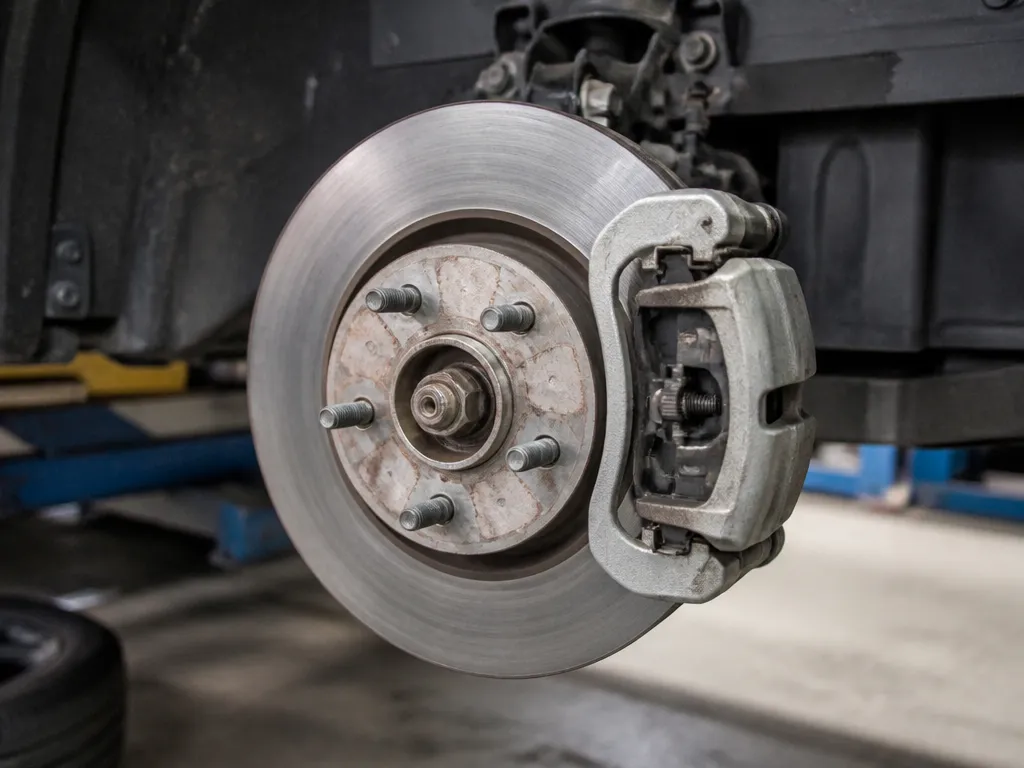
Parking-brake faults commonly appear as weak holding, dragging, uneven engagement, a warning message, or failure to release. The likely cause depends on whether the vehicle uses cables and shoes, a mechanical caliper, or an EPB.
| Design area | Common failure mode | Typical symptom you’ll notice | Most likely mechanism cause | Cost or risk impact (practical) |
|---|---|---|---|---|
| Mechanical wear, cable | Cable stretch, fraying, corrosion, or binding | Brake does not hold well, lever travel is excessive, or release is poor | Insufficient actuator travel or friction in the cable path | Possible loss of holding force and added inspection or replacement labor |
| Mechanical wear, shoes inside drum-in-hat | Worn, contaminated, or poorly adjusted shoes | Vehicle moves when parked or the hold is uneven | Insufficient shoe contact with the inner drum surface | Parking risk and possible need for shoe, adjuster, or rotor-hat service |
| Caliper-mounted mechanical | Seized internal parking mechanism or lever | Dragging after release, inconsistent holding, or failure to apply | Internal mechanism does not build or release clamp force correctly | Possible heat and accelerated wear, with caliper service potentially required |
| EPB (electronic parking brake) | Actuator, wiring, sensor, or control fault | Warning message, failure to hold, inability to release, or intermittent operation | The system cannot complete or verify the commanded movement | Both parking safety and drivability can be affected, and diagnosis may require vehicle-specific equipment |
Weak holding suggests inadequate actuator travel, worn friction material, contamination, or a problem inside the parking mechanism. Dragging suggests incomplete return, incorrect clearance, or an actuator that remains applied. Uneven engagement can result from different cable travel, shoe condition, caliper movement, or actuator performance from one side to the other.
How Should You Inspect And Maintain Each Design?
Inspection should follow the force path: identify the friction surface, check the actuator that moves it, and verify both holding and release. Use the vehicle’s service procedure for access, adjustment, and EPB operation.
Mechanic’s rule for all designs: connect every finding to two functions: dependable holding and complete release. If the brake is weak, inspect the friction surface and the actuator travel. If it drags, inspect the return path and clearance.
What Edge Cases Or Misconceptions Should You Watch For?
Not every vehicle with rear discs uses the same parking-brake arrangement. The holding surface may be inside the rotor hat, within the caliper, or operated by an EPB motor and control system.
Unusual Rear-disc Combinations
A vehicle can have rear discs for service braking while using drum-in-hat shoes for parking. The visible outer rotor does not reveal the entire parking-brake mechanism. The shoes contact a separate inner drum surface inside the hat.
Another possibility is unequal operation from side to side. One cable, shoe assembly, caliper mechanism, or actuator can be worn or seized while the other still works. A parking brake that holds on level ground may not hold reliably on an incline, so do not treat a flat-ground test as conclusive.
Epb Myths And Edge Cases
An EPB does not simply mean that an electric motor runs continuously while the car is parked. The motor applies a mechanical mechanism, and the system then uses its programmed control and retention strategy. The exact monitoring and re-application behavior varies by vehicle.
A dashboard indicator confirms that the vehicle has received or completed a command according to its control logic. It does not replace a safe functional check if the vehicle rolls, drags, or shows a fault message.
Practical Checks In Real Cars
Use checks that test the mechanism rather than relying only on the dashboard. With the vehicle secured and the manufacturer’s precautions followed, observe whether the brake holds and whether both sides release without abnormal drag.
If you inspect components, focus on the actual hold path: drum-in-hat shoes, caliper parking mechanism, cable and linkage, or EPB actuator. Looking only at the outer rotor surface can miss the part that creates the parking hold.
Quick Summary
A disc-brake parking brake holds the vehicle by creating friction through a separate mechanism. The mechanism may expand shoes against a drum inside the rotor hat, clamp pads with a caliper-mounted parking mechanism, or use an EPB motor to operate either type of mechanical hold.
Next action: Identify whether the vehicle uses drum-in-hat shoes, a caliper-mounted mechanical mechanism, or an EPB. Then inspect the actuator, friction surface, holding mechanism, and return path that belong to that design.
Frequently Asked Questions
How Much Should I Expect To Pay To Fix A Parking Brake That Will Not Hold On A Disc-brake Car?
There is no reliable single price. The repair could involve a cable, shoes, an adjuster, a caliper mechanism, an actuator, wiring, or control diagnosis, and labor varies by vehicle and access.
Before authorizing work, ask the shop to identify the failed part and explain what they checked. Useful details include cable movement, actuator travel, friction-material condition, caliper operation, and any EPB fault or calibration requirement.
What Happens If I Ignore A Parking Brake That Is Not Holding Correctly?
A weak parking brake can allow the vehicle to move after it is parked, particularly on an incline. If the brake is dragging instead, continued friction can create heat and accelerate wear in the affected components.
Use wheel chocks or another safe method to secure the vehicle until the fault is inspected. Do not rely on a brake that has already shown that it cannot hold.
Can I Adjust Or Repair A Cable-driven Parking Brake Myself Without Special Tools?
Some cable-operated systems have an adjustment procedure, but adjustment cannot repair worn shoes, a seized caliper mechanism, a damaged cable, or a sticking actuator. Over-adjustment can also leave the brake dragging.
If the vehicle has an EPB, follow the model-specific service procedure. The system may require a service mode, calibration, or diagnostic command rather than a manual cable adjustment.
How Can I Verify Whether The Problem Is In The Actuation Path Or In The Friction Hold Surface?
For a mechanical system, observe whether the cable, lever, or linkage moves smoothly and whether the shoes or caliper mechanism reach their intended contact position. For an EPB, check whether the actuator responds and whether the system reports a completed operation, following the vehicle’s safety and service procedures.
Little or no effective movement points toward the cable, linkage, actuator, or control path. Normal movement with weak holding points more toward worn, contaminated, or damaged friction surfaces. A proper diagnosis may require access to the brake assembly.
When Should I Get Professional Help Instead Of Continuing To Troubleshoot?
Get professional help if the mechanism will not move, the vehicle will not hold, a part is binding or broken, the brake remains hot or dragging, or the fault returns after adjustment.
Professional diagnosis is especially appropriate for EPB faults involving warning messages, actuator failure, sensor feedback, service mode, or calibration. If the vehicle must be parked on an incline and you cannot trust the hold, stop relying on trial-and-error checks.
Is There A Quick Way To Test “Hold Strength” Before Relying On It For Real Parking?
In a safe, controlled location, apply the parking brake and check whether the vehicle remains stationary on a suitable gentle incline. Keep clear of the vehicle and follow the manufacturer’s safety guidance. A vehicle that creeps should not be treated as having a dependable parking brake.
After release, watch for abnormal drag, heat, odor, or increased resistance. Those signs suggest that the shoes, pads, caliper mechanism, cable, or EPB actuator has not returned fully.