
How Long Can I Drive Without Serpentine Belt? Exact Limits
You generally should drive zero miles (or “only as far as needed to reach safety”) after a serpentine belt fails, because most critical engine systems stop functioning quickly without it. The exact cutoff depends on what the belt drives on your specific vehicle, but the safe rule is to pull over immediately instead of trying to “make it to the next exit.”
If the serpentine belt is broken, missing, or slipping badly, there is no universal safe duration you can rely on. In most cars, the belt powers systems like the alternator and engine cooling components, so you can lose electrical power and overheat within a short time. If you must move, do it only to a safer spot, then call for a tow.
What Is How Long Can I Drive Without Serpentine Belt?
“How long can I drive without a serpentine belt?” really means “how long can I keep running the engine before the belt-driven systems stop working and the engine overheats, overheats accessories, or loses critical function.” There is no single safe time because serpentine belts feed different loads on different vehicles, and the critical load can be different from one car to the next.
With weak evidence on an exact minutes-or-miles number, the correct answer is operational: assume zero safe driving beyond reaching safety, then adjust only for vehicle-specific exception cases you can confirm on your exact model.
Key Benefits
Serpentine belts are a high-impact, shared-power component, so their benefits show up as how many critical systems keep working at once while the engine runs. The moment the belt stops, those same systems lose synchronized power delivery, which is why the failure is so abrupt and why “limp driving” has tight limits.
Step-by-step Guide

Use a fast, conservative process to keep the engine from overheating and avoid secondary damage, then get the car to the right kind of help. Every step below is about buying time safely while you confirm what you actually lost when the belt stopped driving accessories.
One move-or-tow rule you can apply on the spot: if you cannot keep the temperature clearly steady and in normal range during the brief move, switch to tow. If you find shredded belt material, bent or damaged pulleys, or a belt that will not stay on the routing, treat it as a repair first situation, not a “drive it until later” situation.
Common Mistakes To Avoid
Avoiding the wrong choices after a serpentine belt fails is what keeps the problem from turning into expensive engine damage.
If you want the least painful outcome, treat the failure as urgent, get safely off the road, then get a repair that identifies why the belt failed in the first place.
Tips For Success
After a serpentine belt failure, the successful outcome is simple: protect the engine from overheating, prevent more belt-driven systems from failing, and get the right repair support as fast as conditions allow. The two biggest drivers of how successful you are, temperature and time, so treat every minute as a limited resource and make decisions based on what the dash and the engine are telling you.
When you contact help, be precise about symptoms you saw right after the belt failed. Tell them whether the temperature rose, whether you lost power steering, and whether any warning lights came on, because it narrows down which components stopped turning when the belt went out.
If you are forced to move the vehicle a short distance, do it with the goal of reaching safety, not a destination. Choose the shortest route to a turnout, a driveway, or a service location you can safely access, and keep braking gentle because extra load on systems and driver control can change without the belt-driven accessories.
After replacement, your “success” continues. Confirm the belt sits correctly on every pulley, check for abnormal noise at idle, and recheck that the belt is tracking straight after a short test drive, because belt mis-tracking usually shows up quickly.
Real Examples
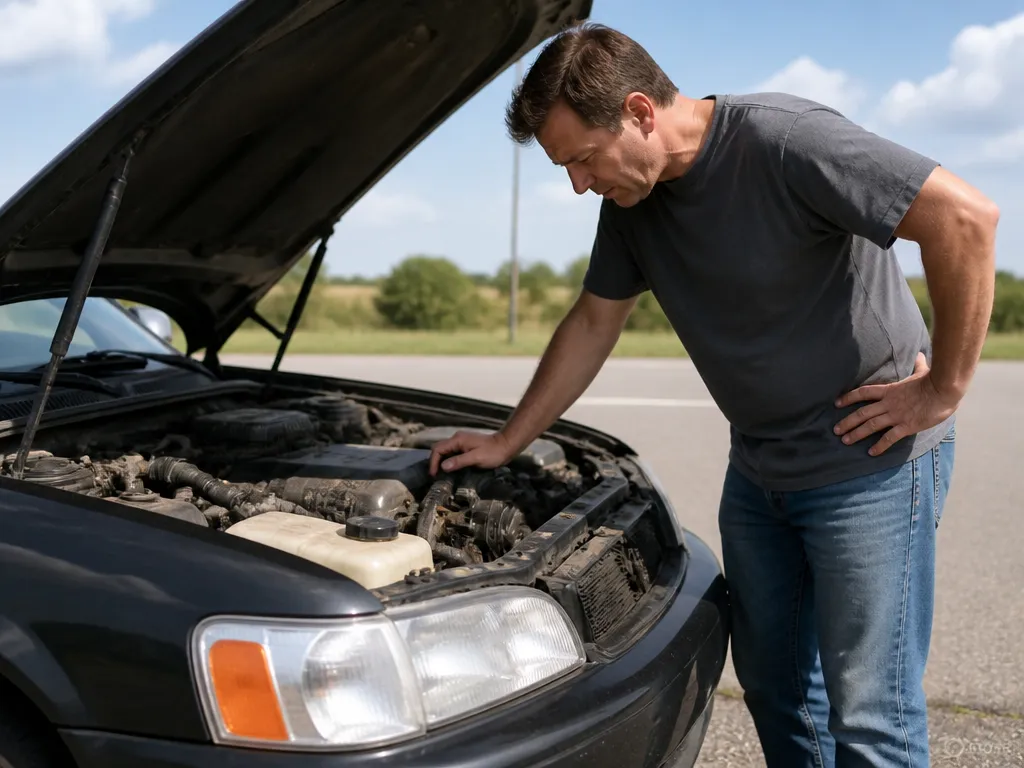
Real outcomes differ according to which components the belt drives, so two vehicles can react very differently after the same visible failure. The safest example is a car that loses its belt near home: the driver pulls over, shuts the engine down, and arranges a tow rather than treating the short distance as a test.
A conventional engine with a belt-driven water pump gives the clearest warning. The pump stops circulating coolant with the belt, so continuing to run the engine can lead to overheating. The alternator may also stop charging, and a vehicle with belt-driven hydraulic power steering can become much harder to steer.
Consider a second car whose water pump is electric. The engine may continue circulating coolant without the serpentine belt, but that does not make driving a sound plan. The alternator, air-conditioning compressor, or steering-assist pump may still depend on the belt, and the exact combination must be confirmed for that engine.
A post-repair example is a car that starts normally after a new belt is fitted but develops squealing, visible belt wandering, charging warnings, or unusual steering effort. Those signs call for another inspection before regular driving, because the belt may be misrouted or an accessory may be binding.
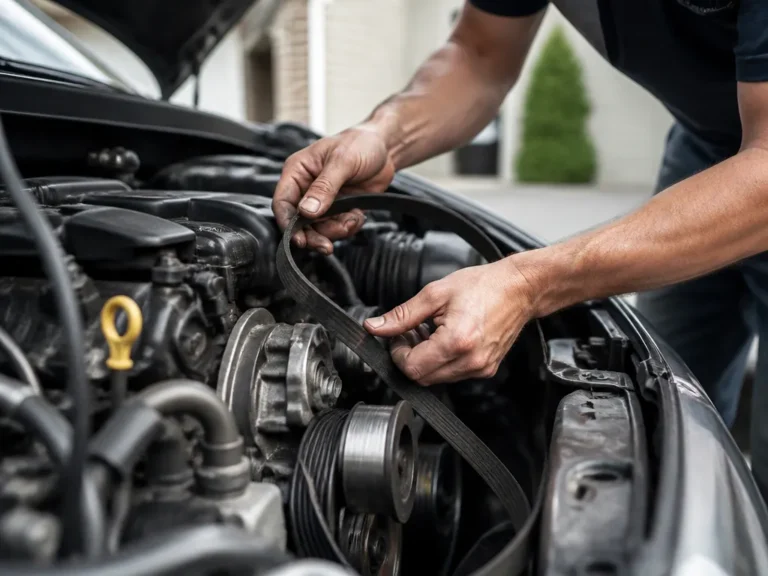
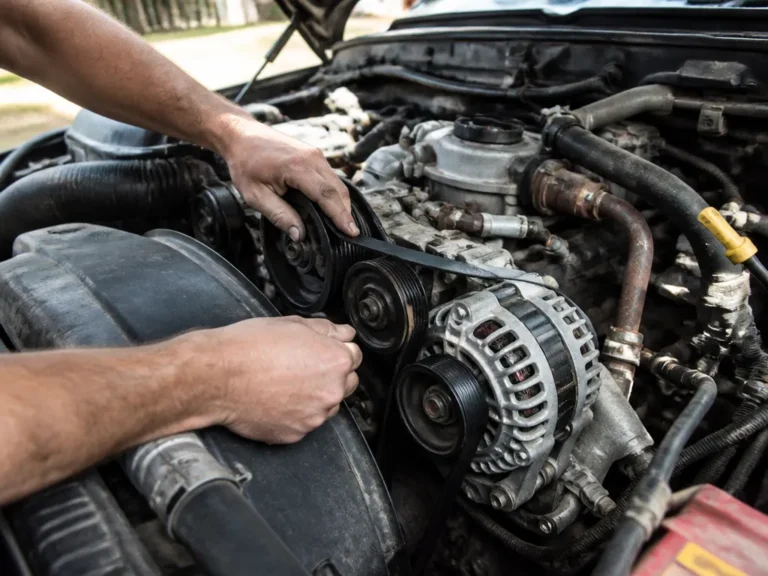
For a used-car inspection, look for a complete belt path, correct routing, and a belt that sits properly in every ribbed pulley. Ask for the vehicle’s service records and verify the routing diagram against the owner’s manual or manufacturer service information, especially after work near the front of the engine.
Quick Summary
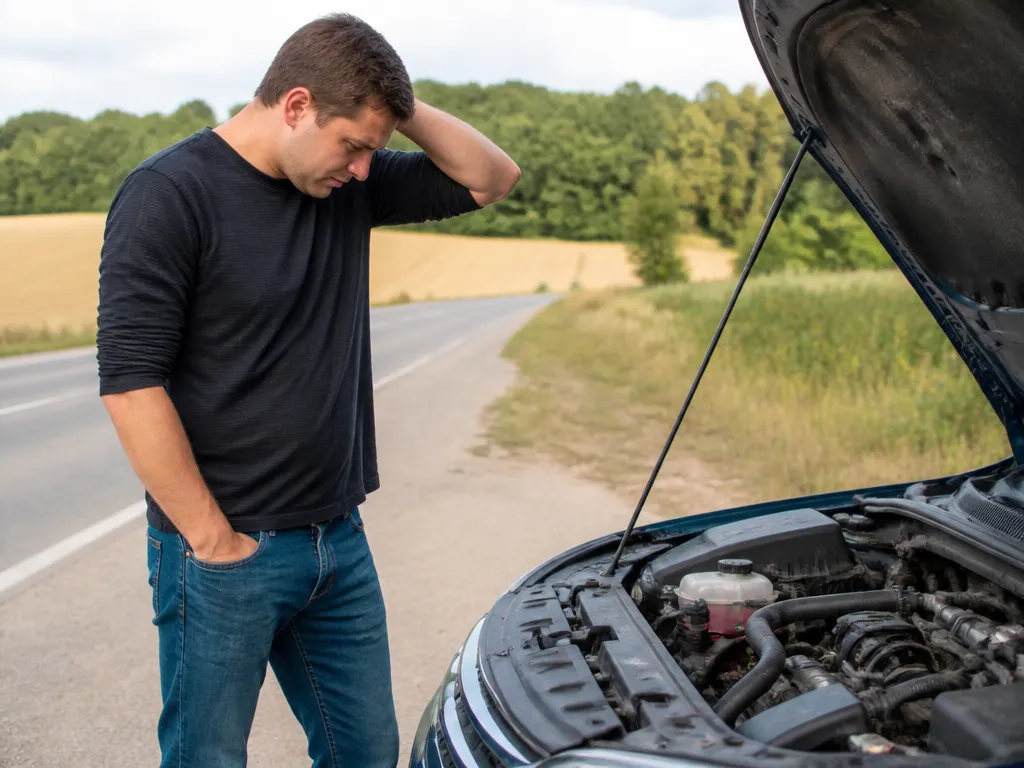
Plan to drive zero miles after the belt fails, except for the minimum distance needed to reach a safe stopping place; there is no reliable universal time or mileage limit.
Next action: Pull over safely, shut the engine off, and arrange a tow unless the vehicle is already at a repair location and its manual specifically confirms a safe exception.
Frequently Asked Questions
How Much Should A Serpentine-belt Repair Cost?
There is no defensible single price without the vehicle, belt routing, labor rate, and the reason the belt failed. Ask for an itemized estimate covering the belt, tensioner, idler pulleys, and any damaged accessory rather than approving a belt-only repair automatically.
Exact current cost data is not available here. Compare the written estimate with the labor guide or pricing information used by a reputable repair shop.
How Soon Should I Replace A Serpentine Belt That Looks Worn But Has Not Broken?
Arrange an inspection promptly if the belt has cracks, frayed edges, missing ribs, glazing, contamination, or repeated noise. A visual check cannot reliably confirm the condition of the tensioner, pulleys, or belt alignment, so the replacement decision should include those parts.
Do not rely on a universal mileage or time interval. Use the maintenance schedule for your exact vehicle and account for the belt’s condition and service history.
How Can I Find Out Whether My Car Has An Electric Water Pump?
Check the owner’s manual and the manufacturer’s service information for the engine code or vehicle identification number. A parts catalog can also identify the water-pump drive arrangement, but the listing must match the exact engine, model year, and equipment.
Do not infer the answer from the presence of a serpentine belt alone. The belt may drive other systems even when the water pump has its own electric motor.
What Happens If I Leave The Broken Belt In Place And Do Nothing?
The vehicle remains unrepaired, and the failed belt may be only one part of the fault. A seized pulley, failed tensioner, misalignment, or damaged accessory can cause a replacement belt to fail again, so postponing diagnosis can turn a simple repair into a broader one.
Have the cause identified before fitting a new belt. If the car must remain parked, keep it stationary until the repair has been assessed.
When Should I Stop Troubleshooting And Call A Professional?
Call for professional help if the belt path is unclear, a pulley is locked or wobbles, the belt has shredded, pieces are missing, fluid has contaminated the belt, or the engine does not turn normally after the failure. Those signs require diagnosis rather than a quick belt installation.
Use the vehicle manufacturer’s manual for the correct routing and inspection procedure. If you cannot confirm the route and tensioner position for the exact engine, do not guess.
How Can I Verify That A Belt Replacement Was Done Correctly?
With the engine off, compare the installed belt’s route with the diagram in the owner’s manual or the under-hood label. Every ribbed section should sit fully in the matching pulley grooves, and the belt should not touch nearby covers, hoses, or wiring.
Ask the shop what caused the original failure and whether it inspected the tensioner, idler pulleys, and belt-driven accessories. A short post-repair check should confirm that the belt tracks correctly and that no abnormal pulley noise remains.