
How Often Change Serpentine Belt? Replace By Mileage And Factors
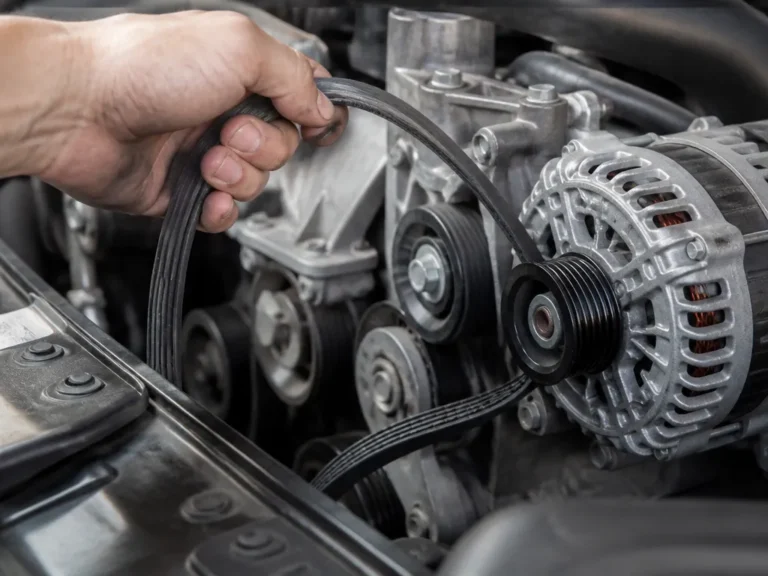
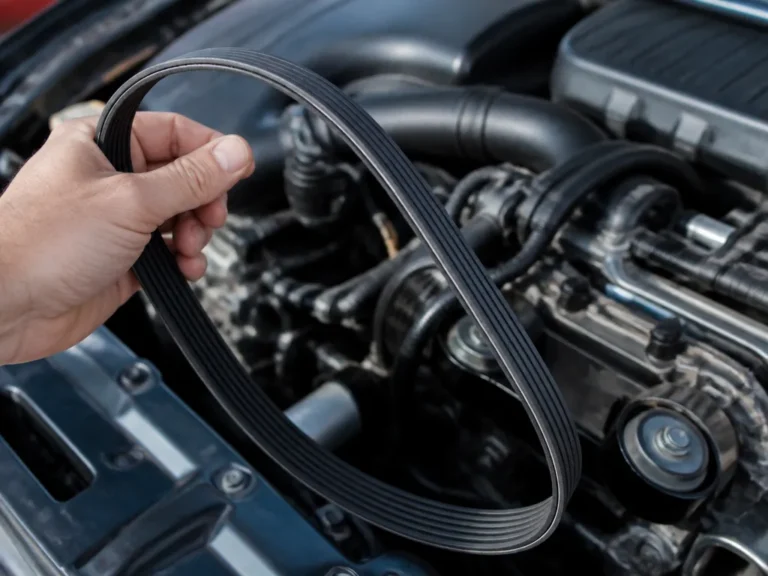
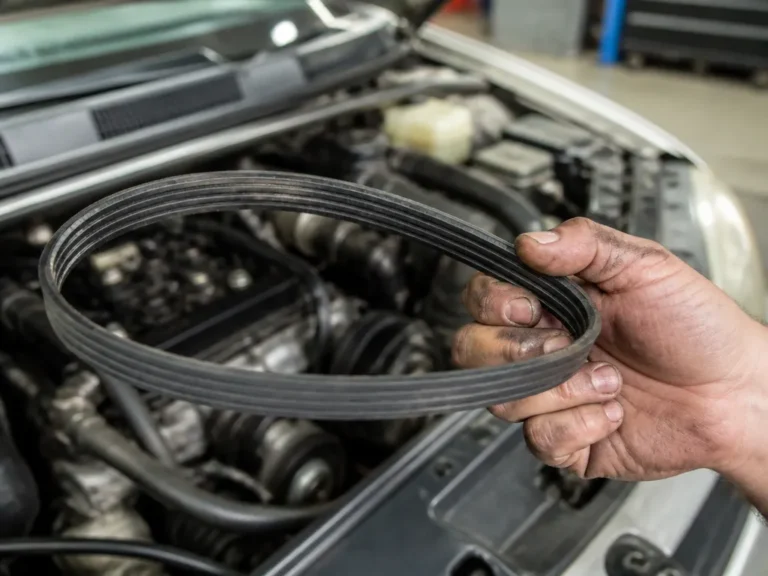
Replace the serpentine belt according to your vehicle manufacturer’s maintenance schedule. There is no universal mileage or time interval that applies to every car. If the manual gives no replacement point, inspect the belt regularly and replace it when it shows structural damage, rib wear, glazing, contamination, repeated slipping, or related pulley and tensioner problems.
Modern EPDM belts may show little cracking, so do not judge their condition by cracks alone. Check the ribs, belt tracking, surface condition, tensioner, and idler pulleys.
What Does The Owner’s Manual Require For Belt Replacement?

Your vehicle’s owner’s manual and scheduled maintenance plan are the starting point for serpentine belt service. The schedule may call for inspection, replacement, or both. Follow the action specified for your exact engine rather than relying on a universal interval.
The correct service interval depends on the engine layout, belt construction, tensioning system, and operating conditions. Replacing the belt without checking the tensioner and pulleys can lead to repeat noise, mis-tracking, or early failure.
What Is The Practical Replacement Range You Should Expect?
There is no reliable replacement range that fits every serpentine belt. Use the manufacturer’s schedule as the replacement point, and use the belt’s actual condition to move the job earlier when necessary. A generic mileage target should not override a manual inspection requirement or visible damage.
Practical rule for action: use the manufacturer’s schedule to plan service, then let inspection findings determine whether replacement needs to happen sooner.
Is Replacement By Age Or Time Ever Appropriate?
Age-based replacement is appropriate when the owner’s manual gives a calendar interval or when inspection finds age-related deterioration. If the manual gives both mileage and time limits, follow the earlier one.
Time can matter for vehicles that sit for long periods or experience repeated exposure to heat, moisture, or contamination. However, do not create a time interval when the manual does not provide one. Inspect the belt and related components instead.
To turn an age recommendation into an action, check two parts of the maintenance schedule: the interval type, such as mileage, months, years, or a combination, and the action wording, such as inspect or replace. An inspection interval does not automatically mean the belt must be replaced. Replace it when the schedule says to replace it or when inspection finds unacceptable wear.
Also check for instructions related to dust, towing, extreme temperatures, or other severe service. If you cannot find a time-based interval, use regular inspections and replace the belt for structural damage, persistent contamination, repeated slipping, or failed tensioner and pulley components.
| What you find in your manual | What to do |
|---|---|
| Mileage-only schedule | Follow the mileage trigger and inspect sooner if you find belt wear, contamination, or pulley problems. |
| Both mileage and time triggers | Use the earlier trigger, following the manual’s instruction to inspect or replace. |
| Time-based “inspect” | Inspect the belt and pulley system at the time milestone, then replace only if the schedule or inspection calls for it. |
How Belt Material Affects Wear: Neoprene Vs Epdm
Practical rule: use the material to decide what to check first, then inspect the belt at rib level. Replace the belt immediately if you find missing ribs, exposed cords, deep chunking, severe fraying, or contamination that has damaged the belt. Check the pulleys and tensioner before installing the replacement.
What Should Your Replacement Checklist Include?
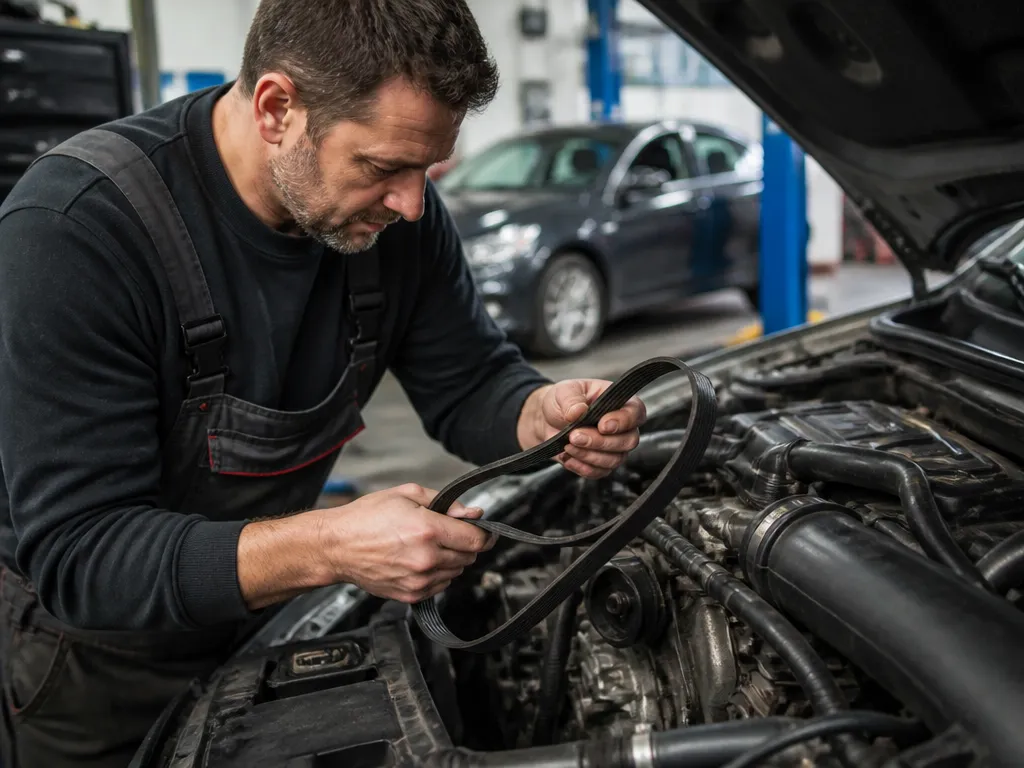
A replacement checklist should confirm the service trigger, belt condition, correct belt length, routing, and the condition of the tensioner and idler pulleys. These details matter as much as fitting a new belt.
| Checklist item | What you track | What it changes |
|---|---|---|
| Mileage/time trigger | Manual’s inspection or replacement schedule | Whether you replace now or plan service later |
| Belt material | Neoprene or EPDM, where applicable | Which wear signs deserve the most attention |
| Routing diagram | Pulley order and belt path | Prevents slip and mis-tracking |
| Belt length | Correct application and vehicle configuration | Helps maintain proper tension |
| Tensioner and idler condition | Noise, wobble, rough rotation, and wear | Determines whether related components need replacement |
What Symptoms, Failure Modes, And Costs Should You Expect?
Serpentine belt problems can cause noise, charging problems, overheating risk, or loss of accessories. The same symptom can also come from a tensioner or pulley, so diagnosis should include the complete belt drive.
| Symptom | What it usually means | Failure mode | How urgent | Typical repair scope (what may be replaced) |
|---|---|---|---|---|
| Squealing or chirping | Slipping, poor grip, or a pulley or tensioner problem | Belt slip or accessory-drive fault | High, get it checked soon | Belt, tensioner, or idler as diagnosis requires |
| Slapping noise | Belt instability, weak tensioner, or mis-tracking | Tensioner, pulley, or belt problem | High | Belt and any failed tensioner or idler |
| Battery-warning light | The alternator may no longer be driven correctly | Loss of alternator drive | Very high | Belt and any component that caused the loss of drive |
| Overheating or loss of cooling | The belt may drive a cooling-system component, depending on the engine | Loss of belt-driven circulation where applicable | Very high | Stop driving and diagnose the belt system and overheating cause |
| Loss of power steering or A/C | An accessory may no longer be driven | Loss of accessory drive | High | Belt, tensioner, pulley, or affected accessory as diagnosed |
A belt-only replacement commonly falls in the range of $100-$300. A repair that also includes a tensioner and pulleys may reach $200-$500 or more, depending on the vehicle, location, parts, and labor. Parts for the belt alone are commonly $20-$100. One cost breakdown lists labor at $50-$150+, a tensioner assembly at $50-$200+, and idler pulleys at $20-$80 each.
Noise alone does not identify the failed component. If the belt is shredding or slipping repeatedly, or if the battery warning light or overheating appears, treat the problem as urgent and avoid continuing to drive until it has been inspected.
What Actions To Take And The Final Decision Rule?
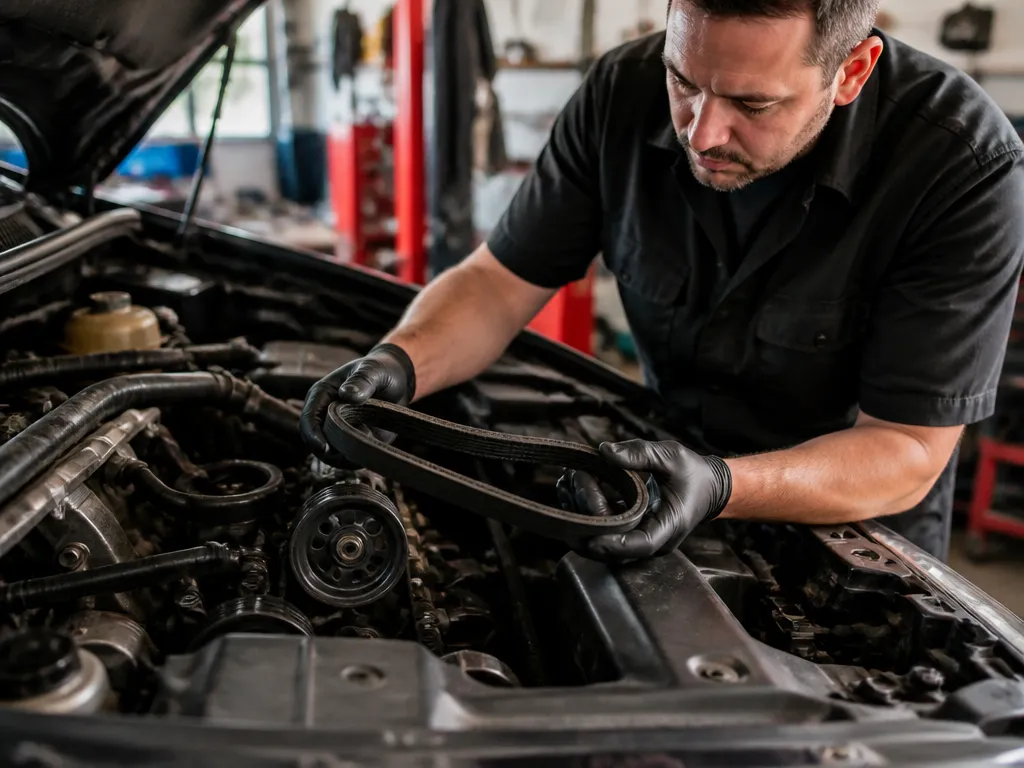
Confirm the routing, belt length, and pulley condition before installing a replacement. Then use the belt’s condition and any symptoms to decide whether the repair can be scheduled or needs immediate attention.
Quick Summary
Replace the serpentine belt according to your vehicle’s maintenance schedule. If the manual specifies inspection rather than a fixed replacement point, inspect the belt and pulley system at the required interval and replace the belt when its condition or the manual calls for it.
Several factors affect the decision:
Next action: check the belt, tensioner, and idler pulleys. Replace the belt immediately if you find structural damage, serious contamination, repeated slipping, or a related component that has failed.
Frequently Asked Questions
What’s A Realistic Total Cost If I Replace Just The Belt Versus Replacing Belt-related Parts Too?
Belt-only work commonly falls around $100-$300. If the job includes a tensioner and pulleys, the total may rise to $200-$500 or more. The final price depends on the vehicle, parts required, labor, access, and location.
If I Hear Squealing Or See Light Wear, Do I Have To Replace Immediately?
Noise or light visible wear does not identify the exact cause by itself. Inspect the belt, tensioner, and pulleys. Replace immediately for missing ribs, exposed cords, chunks, serious fraying, repeated slipping, or damaging contamination. A belt with minor wear but no structural damage should be handled according to the manufacturer’s schedule and inspection criteria.
How Can I Confirm A Mechanic’s Claim That My Tensioner Or Idler Pulley Needs Replacement?
Ask the mechanic to show you the specific problem, such as noise, rough rotation, seizure, wobble, or visible wear. Abnormal belt tracking or uneven rib wear can also indicate a pulley or alignment problem.
Ask the shop to confirm the correct routing diagram and belt length for your vehicle. Incorrect routing or an incorrect belt can create noise and abnormal wear that resemble a failed component.
What Happens If I Keep Driving After The Belt Starts Slipping?
Continued slipping can worsen belt damage and may lead to shredding or sudden loss of drive to belt-powered accessories. The consequences depend on the engine design and on which accessories the belt drives. If the belt is slipping repeatedly, arrange inspection promptly rather than continuing to monitor it while driving.
If the belt begins shredding, shows structural damage, or is accompanied by a battery warning light or overheating, stop driving and have it repaired.
When Should I Pay For A Professional Diagnosis Instead Of Inspecting And Deciding Myself?
Use a professional when the wear pattern is difficult to interpret, contamination may have damaged the system, or a pulley bearing or tensioner may be failing. Professional help is also sensible when access is tight or you cannot confirm the correct routing and belt length.
If you inspect or replace the belt yourself, work with the engine off and cool, keep the key away from the vehicle, and confirm the routing before starting the engine. If you cannot verify the installation, have a shop complete the work.
How Do I Verify The Belt Is The Right One For My Car Before I Buy Or Before The Shop Installs It?
Match the belt to your exact vehicle, engine, and configuration. Confirm the part number and length, then compare the belt path with the vehicle-specific routing diagram. Do not rely on appearance alone, because a belt that looks similar may not have the correct length or application.
If you are buying the belt yourself, provide the parts counter with the vehicle’s year, make, model, and engine. Cross-check the supplied belt and routing information before installation.