If My Serpentine Belt Breaks What Happens—and What To Do Next
If your serpentine belt breaks while driving, the alternator may stop charging the battery, and other belt-driven accessories may stop working at the same time. Depending on the vehicle, you may lose power-steering assistance, air conditioning, or coolant circulation if the water pump uses this belt.
Pull over as soon as it is safe and switch off the engine, particularly if the temperature gauge rises or an overheating warning appears. Do not plan to drive to a repair shop after the belt fails. Call for roadside help or a tow, then inspect the belt only after the vehicle is stopped and the engine is off.
What Happens Immediately When The Serpentine Belt Breaks
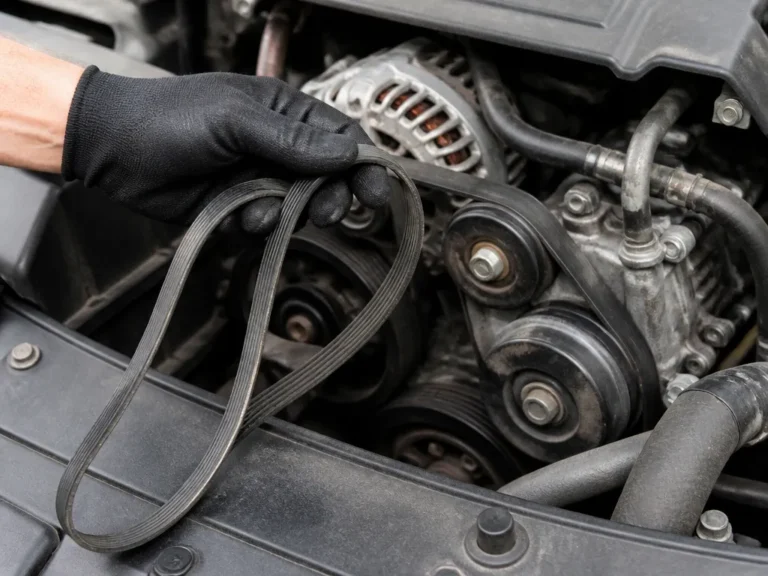
A serpentine belt drives several accessories from one continuous loop. When it breaks, every accessory on that loop stops receiving belt drive, although the exact consequences depend on the engine’s design.
Symptom: Battery Warning Light, Electrical Systems Fade Fast
Cause: The alternator stops turning, so it no longer recharges the battery. The battery may continue supplying electrical power for a while, but its remaining capacity depends on its condition and the vehicle’s electrical load.
Fix right now: Treat the charging failure as time-sensitive. Pull over safely instead of relying on the battery to get you farther.
Symptom: Power Steering Suddenly Gets Heavy Or Jerky
Cause: Many vehicles use a belt-driven hydraulic power-steering pump. If that pump loses drive, steering assistance may disappear and the wheel may require substantially more effort, especially during low-speed turns.
Fix right now: Keep your steering inputs controlled, reduce speed, and stop as soon as you can do so safely. Do not assume that steering assistance will return.
Symptom: Ac Stops Blowing Cold, Then Airflow May Change
Cause: The air-conditioning compressor is commonly connected to the serpentine belt. Without belt drive, the compressor cannot maintain normal refrigerant circulation, so the air conditioner may stop cooling.
Fix right now: Air-conditioning loss is not the main hazard. Focus on stopping safely and checking for charging or overheating warnings.
Symptom: Overheating Risk Rises, Sometimes Very Quickly
Cause: Some engines use the serpentine belt to drive the water pump. If that pump stops, coolant circulation may be reduced or lost, allowing the engine temperature to rise. Other vehicles use a different pump drive, so the cooling risk is vehicle-specific.
Fix right now: If the temperature gauge rises, an overheating warning appears, or steam is visible, stop the engine as soon as it is safe. Do not open the cooling system while it is hot, and do not keep restarting an overheated engine.
Symptom: You May Be Unable To Restart Or Continue
Cause: Once alternator output stops, the battery must support the vehicle’s electrical systems. The engine may eventually stall or fail to restart, but the timing varies with the battery, electrical load, and vehicle design.
Fix right now: After pulling over, treat inspection and towing as the repair plan rather than testing how far the vehicle can go.
What Components Rely On The Serpentine Belt
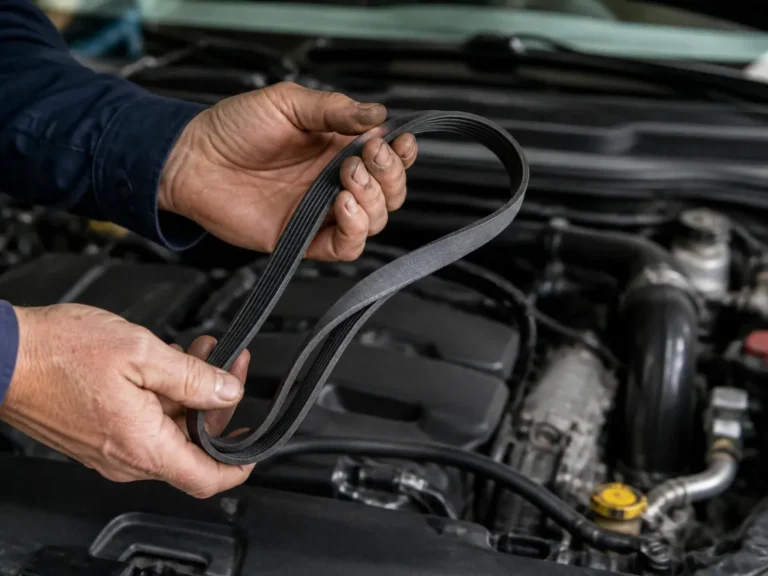
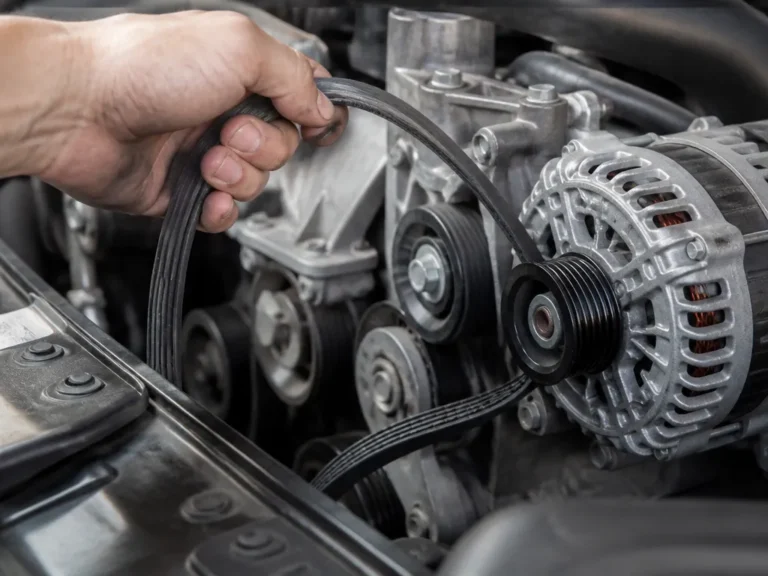
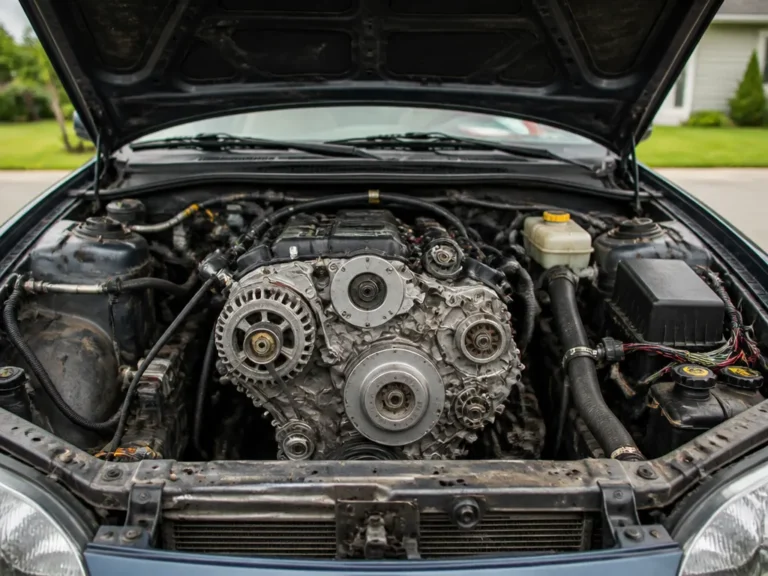
The serpentine belt is an accessory drive belt routed around several pulleys at the front of the engine. Its layout varies by vehicle, so not every component below will be connected to it on every engine.
How Quickly Can Damage Occur After A Belt Failure
There is no universal safe number of minutes or miles after a serpentine-belt failure. The risk depends mainly on whether the belt drives the water pump, the engine temperature, the electrical load, and the conditions around the vehicle.
Action rule: If the belt breaks, make a controlled stop as soon as possible. Continuing can turn a belt replacement into a larger repair if the engine overheats, the battery is depleted, or a damaged pulley causes further failure.
Immediate Safety Steps If The Belt Fails On The Road

Do not keep driving to see whether the problem clears. Your priority is to move out of traffic safely, avoid overheating, and arrange assistance.
My rule: once belt failure is obvious, aim for a safe stop, check the instruments, and do not test the vehicle by driving farther.
Replacement Options And What To Replace
Repair normally begins with the belt and an inspection of every component it drove. If the belt snapped or shredded, the cause may be a worn tensioner, seized idler, misalignment, or a failing accessory rather than the belt alone.
| What you replace (or inspect) | When it matters most | What to ask the shop for |
|---|---|---|
| Serpentine belt | Any belt break, fraying, missing ribs, or shredding | Confirm the correct belt part number and routing |
| Tensioner (assembly) | Noise, weak tension, belt flutter, or another failure soon after replacement | Replace it if movement is rough, loose, or unstable |
| Idler(s) and pulley(s) | Grinding, wobble, bearing wear, or tracking problems | Inspect for roughness and play with the engine off |
| Water pump (only if belt-driven on your design) | Coolant leakage, bearing noise, or overheating after belt failure | Confirm the drive type and inspect for leakage and play |
| Alternator | Charging warnings, abnormal pulley noise, or damage around the belt-drive area | Check pulley condition and verify charging after repair |
A belt-only repair may be appropriate when the surrounding hardware is sound, but it is not a complete diagnosis after a violent break. Have the tensioner, idlers, alignment, and driven accessories checked before fitting the new belt.
Labor Time And Parts Cost Ranges By What’s Being Replaced
There is no reliable universal labor time or replacement price. Access, engine layout, parts quality, local labor rates, and the number of components replaced all affect the estimate. Ask for an itemized quote that separates the belt, tensioner, idlers or pulleys, diagnostic work, any driven-component repair, and towing.
Service Checklist For The Replacement Visit
Ask the shop to verify the routing, inspect each pulley for roughness and wobble, and confirm that the tensioner moves correctly. If the engine ran hot, ask for an inspection of coolant circulation and the water-pump area. Before collecting the vehicle, request a charging check and confirmation that the belt tracks correctly without new noise or warning lights.
Maintenance Plan To Prevent Belt Failures
Follow the vehicle maker’s service schedule rather than applying one mileage rule to every engine. Belt material, engine design, climate, contamination, and the condition of the tensioner and pulleys all affect service life.
| Check | What to look for | Action |
|---|---|---|
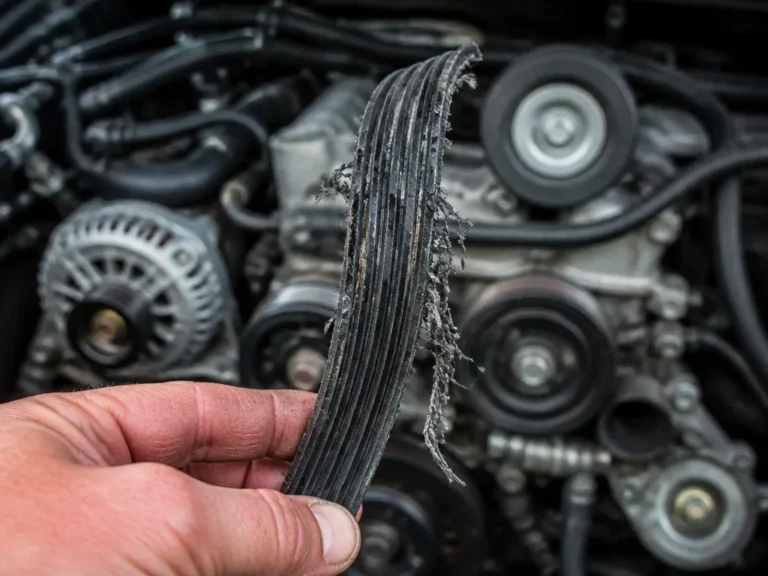
| Belt surface | Cracks, fraying, glazing, hardened rubber, or missing ribs | Replace the belt and investigate abnormal wear |
| Belt tracking | Side-to-side movement, exposed edges, or ribs that do not sit squarely in pulley grooves | Inspect alignment, tensioner position, and pulley condition |
| Tensioner | Weak movement, vibration, noise, or poor belt pressure | Test and replace it if worn or unstable |
| Idler and accessory pulleys | Roughness, wobble, grinding, or resistance with the belt removed | Replace the defective pulley or accessory before installing a new belt |
| Service interval | The interval specified for that vehicle, belt material, and engine design | Use the vehicle-specific schedule and inspect sooner if symptoms appear |
Visible belt damage calls for replacement, while noise, wobble, or poor tracking calls for diagnosis of the surrounding hardware. A new belt fitted over a seized pulley or failing tensioner can fail again.
Set An Inspection And Replacement Routine
Check the belt during scheduled maintenance, using a light to view the full belt path. The pulley-side ribs may show damage that is not visible from above, so ask the technician to inspect both surfaces and verify the routing.
Replacement timing varies with belt material, engine design, climate, contamination, and service history. Some vehicles specify inspection rather than a fixed replacement date. Follow the vehicle-specific schedule and replace the belt earlier if it is contaminated, glazed, frayed, or missing ribs.
Budget for the possibility of a tensioner or idler replacement rather than treating the belt as an isolated part. During service, ask for a written assessment of belt condition, tensioner movement, pulley bearings, alignment, and fluid leaks that could contaminate the belt.
Edge Cases, Costs, And Budgeting Realities
Outcomes vary because vehicles use different cooling layouts, and a belt may slip or shred without immediately falling off. Repair prices also depend on parts, access, diagnostic time, and local labor rates.
| Scenario | What changes | What to do financially and operationally |
|---|---|---|
| Beltless or alternate water-pump drive designs | The belt failure may not interrupt coolant circulation if the pump has a separate drive. | Have the technician confirm the cooling-system layout. Do not assume that the vehicle is safe to drive because overheating is less likely. |
| Belt slips instead of fully breaking | The belt may remain in place while accessory drive becomes intermittent or inadequate. | Treat slipping as urgent and have the belt path inspected before driving. |
| Partial shredding (belt fragments) | Fragments may indicate a pulley, tensioner, alignment, or accessory problem. | Budget for inspection beyond the belt and replace worn hardware identified by the technician. |
| Tow vs roadside repair | A failed belt can make continued driving unreliable, adding towing to the repair decision. | Ask roadside service whether the vehicle should be towed for inspection rather than restarted. |
| Parts and labor pricing varies by shop | Engine access and the number of replaced components can change the total substantially. | Request an itemized estimate for the belt, tensioner, idlers, diagnostic time, labor, and tow. |
There is no dependable single price for a serpentine-belt repair. Get a written quote that states whether it covers the belt alone or a complete inspection and repair of the belt-drive system. Compare estimates with the same scope of work, and ask what the shop found before approving additional components.
Once you are safely stopped, photographs of the visible belt path or debris may help the technician understand what happened. Do not take them if doing so requires standing near traffic or reaching into the engine compartment.
Quick Summary
If the serpentine belt breaks, stop driving as soon as you can do so safely and arrange an inspection or tow. The vehicle may lose charging, steering assistance, air conditioning, and engine cooling at the same time.
After stopping, switch on the hazards, shut the engine off if safe, inspect only from a safe position, and call roadside assistance. Do not restart the vehicle simply to see whether it will make it home.
Frequently Asked Questions
Can A Fully Charged Battery Get Me To A Repair Shop After The Belt Fails?
A charged battery may keep some electrical systems operating for a limited and unpredictable period, but it does not restore the belt-driven accessories. Battery condition, electrical demand, traffic, and vehicle design all affect the result.
Do not use the battery as a travel plan. Arrange a tow unless a qualified technician has confirmed that moving the vehicle a very short distance will not create a cooling or control problem.
How Can I Tell Whether My Water Pump Is Driven By The Serpentine Belt?
Check the owner’s manual, belt-routing information, or manufacturer repair information for the exact engine. A routing diagram may not identify every component clearly, so ask a technician to confirm the water-pump drive.
Do not restart the engine solely to test the arrangement after a belt failure. Give the shop the vehicle identification and engine details before approving any attempt to move it.
What Should The Mechanic Determine Before Fitting A New Belt?
The technician should identify why the old belt failed rather than treating the belt as the only faulty part. Useful checks include pulley alignment, tensioner movement, idler condition, and whether an accessory is binding or making abnormal noise.
Ask for the diagnosis on the estimate. A new belt installed over a seized pulley or weak tensioner can fail again.
How Can I Check Whether A Repair Estimate Is Complete?
Request an itemized estimate that separates the belt, tensioner, idlers, damaged accessories, diagnostic work, labor, and towing or other service charges. It should state whether the shop is replacing the belt alone or inspecting the complete belt-drive system.
Compare the proposed work with the technician’s findings, not with a generic price. Labor rates, engine access, parts quality, and secondary damage vary by vehicle and location.
What If The Belt Has Only Come Off The Pulleys Instead Of Breaking?
A belt that has come off may still be damaged. The cause may be lost tension, pulley misalignment, a failed tensioner, or an accessory that is no longer turning correctly. Its appearance does not prove that reinstalling it is safe.
Leave the engine off and have the belt path and hardware inspected before driving. Reinstalling the belt without finding the cause risks another failure.
Can Roadside Assistance Or A Vehicle Warranty Pay For The Failure?
Coverage depends on the roadside plan, warranty terms, vehicle age, maintenance requirements, and cause of the failure. A policy may cover towing while excluding the belt, labor, or damage to related components.
Before authorizing non-emergency work, ask the provider what is covered. Keep the repair estimate and photographs if practical, since the provider may request documentation of the failure or maintenance history.