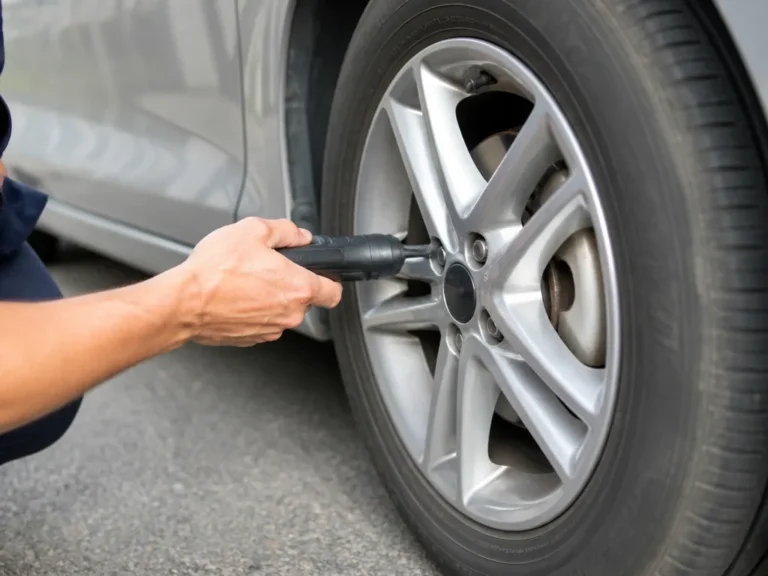
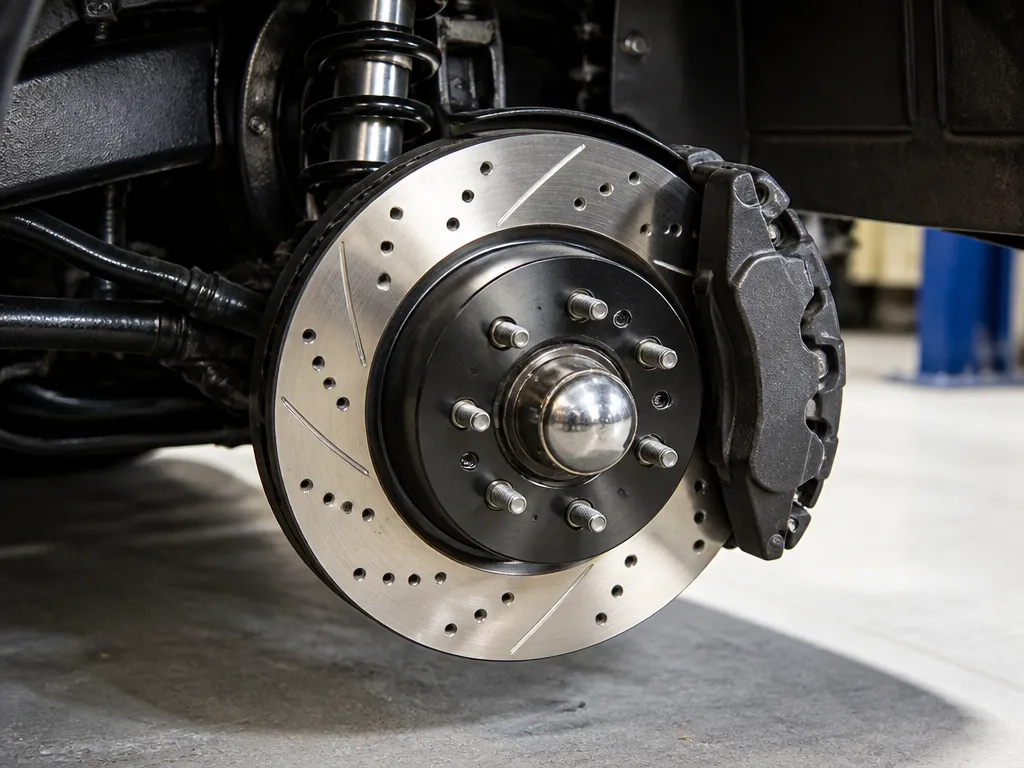
Ford 9 Disc Brake Conversion: Parts, Steps, Costs, Kits
A Ford 9-inch disc brake conversion depends on rotor and caliper fitment. Wheel clearance is the first thing to check: a wheel can contact the rotor hat, caliper, or both even when the bracket bolts to the axle correctly. Measure the clearance on your actual wheels before buying parts.
Choose a complete kit matched to the axle’s mounting arrangement, then confirm rotor dimensions, stud pattern, parking-brake design, and hydraulic requirements. Allow substantial time for the conversion, especially if the axle needs cleaning, replacement bearings or seals, line fabrication, machining, or repeated bleeding.
What Ford 9-inch Disc Conversion Actually Does
A Ford 9-inch disc conversion replaces the rear drum hardware with axle-mounted brackets, rotors, calipers, pads, and the hydraulic connections needed to operate them. The axle shafts and differential may remain in place, but their dimensions, bearings, seals, studs, and axle-end hardware must be compatible with the selected kit and in serviceable condition.
The starting point matters because Ford 9-inch axles do not all use the same brake or axle-end arrangement. You may be removing a factory-style drum assembly, an aftermarket drum setup, or an axle that has already received different housing ends, shafts, or backing-plate mounts. Those differences affect bracket fit, rotor position, axle-end clearance, and parking-brake installation. A kit listed for a Ford 9-inch axle is not automatically correct for every housing.
What Changes, And What Usually Stays
The drum backing plates and drum-specific shoes, springs, adjusters, and wheel cylinders come off. The conversion adds a mounting system, a rotor at each axle end, and a caliper positioned over each rotor. Flexible hoses and hard-line connections may also need to change if the original lines were shaped around the drum backing plates.
Parking Brake And Attachment Choices
Parking-brake design is one of the main differences between conversion kits. A mechanical caliper with an integrated parking-brake lever can connect to a cable. Other systems use a separate parking-brake mechanism or require a different cable layout. A hydraulic-only rear caliper can provide normal service braking but does not automatically provide a mechanical parking brake.
Disc hardware attaches at the axle ends through a bracket or adapter system. Depending on the housing and kit, the bracket may mount against the existing axle-end flange, use the backing-plate mounting surface, or locate the caliper around a rotor hat installed over the axle flange. Confirm the attachment method before ordering. The housing-end pattern and rotor position determine whether the caliper sits correctly over the rotor and whether the wheel clears the assembly.
How The Disc System Works On A 9-inch Axle
A rear disc system uses hydraulic pressure to clamp pads against a rotor. Compared with a drum arrangement, it can offer more predictable behavior during repeated braking, but the result depends on the caliper, rotor, hydraulic balance, and fitment of the complete assembly.
Which Variables Decide Your Kit And Parts List

Your kit is determined by measurements from the axle, rotor, wheel, and parking-brake arrangement, not by the Ford 9-inch name alone. Record each dimension before ordering and compare it with the manufacturer’s compatibility information.
| Variable | Measure or identify | Why the number matters | Do not order until |
|---|---|---|---|
| Rotor size | Outside diameter, thickness, hat height, and center bore | Controls wheel clearance, caliper fit, and bracket position | The kit lists matching diameter, thickness, and mounting dimensions |
| Wheel clearance | Wheel diameter, inside-barrel clearance, spoke clearance, and backspacing | A wheel can contact the caliper or rotor even when its diameter appears sufficient | A physical template or the kit’s clearance drawing confirms the fit |
| Bolt pattern | Number of studs and the exact circle diameter or manufacturer specification | Determines rotor and wheel compatibility | The rotor, axle flange, and wheels use matching patterns |
| Studs and lugs | Stud diameter, thread pitch, usable thread length, and lug-seat style | Determines rotor retention and whether existing wheel hardware can be reused | The kit confirms thread and seat compatibility |
| Housing width | Axle flange-to-flange width and rotor mounting position relative to each flange | Changes caliper location, wheel position, and available backspacing | The bracket is specified for that housing and flange arrangement |
| Parking brake | Integrated mechanical caliper, drum-in-hat, or separate mechanical mechanism | Determines the cable brackets, cables, calipers, and adjustment hardware required | The complete kit lists every parking-brake part |
Measure rotor position from the axle flange rather than assuming the original drum location transfers directly. A different hat height or offset can move the rotor inward or outward, changing caliper alignment and wheel clearance.
Parking Brake Choice Changes The Parts List
An integrated mechanical caliper usually needs a compatible cable arm and a way to anchor the cable to the axle. A drum-in-hat arrangement adds an internal parking-brake assembly and adjustment hardware. A hydraulic-only rear caliper may reduce the parts count, but it does not provide the same mechanical parking-brake arrangement.
Write the measurements on the order sheet, including units, before comparing kits. If a listing omits hat height, caliper offset, wheel-clearance information, or parking-brake hardware, treat the omission as a fitment risk.
Required Parts And Where To Source Them
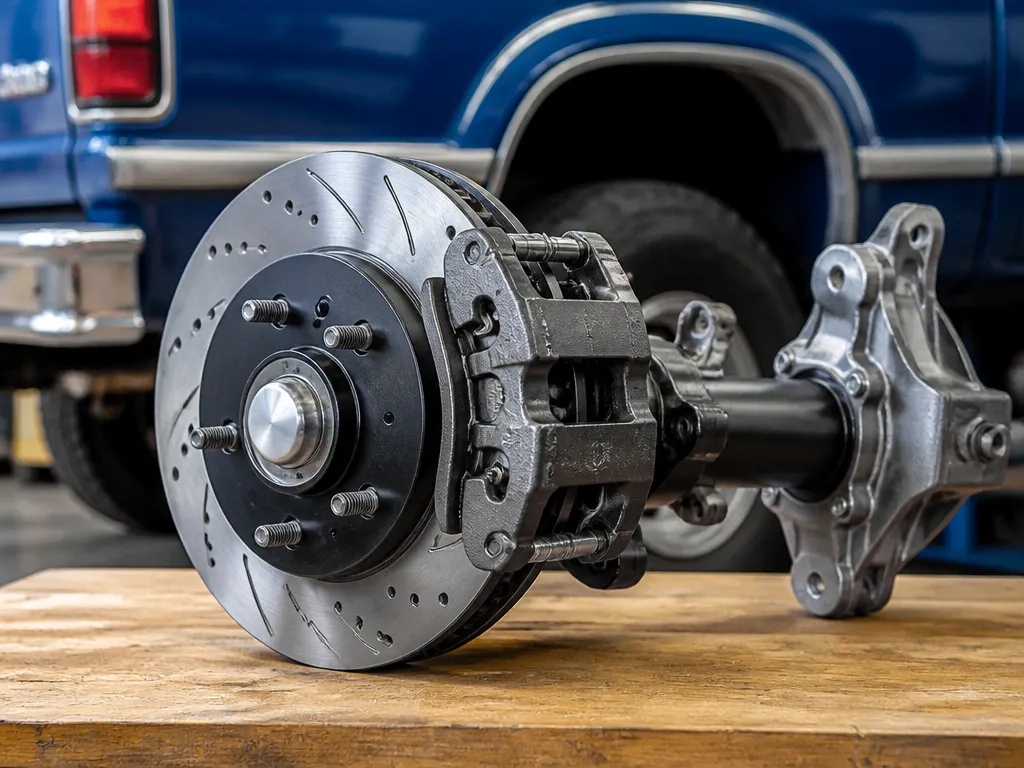
A complete conversion requires matched axle brackets, rotors, calipers, hydraulic hardware, parking-brake parts, and tools for assembly and bleeding. Buy these components as a matched package where possible. Mixing brackets, rotors, and calipers from unrelated applications creates avoidable fitment problems.
Listings can differ in axle width, flange pattern, rotor offset, caliper side, parking-brake mechanism, hose fittings, and wheel-clearance requirements. Require a dimensioned drawing and complete parts list before ordering. Choose a manufacturer that publishes these measurements, identifies service-replacement parts, and provides instructions for your axle configuration.
Step-by-step Conversion From Axle To Bleed
Complete the conversion in a fixed order: remove the drum hardware, inspect the axle, install the brackets and rotors, connect the hydraulics, then bleed and test the system. Do not force a part into place. A rotor that sits off-center or a hose that twists can create problems before the vehicle moves.
Common Problems During Ford 9 Disc Conversion
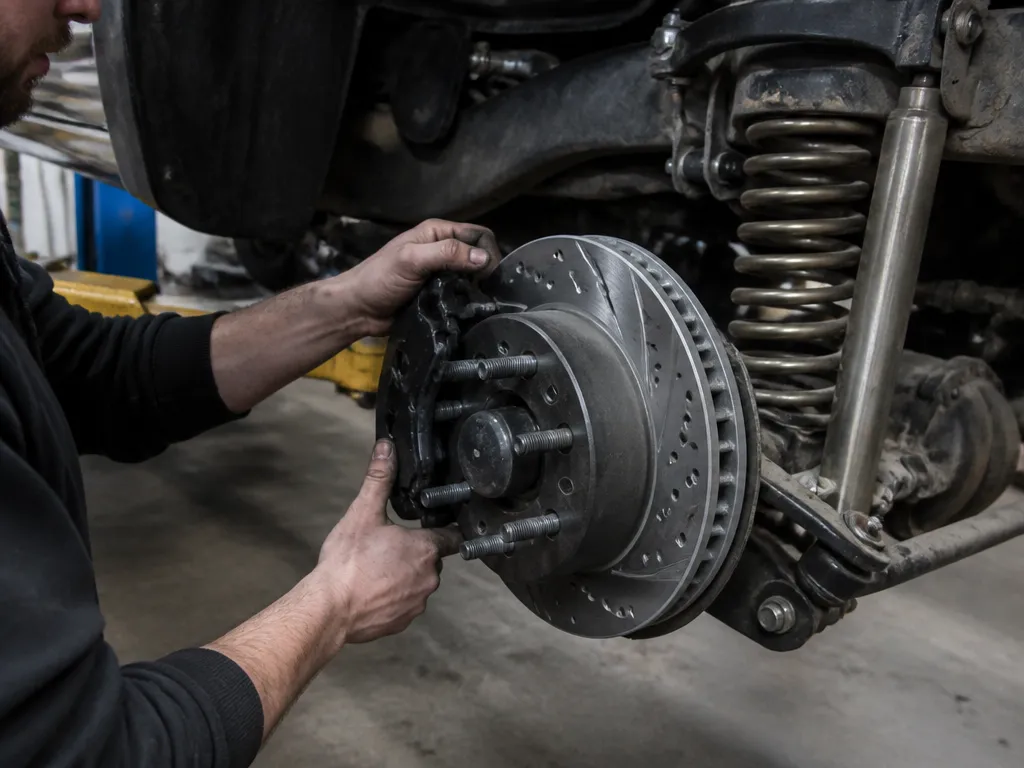
Common installation problems involve misalignment, trapped air, incorrect parking-brake adjustment, or hardware that does not match the axle and rotor package. Diagnose the symptom before driving the vehicle. A dragging caliper, leaking hose, or persistently soft pedal requires correction.
Cost Breakdown For Parts And Installation Labor
The total cost depends on the axle, kit design, parking-brake arrangement, and any replacement or fabrication work the axle needs. Do not rely on a single advertised kit price. Build the budget from an itemized parts list and an installation quote.
Which Kits And Components To Choose For Your Setup
Choose a matched Ford 9-inch conversion kit only after confirming axle width, bolt pattern, rotor position, wheel clearance, and parking-brake design. The strongest option is the package with clear compatibility data, serviceable replacement parts, and complete installation instructions.
Quick Summary
Proceed with a Ford 9-inch disc conversion only after the axle, wheel, rotor, caliper, and parking-brake measurements match one complete kit.
Parts and labor costs vary with kit design, axle condition, and required upgrades. Measure the axle and wheels, photograph the brake flange and parking-brake area, and send those details to the kit manufacturer for written compatibility confirmation before buying anything.
Frequently Asked Questions
What Documentation Should I Keep During A Ford 9-inch Disc Conversion For Future Maintenance Or Resale?
Keep photos of the mounting points, bracket-to-axle interfaces, rotor and hat orientation, hose routing, and fittings. Save part numbers, vendor names, the kit version, torque specifications, and notes about the bleeding procedure. Keep receipts and record any deviations from the standard kit, along with observations from initial testing. This information gives future mechanics a clear installation history.
What Long‑term Maintenance Tasks Are Unique To A Ford 9-inch Disc Conversion That I Should Plan For?
Inspect caliper seals, pad wear, rotor surfaces, hoses, fittings, and hard lines during routine service. Check for leaks, air in the hydraulic system, restricted hoses, and abnormal pad wear. Parking-brake components also need periodic inspection when the system uses mechanical or integrated hardware. Continue checking wheel bearings and axle seals because the conversion does not make those parts maintenance-free.
Are There Driving Scenarios Where A 9-inch Rear Disc Conversion Is Not Advisable Or Worth The Effort?
A conversion may offer little practical benefit for light daily driving if the existing drum system is in good condition and the available wheel clearance is limited. Vehicles with unusual parking-brake arrangements, uncertain axle dimensions, or no clearly compatible kit may also be poor candidates. Repeated heavy braking or track use requires a package specifically suited to that duty rather than a generic street conversion.
What About Insurance Or Regulatory Concerns After Completing A Disc Brake Conversion?
Modification rules and insurance requirements vary by location and policy. Ask the insurer whether the alteration must be disclosed and whether it affects coverage, premiums, or claims. Check local inspection or approval requirements before starting the work. Keep the parts records and installation documentation with the vehicle.
What Should I Ask A Shop Or Installer Before Committing To A Ford 9-inch Disc Conversion?
Ask about experience with 9-inch disc kits and confirm compatibility with your axle width, bolt pattern, wheel clearance, and parking-brake design. Request a written estimate that includes possible bearing, seal, line, bleeding, and alignment work. Confirm who supplies the kit, whether the parts are matched, how the hydraulic system will be tested, and what warranty applies to parts and labor.
How Can I Verify A Kit’s Compatibility Or Performance Claims Without Making A Purchase?
Compare the kit’s axle-width, bolt-pattern, rotor-offset, rotor-thickness, wheel-clearance, and parking-brake requirements with your measurements. Ask for installation instructions, dimensioned drawings, fitment information for similar axle configurations, and the exact replacement rotor, pad, caliper, and hose specifications. Review the warranty and return policy before ordering.